ProductNot yet confirmed elsewhere1 publisher3 min readPublished
XREAL's $299 glasses make Android XR an accessory purchase
A reviewer who would not pay $600 for a portable big screen says he would pay $299 for the same trick, which tells you which price tier will decide what Android XR has to run on when Aura ships.
The Product Desk
What happened
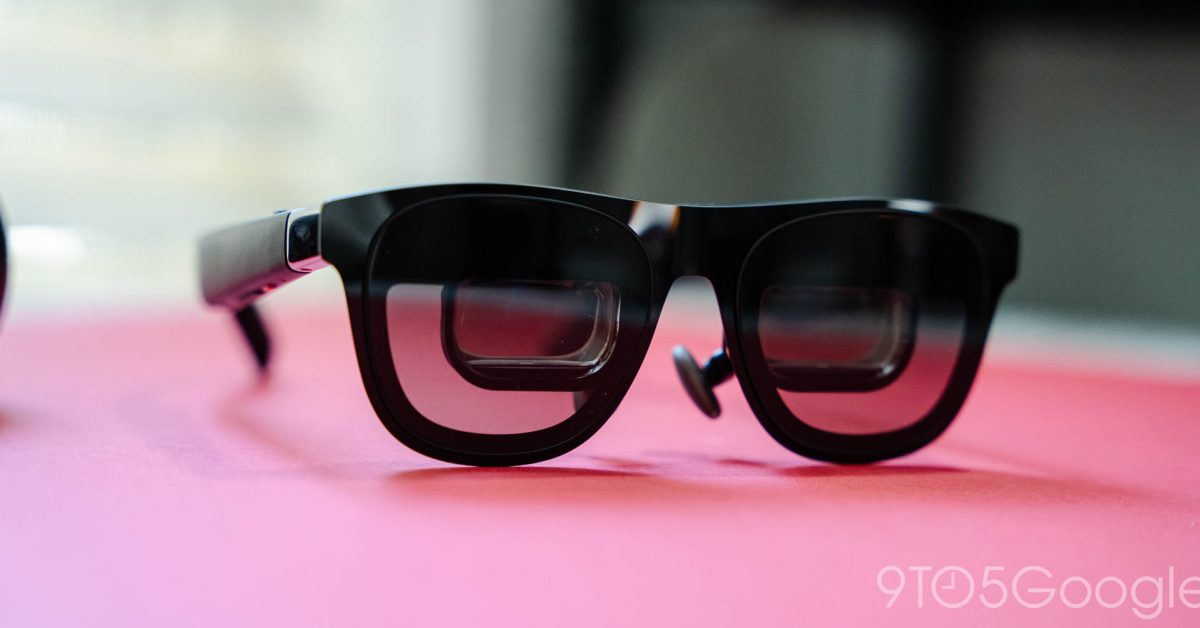
- XREAL's One Pro glasses do one thing: they take a plugged-in device's output and put it on a virtual display the reviewer describes as 157 inches and customizable.
- 9to5Google tested that setup against three hosts, a Galaxy Z Fold 7, a MacBook and a Redmagic Astra 2 tablet, rather than as a standalone computer.
- Three models are on sale now at $299 for the A01+, $450 for the 1S and $600 for the One Pro, spanning roughly the same core function.
Why it matters
- decision The purchase that seeds Android XR's install base is being made at the cheap end by buyers who already declined the flagship, which sets the hardware floor any platform software has to run acceptably on.
- constraint Because the glasses cannot do anything without a host device, nobody can evaluate them in isolation; a pilot needs an approved host list before it needs a headcount.
- exposure XREAL's perceived reliability is set by video apps it does not control, so a broken playback path on one tablet reads to the user as broken glasses.
- capability Keeping plug-in support in Aura means Android XR can ship without asking buyers to give up the only mode that already justified the money.
The most useful figure in the 9to5Google hands-on is the point where the reviewer stopped being willing to pay, not the screen size. He says he would not hand over $600 for the One Pro just to get a big screen he can throw in a bag, that he would pay for the A01+, and that the 1S is worth considering because it did the same job about as well when he tried it at CES [6]. The top of the lineup costs almost exactly twice the entry model, a gap of $301 [15]. The middle sits $151 above the entry price [16]. None of the things he describes doing needed the expensive pair.
The dependency is the whole product. The One Pro builds on whatever you feed into it, its on-board controls and software are limited, and without a secondary device it does nothing; XREAL sells gesture add-ons and an Android phone that puts a UI on the glasses to fill that hole [7]. So the failures land where the host lives. On the Redmagic tablet, Fandango at Home and Google TV misbehaved and 3D conversion never worked at all, while Google TV was fine on a Galaxy Z Fold 7 over DeX and 3D conversion held up there [8]. Anyone piloting these owns a pairing matrix, not a device.
This reviewer did not build spatial workspaces or arrange floating panels. He mirrored a MacBook on a plane so the person in front could recline without ruining the screen, and he watched movies on a floating display that beat the seatback option and stayed comfortable for a few hours [11][10]. Time to value was a minute of fiddling with settings before the picture looked good [12]. The one thing that broke in that setting was tracking: 3DoF is excellent on the ground and drifts in flight, worse with turbulence [9].
That is why the tethered SKUs matter more to Android XR than a headset would. The reviewer calls Android XR the missing puzzle piece and notes XREAL is vocal about a future built around it [14], but Aura is set to keep supporting a plugged-in device when it arrives later this year [18][17]. The mode that already earns its keep survives the platform launch, so the platform does not have to carry the purchase on its own.
Two axes are worth drawing before you commit to any of this. First: does the value survive if the platform never ships? For a pair of glasses that mirrors a 157-inch display off a phone or a laptop [1][2], the answer is yes, because that is a display problem rather than an ecosystem problem. Second: does adoption require a new primary device, or does it ride the one already in the user's pocket? The cell that fills first is cheap hardware with standalone value on borrowed compute, and that is the cell XREAL is selling into at $299 [3].
That framing does not tell you retention. A first flight with a 157-inch screen reads well in any review. The number worth collecting from your own pilot is how many people take the glasses out of the bag on the second flight, and how many quietly went back to the seatback screen.
What to watch
- Aura's price when it launches later this year, and whether it lands nearer the $299 A01+ or the $600 One Pro.
- Whether the Google TV and Fandango at Home failures are host software problems that follow the glasses into Android XR.
- Whether XREAL keeps selling the plain tethered models once Aura is on the market.
Clarity's read
What the record supports and how the coverage leans. The claims behind it follow.
Reality
- Evidence42
- Adoption18
- Hype gap+22
- Incentives40
- Confidence46
Claim ledger
Ranked by verification strength, evidence, and original report placement.
- [1]
XREAL One Pro projects the content of a plugged-in device onto a virtual display described as 157 inches and customizable.
- [2]
The 9to5Google reviewer used XREAL One Pro plugged into a Galaxy Z Fold 7, a MacBook, and a Redmagic Astra 2 tablet.
- [6]
The 9to5Google reviewer wrote that he would not pay $600 for XREAL One Pro just to get a bigger screen he can put in a bag, that he would definitely pay for the A01+, and that the 1S at $450 is also worth considering because it worked about as well as One Pro for those purposes when he tried it at CES.
- [7]
XREAL One Pro builds on whatever is fed into it: on-board controls and software are limited and it cannot do anything without a secondary device, though there are gesture control add-ons and XREAL sells an Android phone that adds a UI to the glasses.
- [8]
Plugged into the Redmagic tablet, the reviewer hit problems with video apps including Fandango at Home and Google TV, and the 3D conversion mode never worked; Google TV worked fine on the Galaxy Z Fold 7 over DeX and 3D conversion was solid there.
- [9]
The reviewer found XREAL's 3DoF tracking fantastic on the ground but prone to drifting during a flight, especially with turbulence.
- [10]
On a plane, the giant floating screen that follows head movement beat the seatback screen and was comfortable to wear for a few hours.
- [11]
Mirroring a MacBook gave the reviewer a full-size work canvas without worrying about the person in front reclining and ruining the experience.
- [12]
The reviewer said it takes a minute to dial in the settings, after which movies look great.
- [13]
One Pro sticks out from the face too far to be subtle, with a cable running down, but is compact in a bag; the reviewer said he would never wear a full headset on a flight because it is too bulky.
- [14]
The reviewer calls Android XR the missing puzzle piece for XREAL's glasses and notes the company is vocal about a future involving a lot more Android XR.
- [15]
XREAL One Pro costs $301 more than the A01+, which is almost exactly twice the A01+ price.
- [16]
XREAL 1S costs $151 more than the A01+.
- [17]
XREAL Aura is set to launch later this year, while One Pro, 1S and A01+ are available now.
- [18]
XREAL Aura, the company's Android XR glasses, is set to support plugging in a device, so the tethered mode does not go away.
Sources
1 independent publisher whose own reporting we read for this story.
- 9to5google.comXREAL has set the perfect stage for Android XR
1 article · August 28, 2026
Topics and entities
Follow any of these and your For You feed starts watching them — no settings page required.
Topics
- Smart Glasses HardwareFollow
- Consumer Hardware PricingFollow
- Tethered Display CompatibilityFollow
- Android XRFollow
Entities
- XrealFollow
- Xreal One ProFollow
- XREAL A01+Follow
- XREAL 1SFollow
- XREAL AuraFollow
- Android XRFollow
- Galaxy Z Fold 7Follow
- Redmagic Astra 2Follow
- 9to5GoogleFollow