Product3 publishers3 min readPublished Updated
Meta's VR Glasses weigh 100g because the computer sits in your pocket
Meta priced its glasses-shaped VR headset at $1,299 and moved the processor into a puck you carry in your pocket. Shipping is promised for what the company calls Spring 2027. That means March 2027 at the earliest.
The Product Desk · Product desk
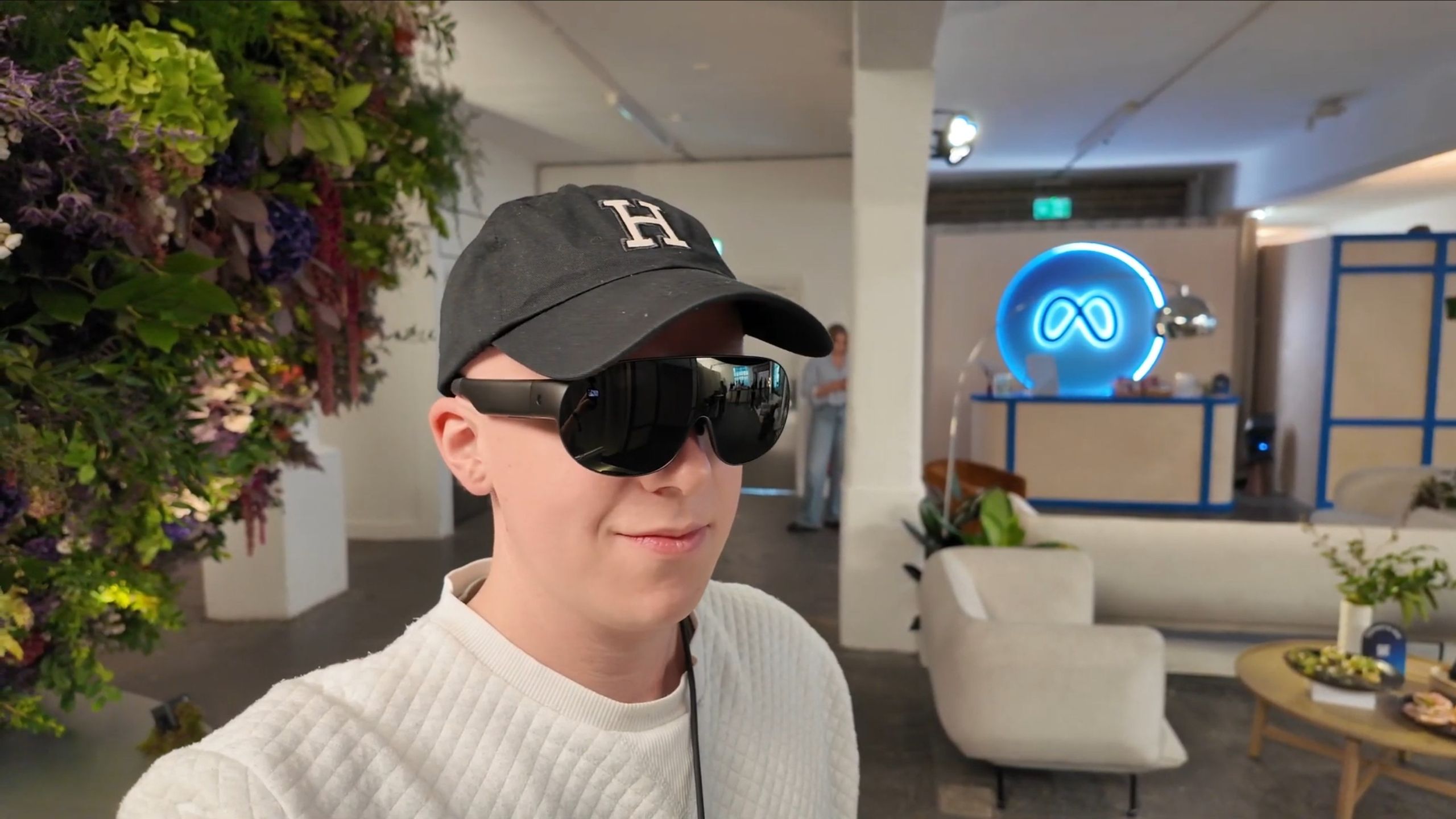
What happened
- Meta unveiled the VR Glasses at its Connect developer conference on Wednesday and priced them at $1,299, with pricing for other regions still to be confirmed.
- The device is not due until what Meta calls Spring 2027, a window TechRadar takes to mean March, April or May of that year.
- An optical cable runs from the visor to a pocket puck that holds the battery and all of the headset's compute, where the Vision Pro and Galaxy XR pucks hold only power.
- No controllers come in the box: the device is built for eye and hand control, works with existing Quest controllers, and new controllers will be sold separately.
- The puck ships with 128GB of storage and a MicroSD slot that takes higher-speed cards, the first expandable storage Meta has put on a VR headset.
Compiled by The Product DeskSomething wrong?How this is made
Why it matters
- cost The controller-free box moves cost onto whoever owns a pre-hand-tracking VR library: each of those titles needs a controller purchase or a spare Quest controller for every user who runs it.
- contradiction CNET and TechRadar rate the same passthrough differently, so a team whose use case depends on seeing the real room cannot size that risk from the demo coverage.
- constraint A shared unit passed between users is now two objects and a tether, so asset tracking and hygiene routines built around a single headset need reworking.
- precedent Putting the processor in the pocket gives buyers a number to hold every other XR vendor to, and the vendors still mounting silicon on the head get asked about it first.
TechRadar's reviewer let the headset scan the table in front of him, then typed on a keyboard and trackpad projected onto it, as swiftly and accurately, he wrote, as on a physical accessory [17]. The same session ran up to three virtual monitors off one connected PC [16]. Both are things you do sitting down, and TechRadar said so: "where this headset truly shines is static experiences: productivity and entertainment" [15].
TechRadar calls the worn part one-fifth the weight of a Quest 3 or a Samsung Galaxy XR [5]. That puts those two near 500 grams and leaves about 400 grams to account for [6]. It is in your pocket, in a puck on an optical cable [7]. The pucks for the Apple Vision Pro and the Galaxy XR carry power; Meta's carries the processor as well [8]. Neither hands-on reported the puck's weight.
Backward compatibility costs money here. Apps built for the Quest 3 run, but any of them without hand tracking needs controllers, sold as a paid add-on or borrowed off a Quest you already own [14]. So $1,299 buys a working seat only where the library is hand-tracked, and everything older adds a controller pair per head [2][14]. Meta has promised games built for eye and hand control, including a saber-less Beat Saber called Beat Saber Flux, due next year [23]. It also closed games studios, software initiatives and fitness apps, Supernatural among them, earlier this year [22]. Disney Plus and its library of 3D films are coming to the headset; TechRadar takes that as the end of the app's exclusivity on Apple hardware [24].
The front cover is opaque, and looks see-through to the wearer only because of the passthrough video [10]. The two hands-ons rate that video differently. CNET called the color passthrough a big notch up from the Quest 3 and close to where Samsung and Apple are with their more expensive headsets [12]. TechRadar found it still a little grainy with a slight delay, and at least as good as the competition [11]. TechRadar's write-up ended with the line "this is a headset I don't see myself needing to take off, even after multiple days of working with it on" [19]. The demo ran about 30 minutes [18].
Two variables sort this for anyone budgeting a 2027 buy: whether the task needs a controller, and whether the user moves while doing it. Seated with hand-tracked apps is the cell where the advertised price is the whole price. Seated with older apps adds controllers to every seat. Moving with hand-tracked apps puts the puck and the cable in the path of the work, and the only evidence so far is TechRadar's reviewer reporting that the wire never got in the way while he was up and moving [30]. Moving with older apps is a Quest job, and those apps already run on the Quest [14].
What to watch
- A published price for the separately sold controllers. That price sets the real per-seat cost for any controller-era app.
- Whether the Spring 2027 window firms up into a date or slips past May.
- Whether developers add hand tracking to existing Quest titles before launch. Every title that gets it shrinks the controller line item.