Agents push one CRM account from 5GB to 40GB in thirty days
Storage pricing built for humans clicking a user interface is now metering machine writes at volumes nobody budgeted for. The platforms have started policing which vendor's agent gets to hold the record.
The Investor · Invest desk
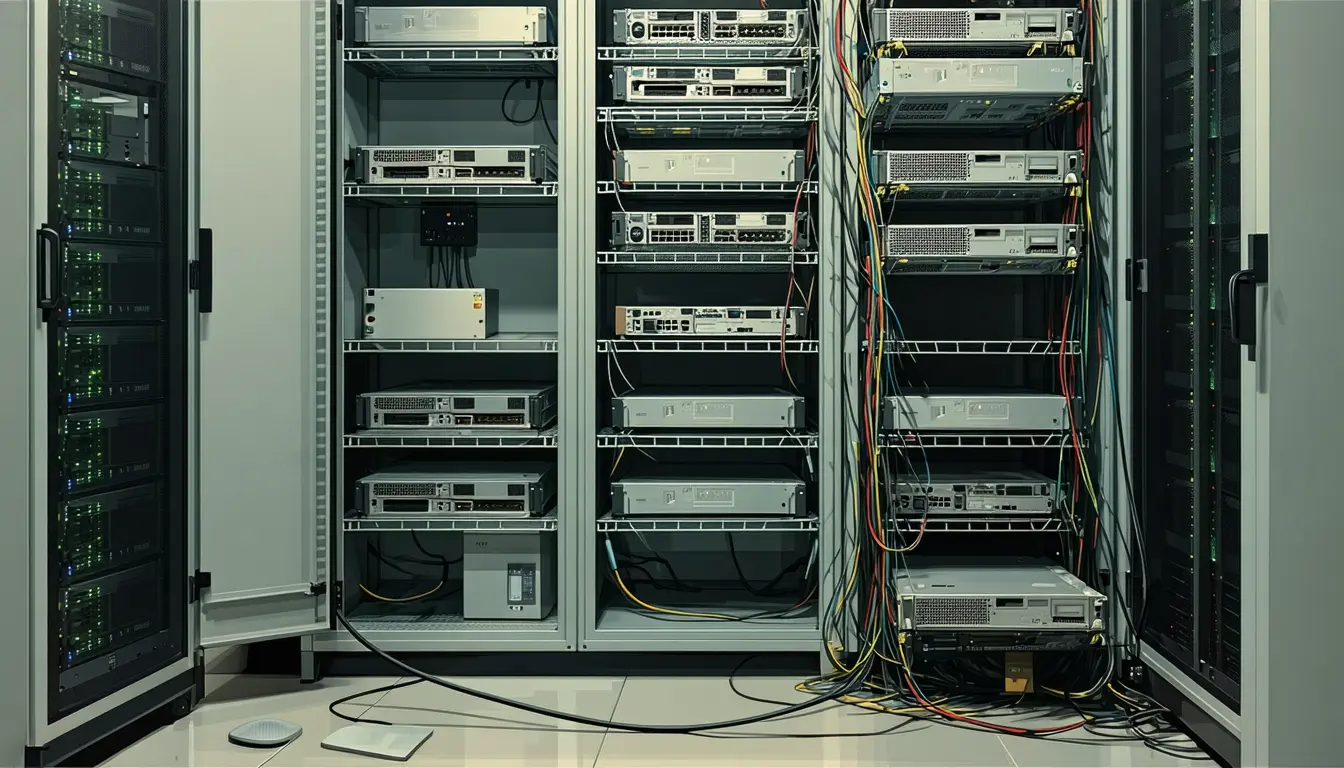
What happened
- Salesforce told SaaStr it was running storage overages weeks after a marketing data migration, at a point when neither of the two operators had logged into the system for a week.
- The instance went from about 5GB to about 40GB in roughly 30 days, roughly 21 million records, written by the firm's production agents rather than by anyone at a keyboard.
- ServiceTitan gave Podium 30 days' notice on an integration that had run nine years and served about 1,000 joint customers, while leaving smaller competitors on the platform.
- ServiceTitan's stated position was that partners may compete with it and may access records, but may not use the partnership to displace it.
- Separately, the author reports that many vendors are now discussing higher charges for API access, on the reasoning that customers are buying fewer seats and the revenue has to come from somewhere.
Why it matters
- cost The customer pays for its own agent exhaust: about 700,000 records a day means the storage line now tracks agent throughput rather than headcount, and it moves without anyone deciding to spend.
- constraint Ten times the volume at a 20% higher per-call price is twelve times the bill, so API repricing lands hardest on exactly the customers whose usage is compounding fastest.
- exposure The integration work that makes a system of record more useful also builds the exit, since an agent layer that speaks to six systems can be pointed at a cheaper store without retraining anyone.
- precedent If an agent on someone else's website keeps the customer, the CRM under that conversation becomes optional, which is why the author expects the next cutoffs in CX and support.
Forty gigabytes spread across roughly 21 million records is about 1.9KB a row [12], which is a fair description of what agents actually deposit into a CRM: task records, email sends, opens, clicks, call metadata, enrichment [10]. It's exhaust, not a decision. On Neon or Supabase or Databricks, in the author's framing, 40GB is nothing [23], and when SaaStr asked Claude what 21 million records would cost on Postgres the estimate came back around a thousand times cheaper, which the author is careful to label an agent's estimate rather than a quote [19].
That gap measures price, not value, and the firm's own reasoning explains why it hasn't moved on it despite that: ten years of hard data that does not drift and does not hallucinate, with Artisan and Qualified integrating natively, and an explicit willingness to pay a few nickels more for that [9]. The engineering hours went somewhere else entirely, into an agent called 10K that the author now describes as headless Salesforce, with classic CRM, Qualified, Momentum, Agentforce, Marketing Cloud Next and a custom quote-to-cash app reaching PandaDoc, Bill.com and QuickBooks all running through it [7]. Its builder had never logged into Salesforce in a decade before building it [8]. The real commercial question here is where the next 100GB lands, since moving ten years of history was never really on the table [21].
The platform side of the same trade has sharper arithmetic. Thirty days of notice across about 1,000 shared customers is roughly 33 joint integrations a day to re-plumb [24], and 30 days is about 0.9% of the nine-year relationship being ended [25].
The counter-thesis, which I think is the stronger one on a two-year view, runs like this. First, a thousand-fold gap on a storage line that is still small against a decade of accumulated switching cost is a rounding error dressed up as an argument, and a vendor that reprices machine writes into a cold tier makes it disappear. Second, ServiceTitan cut off a partner whose agents had crossed nine figures of revenue and begun holding the job record themselves [16], while smaller competitors stayed on the platform [18]. That reads less like a doctrine about categories than a doctrine about scale: one that only binds partners large enough to be worth enforcing against.
What would prove the storage thesis wrong is simple enough to check. If the next 100GB lands in Salesforce anyway, because native integrations with the agent vendors keep winning [9], then this was three humans and 20-plus production agents [1] discovering that a meter exists, and nothing more.
What to watch
- Whether Salesforce introduces separate pricing or a cold tier for high-volume API writes, which would close most of the Postgres gap without any migration.
- Whether other ServiceTitan partners receive similar notices, or Podium finds a supported route back for the roughly 1,000 joint customers.
- Whether SaaStr's next 100GB is actually written to Postgres rather than to the system of record it already pays for.
Clarity's read
What the record supports and how the coverage leans. The claims behind it follow.
Reality
- Evidence38
- Adoption42
- Hype gap+20
- Incentives70
- Confidence45
Claim ledger
Ranked by verification strength, evidence, and original report placement.
- [1]
The Agents episode #013 describes a setup of three humans, 20-plus agents in production, and an 8-figure B2B plus AI business.
- [2]
SaaStr's agents have written about 40GB into Salesforce, 99% of it through the API.
- [3]
The Salesforce instance went from about 5GB to about 40GB in roughly 30 days, roughly 21 million records.
- [4]
Salesforce told the firm it was already running overages weeks after it moved marketing data over, and neither operator had logged into Salesforce in a week when it was flagged.
- [5]
The author argues Salesforce has real costs on a database architected for an era when the customer was a human clicking a UI a few dozen times a day, and that nobody priced for agents writing constantly.
- [6]
The author says his data is up 10x heading to 100x, so raising API pricing 20% on top of that is not a 20% increase but 200% or 2,000% to reach his own data.
- [7]
10K, the firm's AI VP of Revenue, is described as headless Salesforce, with six things running through it: classic Salesforce CRM, Qualified, Momentum for call recordings, Agentforce, Marketing Cloud Next, and a custom quote-to-cash app reaching PandaDoc, Bill.com and QuickBooks.
- [8]
Amelia had never logged into Salesforce in a decade before building 10K.
- [9]
The author's stated reason for running the agent stack on Salesforce rather than Postgres is ten years of hard data that does not drift and does not hallucinate, plus native Artisan and Qualified integrations, and a willingness to pay a few nickels more.
- [10]
The agents write constantly as they go: task records, email sends, opens, clicks, call metadata, enrichment.
- [11]
The author says the headless architecture made Salesforce about 10x more useful and probably also easier to leave, and that vendors should sit with the second half of that.
- [12]
About 40GB across roughly 21 million records averages about 1.9KB per record.
- [13]
Roughly 21 million records in about 30 days is about 700,000 records a day, or about 8 a second.
- [14]
Ten times the data volume at a 20% higher per-call price is twelve times the prior bill.
- [15]
ServiceTitan cut off Podium after nine years and about 1,000 shared customers.
- [16]
Podium went agentic and crossed nine figures of agent revenue, with the agent talking to the customer, scheduling the appointment, tracking the job and starting to hold the record.
- [17]
ServiceTitan's public position was that you can compete with us, you can access records, but you cannot use the partnership to displace us.
- [18]
Podium got 30 days' notice, described as short for a broken integration serving a thousand joint customers, and smaller competitors are still on the ServiceTitan platform.
- [19]
Asked what 21 million records would cost on Postgres, Claude estimated around a thousand times cheaper; the author flags this as an agent's estimate rather than a quote, while saying the direction is not in dispute.
- [20]
A lot of vendors are talking about charging more for API access on the logic that customers buy fewer seats and the money has to come from somewhere.
- [21]
The author says what an API price rise buys the vendor is his decision to put the next 100GB somewhere else, and that customers want cost tied to outcomes and resolutions rather than a meter on reaching their own records.
- [22]
The author expects this fight next in CX and support, on the logic that if a customer talks to your agent on someone's website and that agent keeps them, the CRM underneath that interaction may not be needed at all.
- [23]
The author says the same 40GB is a lot in Salesforce and a rounding error in Postgres, and that on Neon or Supabase or Databricks 40GB is nothing.
- [24]
About 1,000 shared customers spread over 30 days' notice is roughly 33 joint integrations a day to re-plumb.
- [25]
Thirty days of notice is about 0.9% of the nine-year partnership it ends.
Get this ledger inside ChatGPT. Ask about any of our stories and the answer brings its figure, each claim’s verdict and the sources. Free, no account.
Sources
1 independent publisher whose own reporting we read for this story.
Topics and entities
Follow any of these and your For You feed starts watching them — no settings page required.