Product1 publisher2 min readPublished
Salesforce's Headless 360 opens its software to agents with no user interface
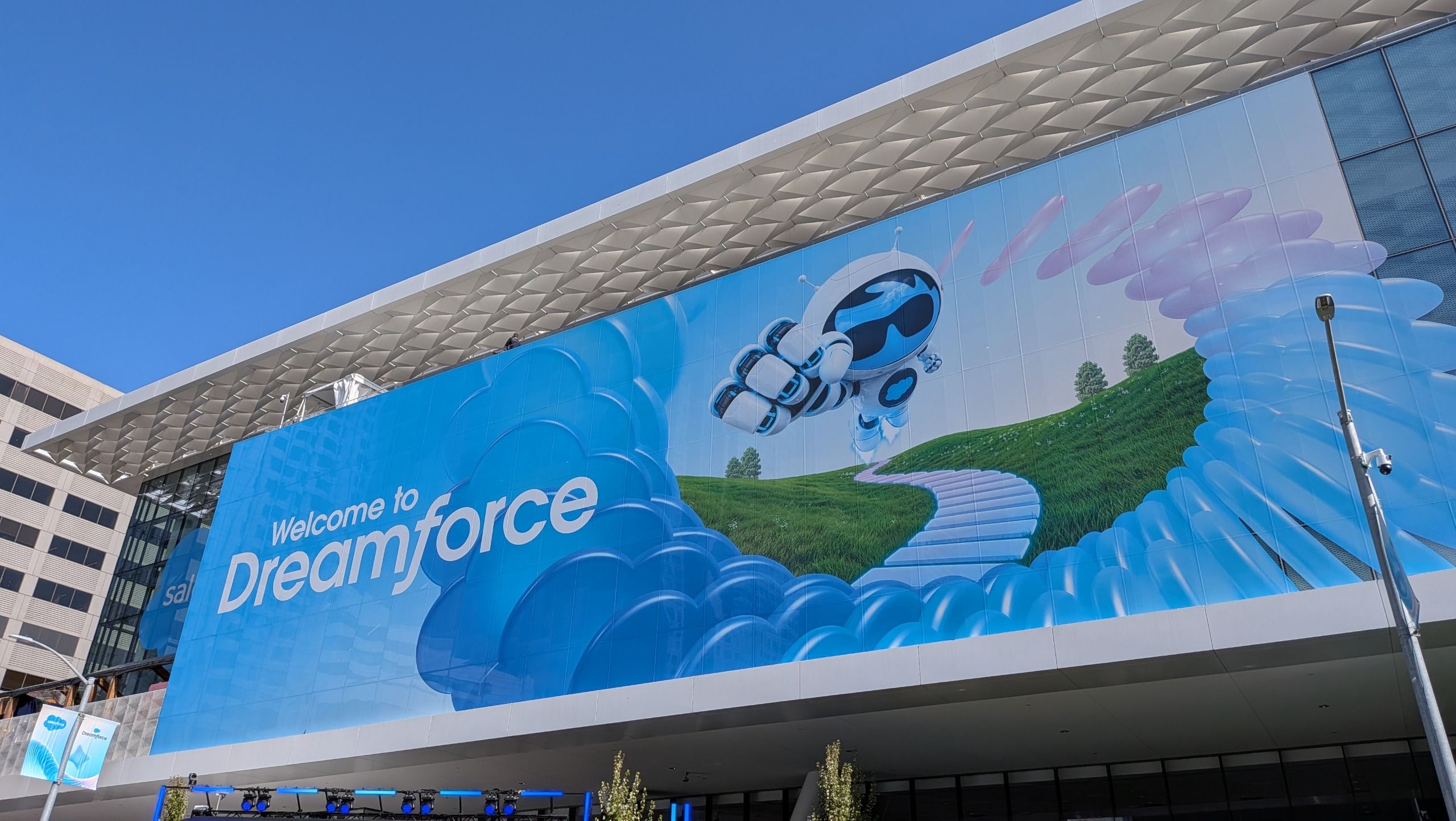
At Dreamforce 2026 Salesforce showed a way into its software with no user interface at all. The analysts who covered the event say the pricing is unsettled and the agent stack underneath is still early.
The Product Desk · Product desk
What happened
- Salesforce used Dreamforce 2026 to unveil Headless 360, which lets users reach its software without its user interface.
- Chief executive Marc Benioff bantered on stage with Nvidia chief executive Jensen Huang and led the announcement of AIforce, a new artificial intelligence interface layer.
- Salesforce described an Enterprise AI Harness that combines data, business knowledge, workflows and control into a common, composable architecture for agents.
- Salesforce is still working out how to price all of this, according to theCUBE Research chief analyst Dave Vellante.
- theCUBE Research executive analyst John Furrier said the headless move shows agents are forcing a complete reconstruction of the enterprise stack, from applications down through security and capital allocation.
Compiled by The Product DeskSomething wrong?How this is made
Why it matters
- cost The customers who have modelled headless access mostly expect to pay Salesforce more, and Vellante's token demand adds an infrastructure bill on top, so any saving has to be found somewhere other than the licence line.
- decision Anyone evaluating a headless pilot is being asked to commit to an architecture while the vendor is still deciding what to charge for it.
- exposure If Slack or Claude draws the interface, the vendor that owns the surface staff work in every day is not the one that owns the data underneath it.
- contradiction Furrier's complete reconstruction of the enterprise stack and Vellante's early-days Agentforce are two different timelines, and a buyer has to pick which one to plan against.
The seat-reduction theory has a spreadsheet problem. SiliconANGLE's recap of theCUBE Pod says investors are still spooked by a possible "SaaSpocalypse", and that Salesforce has committed fully to agents partly to head that off [15]. The figure quoted on the podcast runs the other way. Research from Qualitate, cited by theCUBE Research chief analyst Dave Vellante, has 75% of respondents who had modeled or experienced the financial impact of headless access expecting their Salesforce spending to increase, not decline [7]. That leaves a quarter of the people who had already done the modelling not expecting a rise [8]. The recap does not give a sample size, and the base is restricted to customers who had modelled or experienced the impact, so it describes the ones furthest along.
Vellante's explanation for the extra demand is tokens. He said Claude is creating the interface, Slack is creating the interface, and virtually any harness will be able to create the interface. That, he said, is going to drive token demand [4]. He said that demand comes from "core infrastructure in the data center," and that "a lot of that is going to be on-prem" [5]. Part of the cost of running Salesforce without screens therefore arrives as infrastructure spend, and the person negotiating the CRM renewal is not usually the person who sees that line.
If any client surface can create the interface, the screen a user works in may be sold by a company other than Salesforce. Furrier said Salesforce's "advantage might be the remaining system of data, the workflow, the identity data and the business context underneath it all," and that "Slack becomes a potential agentic front door" [10]. Vellante described the headless layer in the same terms. He said headless becomes that system of intelligence, the place where the data is harmonized and the process knowledge gets injected [3].
For the person running the rollout, the split worth drawing is between the work a screen carried and the work a screen enforced. A step that exists because a human needed a field to type in moves to a headless call without argument. A step that exists because the form would not save without an approval code has to be restated as policy in whatever now calls the API, and the people who own that approval have to sign off on the new version. Vellante said the offering "is not mature" and that "Agentforce is still in its early days," while adding that there is "clear business value" [11].
What to watch
- Salesforce publishing pricing and packaging for headless access, which Vellante said is still being worked out.
- Whether Qualitate releases the sample size and question wording behind the 75% spending figure.
- Whether Slack, Claude or another harness becomes the default surface customers actually log into.