InvestIndependently confirmed2 publishers2 min readPublished
Washington presses Seoul on intelligence standards after six months of curbs on North Korea data
Washington told Seoul to uphold decades-long alliance standards on intelligence after Seoul's spy agency was kept out of a June trilateral cyber meeting. So far the cost sits in intelligence, where Seoul's top general says US curbs on North Korean nuclear data have run past six months, the Seoul Economic Daily reported.
The Investor · Invest desk
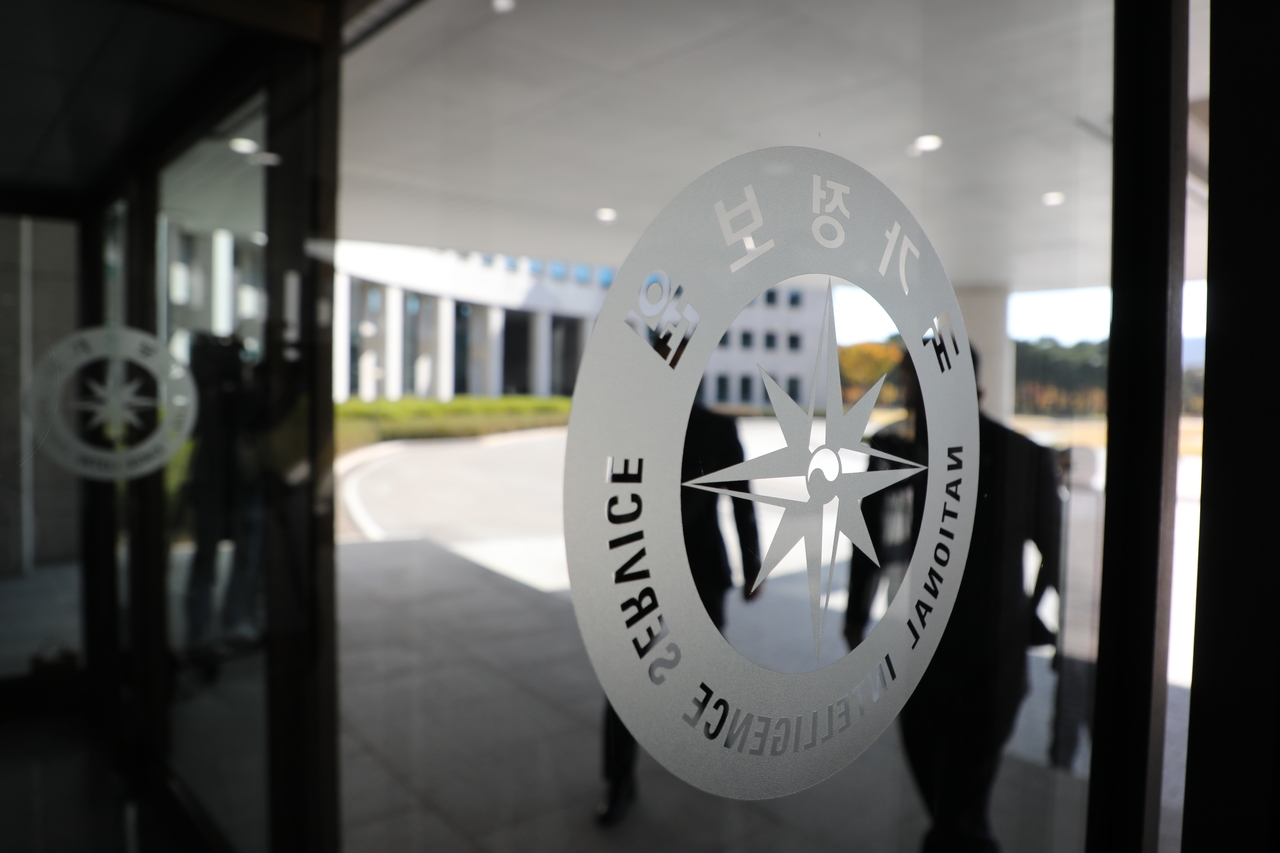
Chung disclosed a Kusong site in March; the US appears to have curbed some intel sharing. A US official expects the ROK to uphold intel standards. NIS was kept out of a June cyber meeting. JCS chair says nuclear intel curbs have run over six months. NIS calls cooperation active.
- exposure Unification Minister Chung Disclosed Kusong enrichment site in March; Washington appears to have curbed some intel access in protest, claim 7
- decision US administration official Said in writing it expects the ROK to uphold alliance standards on intelligence and counterintelligence, claim 1
- exposure National Intelligence Service Excluded from June trilateral meeting on North Korean cyber threats, reportedly at Washington's request, claim 4
- constraint Joint Chiefs of Staff Chairman says US restrictions on sharing North Korea nuclear intelligence have continued for more than six months, claim 10
- contradiction NIS, in its own account Says intelligence cooperation between the two countries is active, claim 6
| Who | How | Kind | Claim |
|---|---|---|---|
| Unification Minister Chung | Disclosed Kusong enrichment site in March; Washington appears to have curbed some intel access in protest | exposure | 7 |
| US administration official | Said in writing it expects the ROK to uphold alliance standards on intelligence and counterintelligence | decision | 1 |
| National Intelligence Service | Excluded from June trilateral meeting on North Korean cyber threats, reportedly at Washington's request | exposure | 4 |
| Joint Chiefs of Staff | Chairman says US restrictions on sharing North Korea nuclear intelligence have continued for more than six months | constraint | 10 |
| NIS, in its own account | Says intelligence cooperation between the two countries is active | contradiction | 6 |
What happened
- A senior US administration official gave the statement in writing to Yonhap News Agency, answering its question about the state of intelligence cooperation between the two countries.
- The strain dates to March, when Unification Minister Chung Dong-young publicly disclosed a North Korean uranium enrichment site at Kusong; Washington appears to have curbed some intelligence sharing in response.
- Seoul's government denies any rift and calls it inappropriate to tie one lawmaker's visa case to the overall relationship with Washington.
- Jung Chung-rae, the ruling Democratic Party's former leader, moved an overseas parliamentary audit trip from the United States to Europe after delays in his US visa.
- US Ambassador Michelle Steel has not scheduled an introductory meeting with Chung more than two months after taking up her post, the Seoul Economic Daily reported.
Why it matters
- contradiction Seoul's spy agency calls cooperation active while its military chief describes US curbs still in force, so the government's denial is a weak gauge for anyone sizing Korea exposure.
- cost Seoul is paying in intelligence access for now, with less US data on North Korea's nuclear program and no seat at the trilateral talks on North Korean hacking.
- precedent Washington now has a written complaint on the record, a stated standard it can invoke if Seoul brings its US investment projects to a November summit.
Neither report cites a move in the won, Korean stocks or sovereign credit spreads. Any risk premium built on this episode has to start from the diplomatic record instead, and that record is a set of dates. The Kusong disclosure came in March [7] and the cyber-meeting exclusion came in June [4], about three months apart [17]. By the time Gen. Jin Young-seung, chairman of the Joint Chiefs of Staff, spoke to a parliamentary audit this month, US limits on sharing intelligence about North Korea's nuclear program had run for more than six months [10].
Seoul's own agencies disagree about where that leaves things. The NIS describes cooperation with Washington as active [6] while conceding "there were some misunderstandings several months ago" [5]. The military's top officer describes restrictions still in force [10]. On these timelines, the curbs also began before Michelle Steel arrived as US ambassador [18].
Washington kept its words narrow. "We expect the ROK to uphold the standards of our decadeslong alliance, in particular concerning matters of intelligence and counterintelligence," a senior US administration official told Yonhap in a written statement [1]. The quoted sentence covers intelligence and counterintelligence and nothing else. The Seoul Economic Daily, in an editorial, called the statement an unusual move and a public display of distrust in how Seoul handles classified information [3].
From here the friction can stay inside intelligence channels, with Washington rationing North Korea data while commercial business runs on its own track. In that case Seoul's security planners pay and Korean cash flows do not. The dispute can also reach the summit Seoul is seeking around a high-level US visit and the APEC leaders' meeting in November [13]. Or Seoul can change people. The Seoul Economic Daily's editorial told the government to consider reshuffling its security team [16].
In our view the evidence supports pricing a narrow risk tied to Seoul's access to intelligence. On what has been published, we think the first branch is the likeliest. The counter-case comes from the same editorial. It argues that if the alliance underpinning Korea's economic security is shaken, stable growth cannot be guaranteed [15]. It also says the government should drop its expectation that progress on US investment projects will dissolve the distrust [14]. That second point describes where Seoul is putting its effort: investment and summitry [14][13]. Meanwhile the minister whose March remarks started the dispute is still in post [11]. We would be wrong if Washington ties intelligence standards to the November summit agenda or to investment terms, or if the summit does not take place.
What to watch
- Whether Seoul and Washington schedule a summit around the November APEC leaders' meeting, and whether intelligence standards appear on its agenda.
- Whether Washington restores Seoul's access to North Korea nuclear intelligence, or Seoul reshuffles its security team instead.
- Whether Ambassador Michelle Steel meets Unification Minister Chung Dong-young, and whether Jung Chung-rae's US visa is issued.
Clarity's read
What the record supports and how the coverage leans. The claims behind it follow.
Reality
- Evidence55
- Adoption
- Insufficient
- Hype gap+10
- Incentives
- Insufficient
- Confidence55
Claim ledger
Ranked by verification strength, evidence, and original report placement.
- [1]
"We expect the ROK to uphold the standards of our decadeslong alliance, in particular concerning matters of intelligence and counterintelligence," a senior U.S. administration official told Yonhap News Agency in a written statement.
ReportedSupportedSource: Senior U.S. administration official, via Yonhap, carried by Korea JoongAng Daily2 sources— create a free account to open themView cited source - [2]
The statement was provided in response to an inquiry from Yonhap News Agency regarding the state of bilateral intelligence cooperation.
ReportedSupportedSource: Yonhap via Korea JoongAng Daily2 sources— create a free account to open themView cited source - [3]
The Seoul Economic Daily editorial called the Trump administration's formal statement on intelligence cooperation an unusual move that amounted to a public display of dissatisfaction and distrust toward the South Korean government's handling of classified information.
ReportedSupportedSource: Seoul Economic Daily editorial2 sources— create a free account to open themView cited source - [4]
South Korea's National Intelligence Service acknowledged it was excluded from a June trilateral meeting with the United States and Japan on North Korean cyber threats; local media reports indicated the agency was left out at Washington's request.
ReportedSupportedSource: Yonhap via Korea JoongAng Daily; Seoul Economic Daily also reports the exclusion at Washington's request2 sources— create a free account to open themView cited source - [5]
The NIS acknowledged that "there were some misunderstandings several months ago."
ReportedSupportedSource: National Intelligence Service, as reported by Seoul Economic Daily2 sources— create a free account to open themView cited source - [6]
The NIS has explained that intelligence cooperation between the two countries is active.
ReportedSupportedSource: National Intelligence Service, as reported by Seoul Economic Daily2 sources— create a free account to open themView cited source - [7]
Unification Minister Chung Dong-young publicly disclosed a North Korean uranium enrichment facility in Kusong in March; Chung said he only shared what was already public, and Washington appears to have restricted Seoul's access to some North Korea-related intelligence in apparent protest.
ReportedSupportedSource: Yonhap via Korea JoongAng Daily2 sources— create a free account to open themView cited source - [8]
Rep. Jung Chung-rae (rendered Chung Chung-rai by the Seoul Economic Daily), who until recently led the ruling Democratic Party, moved the destination of an overseas parliamentary audit from the United States to Europe because of delays in U.S. visa processing.
ReportedSupportedSource: Seoul Economic Daily; Yonhap also reports the delayed visa2 sources— create a free account to open themView cited source - [9]
Jung said in a Facebook post that his U.S. visa is under review and asked others to refrain from remarks that could harm the South Korea-U.S. alliance.
ReportedSupportedSource: Yonhap via Korea JoongAng Daily2 sources— create a free account to open themView cited source - [10]
Gen. Jin Young-seung, chairman of the Joint Chiefs of Staff, told a parliamentary audit on the 8th that U.S. restrictions on sharing intelligence about North Korea's nuclear program have continued for more than six months since the unification minister's remarks.
- [11]
U.S. Ambassador Michelle Steel has not scheduled an introductory meeting with Unification Minister Chung Dong-young, who oversees North Korea policy, more than two months after taking up the post.
- [12]
The South Korean government denies any rift, insisting trust between Seoul and Washington remains solid, and argues it is inappropriate to link the individual visa case to the overall relationship.
ReportedSupportedSource: South Korean government, as reported by Seoul Economic DailyView cited source - [13]
Seoul is seeking a summit with Washington around a high-level visit to the United States and the Asia-Pacific Economic Cooperation leaders' meeting in November.
- [14]
The editorial says the government should abandon the expectation that accumulated misunderstanding and distrust will dissolve simply through progress on investment projects in the United States.
- [15]
The editorial argues that if the alliance, the foundation of foreign and security policy and of economic security, is shaken, neither national safety nor stable economic growth can be guaranteed.
- [16]
The editorial urges the government to devote every effort to mending the alliance, including considering a reshuffle of the security team.
- [17]
The NIS exclusion from the June trilateral meeting came about three months after Chung Dong-young's March disclosure.
- [18]
The US curbs on North Korea nuclear intelligence began before Michelle Steel took up her post as ambassador.
Sources
2 independent publishers whose own reporting we read for this story.
- en.sedaily.comU.S. Warns Seoul on Alliance Standards as Government Denies Rift
1 article · October 11, 2026
- koreajoongangdaily.comWashington expects Seoul to ‘uphold standards of decadeslong alliance’ as intelligence friction persists
1 article · October 9, 2026
Topics and entities
Follow any of these and your For You feed starts watching them — no settings page required.
Topics
- North Korea Nuclear ProgramFollow
- Intelligence sharingFollow
- US-South Korea AllianceFollow
Entities
- Yonhap News AgencyFollow
- Seoul Economic Daily (en.sedaily.com)Follow
- Jin Young-seungFollow
- National Intelligence ServiceFollow
- Korea JoongAng DailyFollow
- Chung Dong-youngFollow
- Democratic Party of KoreaFollow
- Michelle SteelFollow
- Jung Chung-raeFollow