InvestIndependently confirmed3 publishers2 min readPublished
TrendForce expects 2027 notebook shipments to fall as rising chip costs reach buyers
TrendForce forecasts global notebook shipments falling by a low single-digit percentage in 2027, reaching high single digits if CPU and DRAM prices stay high. CPU, DRAM and SSD are about 68% of a $900 laptop's build cost, leaving makers little room to absorb more.
The Investor · Invest desk
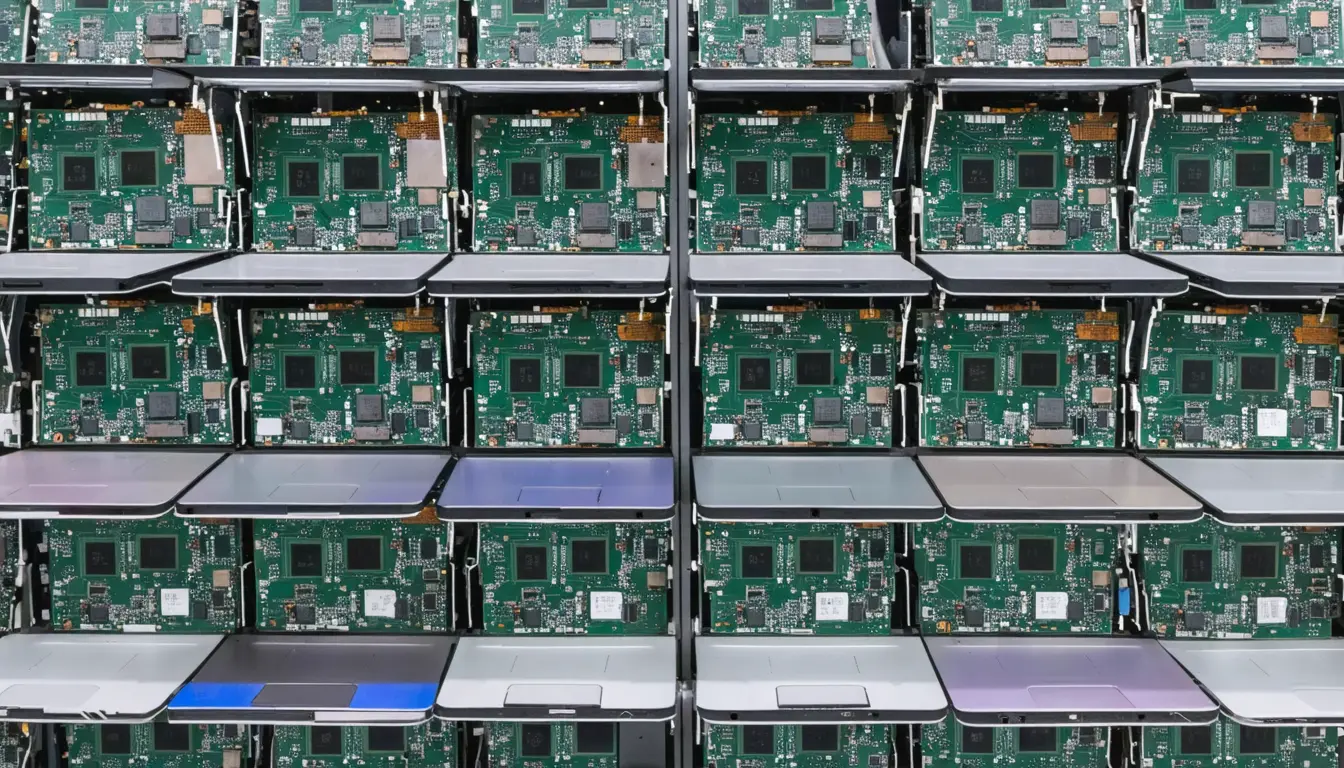
A before-and-after of TrendForce's estimated share of global notebook production outside China, falling from about 24% in 2025 to 21% in 2026.
| Measure | Value | As of | Claim |
|---|---|---|---|
| Produced outside China | 24 % of production | 2025 | 10 |
| Produced outside China | 21 % of production | 2026 | 10 |
What happened
- Notebook shipments held up through 2026 on better CPU supply, early procurement and replacement demand pulled forward from later quarters, which TrendForce says is not a genuine recovery.
- Cheaper component inventory is being used up, so brands now feel rising CPU, DRAM and SSD prices more directly on each unit they build.
- TrendForce estimates notebook production outside China slipped from about 24% in 2025 to 21% in 2026 and could drop below 20% in 2027.
- DRAM supply is expected to stay tight through 2027 as AI servers keep absorbing the advanced-process capacity that PC memory also needs.
Why it matters
- precedent The market's governing question for 2027 becomes whether consumers can absorb higher prices, where in 2026 it was whether enough components could be found.
- exposure Buyers who replaced machines earlier than planned thin the pool of purchasers left to carry 2027 shipments.
- decision If tariffs do not worsen, cost and supply-chain efficiency replace policy risk as the deciding factor in where laptops get built, drawing some capacity back to China.
After CPU, DRAM and SSD, about 32% of a $900 laptop's build cost is left, split across the panel, the battery, the chassis, the board and assembly [18]. A maker that wants to hold the total steady can work on that third and nothing else. A third of the bill will not swallow a rise spread across the other two-thirds [3]. The choices come down to three: lift the retail price, absorb the cost, or thin the specification, say by cutting memory [4]. In 2027, TrendForce says, brands are unlikely to keep price, specification and profitability all at once [9].
Raising the price has a cost of its own. Higher retail prices push out replacement cycles, so buyers wait longer before the next upgrade [8].
How far shipments fall turns on how much of the increase reaches the shelf. If brands adjust product mix and specifications and absorb part of the cost, the drop stays low single digit [12]. If they pass the full increase through, it widens to high single digits [13]. Any relief will be uneven: NAND flash constraints may ease in the second half of 2027 as new capacity comes online, which helps the SSD line, while DRAM stays tight [17]. The bull case is an AI-PC upgrade wave that hands makers enough pricing power to pass costs through without losing volume. We think that is the weaker bet, because two-thirds of the build cost sits in the three parts whose prices are rising, and the third a maker can trim is too small to keep that out of the build cost [18][3].
What to watch
- Fourth-quarter 2026 and early-2027 DRAM and CPU contract prices, which decide whether the decline lands at the low or high end.
- Whether the share of notebook production outside China actually drops below 20% in 2027.
- Whether an AI-PC upgrade cycle materialises to give brands the pricing power the bull case assumes.
Clarity's read
What the record supports and how the coverage leans. The claims behind it follow.
Reality
- Evidence38
- Adoption
- Insufficient
- Hype gap+12
- Incentives
- Insufficient
- Confidence50
Perspective Coverage
3 publishers- Builder
- Builder 13%
- Operator
- Operator 44%
- Investor
- Investor 43%
Claim ledger
Ranked by verification strength, evidence, and original report placement.
- [1]
Global notebook shipments are currently projected to decline by a low-single-digit percentage in 2027.
- [2]
If DRAM and CPU prices remain elevated, brands may be forced to pass more cost on to consumers, potentially pushing the full-year 2027 shipment decline into the high-single-digit range.
- [3]
For a mainstream notebook with a manufacturer's suggested retail price of US$900, CPU, DRAM and SSD components accounted for approximately 68% of the bill of materials cost in 3Q26.
- [4]
Brands face difficult trade-offs: raising retail prices risks weakening demand, absorbing higher costs squeezes gross margins, and reducing specifications such as memory capacity to control BOM costs could undermine product competitiveness.
- [5]
In 2026, improved CPU availability, early procurement by brands and the pull-forward of some replacement demand helped support notebook shipments, but TrendForce says this does not indicate a meaningful recovery in end-market demand.
- [6]
Some consumers have already replaced their devices earlier than planned.
- [7]
As lower-cost inventories are gradually depleted, brands will face more direct pressure from rising CPU, DRAM and SSD prices.
- [8]
Higher retail prices could further extend replacement cycles.
- [9]
In 2027, brands are unlikely to be able to maintain pricing, specifications and profitability simultaneously.
- [10]
TrendForce estimates the share of global notebook production outside China will decline from approximately 24% in 2025 to 21% in 2026, potentially falling below 20% in 2027.
- [11]
TrendForce says the primary risk facing the notebook market in 2027 is expected to shift from supply constraints to the impact of rising costs on demand, with the focus moving from whether sufficient components are available to whether consumers can absorb higher prices.
- [12]
If brands mitigate the retail-price impact by adjusting product mixes and specifications while absorbing some additional costs, the shipment decline could remain in the low-single-digit range.
- [13]
If component costs continue to rise and are fully passed on to consumers, demand could weaken further, pushing the full-year decline into the high-single-digit range.
- [14]
If tariff pressures do not intensify further, the factors guiding notebook manufacturing location are likely to shift from minimizing policy risks toward production costs, supply-chain completeness and operational efficiency.
- [15]
Elevated component prices could encourage brands to relocate some capacity previously established outside China back to the country.
- [16]
DRAM supply is likely to stay tight in 2027 as AI server applications continue to absorb advanced-process capacity, while PC DRAM faces the risk of limited supply growth.
- [17]
NAND Flash supply constraints might ease in the second half of 2027 with new capacity coming online.
- [18]
After CPU, DRAM and SSD, about 32% of the $900 notebook's bill of materials is left for all other parts and assembly.
Sources
3 independent publishers whose own reporting we read for this story.
- 9to5mac.comTrendForce warns of higher notebook prices and weaker demand in 2027
1 article · October 9, 2026
- trendforce.comLaptop production share outside China is expected to fall from 24% in 2025 to 21% in 2026 as PC makers rethink shifting production amid soaring component costs
1 article · October 8, 2026
- CPU, DRAM, And SSD Now Eat 68% Of A $900 Laptop's Build Cost, Forcing Makers Into Three Difficult Choices
wccftech.com
1 article · October 11, 2026
Topics and entities
Follow any of these and your For You feed starts watching them — no settings page required.
Topics
- Memory Chip PricingFollow
- PC and notebook marketFollow
- Electronics manufacturing locationFollow