USC Norris opens a Phase 1 trial of a blood test to pair with mammograms for Stage I breast cancer
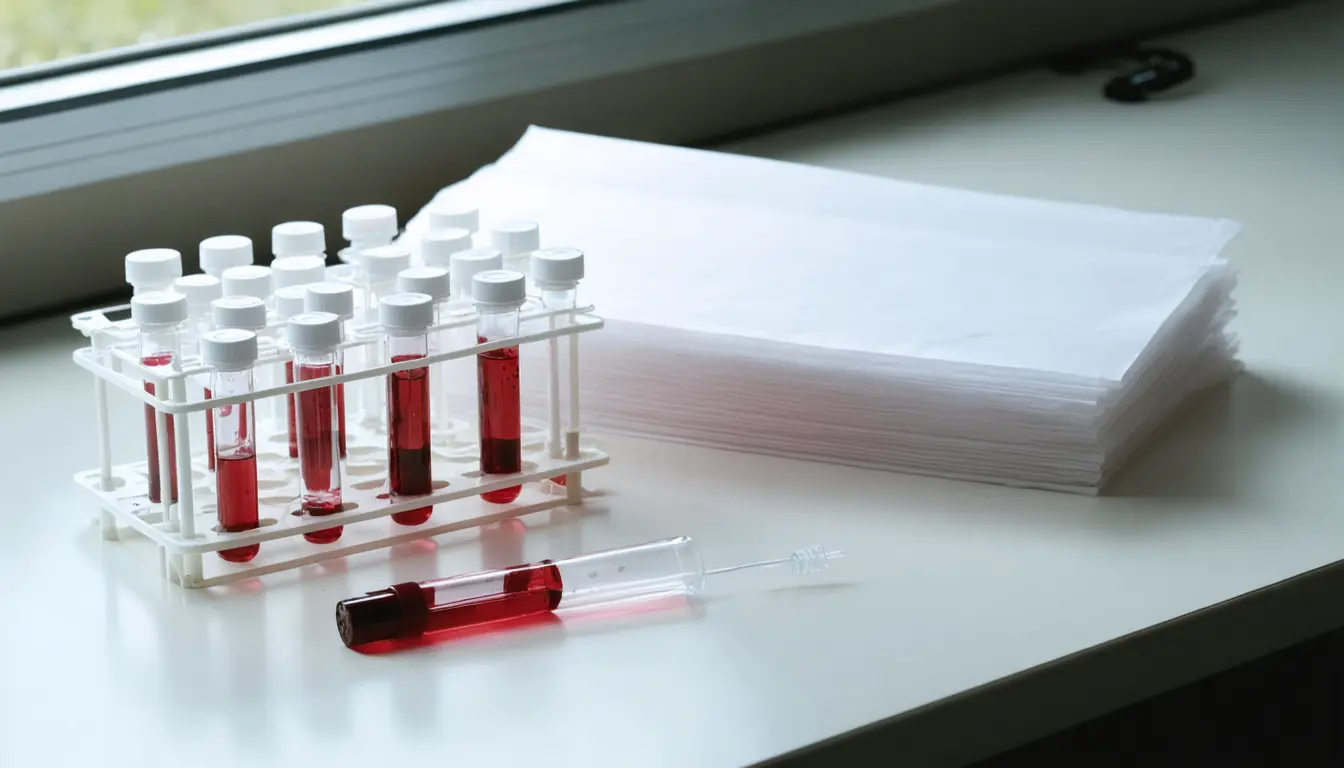
USC Norris Comprehensive Cancer Center has started a Phase 1 trial of a blood test used alongside mammograms to find breast cancer as early as Stage I. No results have been reported, and the stated measure is accuracy against patients' diagnoses.
The Scientist · Science desk
What happened
- Participants will give two blood samples a year apart, and researchers will compare the findings with the patients' diagnoses.
- Encouraging Phase 1 results would lead to a larger Phase 2 trial.
- The test is investigational and cannot replace mammograms or breast biopsies.
Why it matters
- What it limits constraint Scoring the test against diagnoses measures accuracy, and leaves open whether detecting Stage I cancer earlier changes treatment or survival.
- What's now possible capability If the test proves effective, co-investigator Woodworth sees an added screening option for women far from mammography services and for women who have had a mastectomy.
- What doesn't add up contradiction Discover's hope that the test could significantly change breast cancer diagnosis sits on a Phase 1 trial that has reported no results.
More than 300,000 women in the U.S. receive a breast cancer diagnosis each year, Discover reports [9]. The write-up does not give an enrollment figure, an accuracy target or a description of who is being enrolled.
It does give a design. Participants provide two blood samples a year apart, and researchers compare the findings with patients' diagnoses to assess accuracy [6]. In our view, diagnosis is a sensible reference standard for a first look. We'd expect the second sample to let investigators ask whether a signal appears before a diagnosis does.
Liquid biopsies already have a role in cancer care, often to track treatment or check whether a diagnosed cancer has returned [3]. Many look for DNA fragments shed by cancer cells, and a small tumor may not shed enough to find [2]. This test looks for more than DNA. It searches for rare cancer-associated cells and tumor-associated large extracellular vesicles (L-EVs), which are tiny despite the name [1]. Screening for a cancer nobody has found yet is a different job from monitoring one that is known, and this trial is the first test of whether those cells and vesicles can do it.
Martynova framed the aim as a question. "Our hope is to determine whether this test can provide more information about breast cancer screening and detection, particularly during the stages of the disease when it may be easier to treat," said principal investigator Anastasia Martynova in a press release [10]. She was more specific about the particles: "These particles could potentially give doctors an additional sign of cancer, especially at early stages when other tests might not be able to detect it," Martynova said [12].
A comparison with diagnoses shows how often the test agrees with the clinic, but says nothing about whether finding a cancer earlier changes treatment or survival. Accuracy also has two halves: catching cancers, and correctly clearing women who do not have one. The reported design speaks to both only if the analysis breaks them out.
Co-investigator Amanda M. Woodworth described where the test could fit if it works. "If the test is shown to be effective, it could offer an additional screening option for women who face barriers to mammography, such as those who live in remote areas where access to screening services is limited," Woodworth said [11]. She also named women who have had a mastectomy, for whom mammograms are no longer an option [11].
What to watch
- Enrollment size and accuracy figures from Phase 1, including how well the test performs on Stage I cancers specifically.
- Whether a Phase 2 trial is announced, since the source says only encouraging Phase 1 results would lead to one.
- Whether later trials enroll women with limited mammography access or prior mastectomy, the uses Woodworth described.
Clarity's read
What the record supports and how the coverage leans. The claims behind it follow.
Reality
- Evidence20
- Adoption
- Insufficient
- Hype gap+30
- Incentives
- Insufficient
- Confidence40
Claim ledger
Ranked by verification strength, evidence, and original report placement.
- [1]
The test looks for rare cancer-associated cells and tumor-associated large extracellular vesicles (L-EVs); despite the name, these are tiny particles released by cancer cells that can reach the bloodstream early in the disease.
- [2]
Many liquid biopsies search for fragments of DNA shed by cancer cells, which becomes especially challenging when a tumor is small because there may not be enough detectable material.
- [3]
Liquid biopsies already have a role in cancer care, often helping clinicians track treatment or investigate whether a diagnosed cancer has returned.
- [4]
Researchers at USC Norris Comprehensive Cancer Center, part of Keck Medicine of USC, have started a clinical trial to evaluate whether a blood test can work alongside mammograms to detect breast cancer as early as Stage I.
- [5]
The trial is a Phase 1 clinical trial.
- [6]
Participants will provide two blood samples a year apart, and researchers will compare the findings with patients' diagnoses to assess accuracy.
- [7]
Encouraging Phase 1 results would lead to a larger Phase 2 trial.
- [8]
The blood test remains investigational and cannot replace mammograms or breast biopsies.
- [9]
More than 300,000 women in the U.S. receive a breast cancer diagnosis each year.
- [10]
"Our hope is to determine whether this test can provide more information about breast cancer screening and detection, particularly during the stages of the disease when it may be easier to treat," said principal investigator Anastasia Martynova in a press release.
- [11]
Co-investigator Amanda M. Woodworth said: "If the test is shown to be effective, it could offer an additional screening option for women who face barriers to mammography, such as those who live in remote areas where access to screening services is limited. It could also have potential applications for women who have undergone a mastectomy, for whom mammograms are no longer an option."
- [12]
"These particles could potentially give doctors an additional sign of cancer, especially at early stages when other tests might not be able to detect it," explained Martynova.
- [13]
Discover writes that the Phase 1 trial is under way with hopes that the blood test could significantly change the future of breast cancer diagnosis.
Get this ledger inside ChatGPT. Ask about any of our stories and the answer brings its figure, each claim’s verdict and the sources. Free, no account.
Sources
1 independent publisher whose own reporting we read for this story.
- discovermagazine.comA Blood Test That Could Detect Breast Cancer as Early as Stage I Has Started Clinical Trials
1 article · October 15, 2026
Topics and entities
Follow any of these and your For You feed starts watching them — no settings page required.
Topics
- Liquid biopsyFollow
- Clinical trialsFollow
- Breast cancer screeningFollow