Georgia's Rioni River yields more sturgeon in 2026 than the previous eight years combined
Fauna & Flora, which has worked on Georgia's Rioni River since 2017, reports catching more sturgeon in 2026 than in the previous eight years combined. The fish are plainly breeding, but without catch per hour of fishing the jump does not yet show a growing population.
The Scientist · Science desk
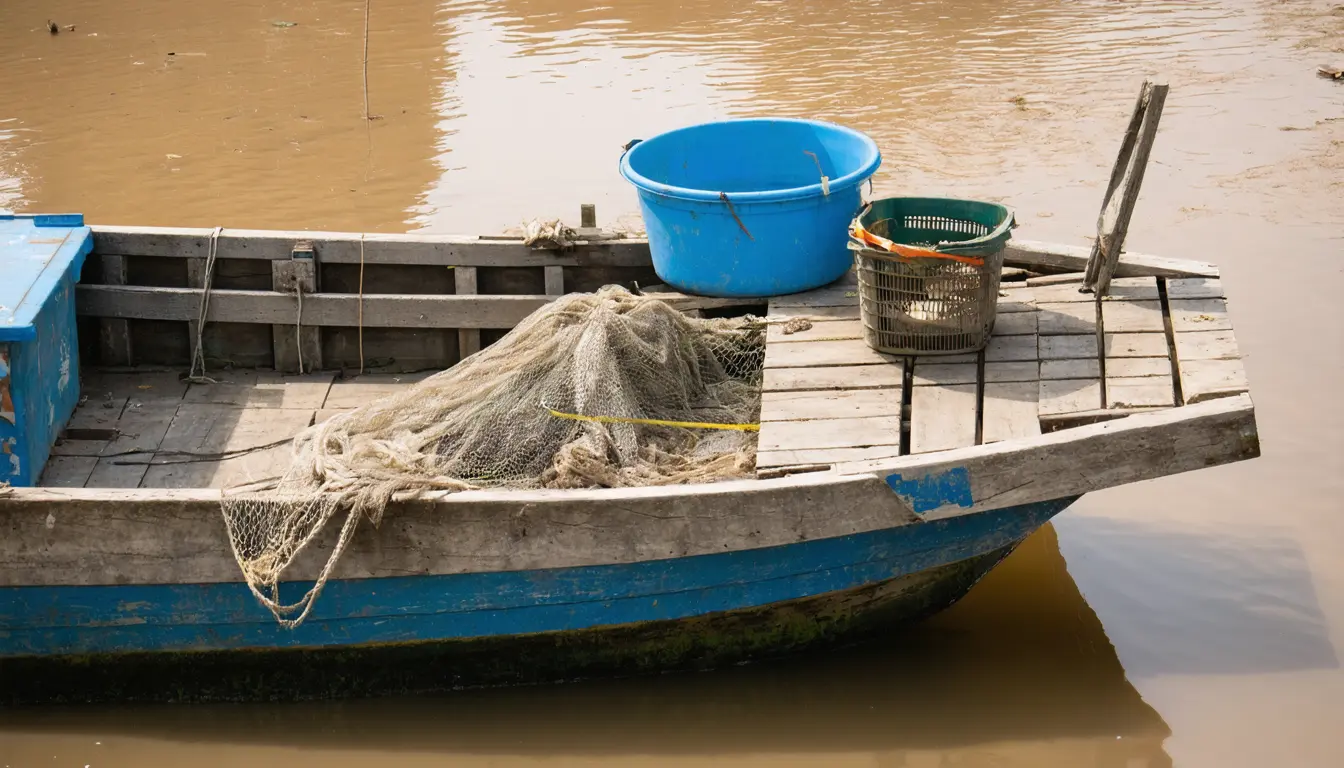
Georgia's parliament voted to create a reserve of more than 500 hectares protecting sturgeon spawning grounds in the Rioni basin. The Rioni is one of the last three sturgeon refuges in Europe. Four, possibly five, critically endangered sturgeon species still survive in the Rioni.
| Figure | Value | Note | Claim |
|---|---|---|---|
| Reserve area voted by parliament, more than | 500 hectares | 11 | |
| Europe's last refuges | 3 sturgeon refuges | 2 | |
| Critically endangered species still in the Rioni | 4 species | possibly five, per Fauna & Flora | 3 |
What happened
- In 2020, two juvenile ship sturgeon, each under three years old, were caught within a month in the Rioni, a species widely believed extinct.
- Dozens of further juveniles were recorded in recent months, and each had DNA and body measurements taken before release.
- Georgia's parliament has voted to create a reserve of more than 500 hectares that covers a river section where sturgeon have historically spawned.
Why it matters
- constraint A catch total without hours or gear cannot separate more fish from more effort, so the 2026 jump cannot yet be used as a population trend.
- capability With breeding confirmed, protection can target known spawning grounds, which is what the new reserve does.
- exposure Four, possibly five, critically endangered species depend on one river that is among Europe's last three refuges, so poaching or spawning-ground loss there threatens all of them at once.
- decision The genetic results from Ilia State University will show which species the 2026 fish are, and that should shape where the program focuses its protection.
Taken literally, the comparison is steep. If the 2026 catch exceeds the previous eight years combined [8], it is more than eight times the average earlier year [14]. It is unclear how much of that jump is more fish and how much is more fishing. Fauna & Flora wrote the account that phys.org carries, and it does not include the 2026 count, the yearly counts before it, or the hours and gear behind them.
The early years set a low base. The 2018 pilot produced the first baseline studies for Georgia's sturgeons, at a time when it was uncertain whether the fish were still reproducing in the Rioni at all [4]. The first evidence of recent reproduction was a tiny juvenile stellate sturgeon [5], and Fauna & Flora described finding it as the aquatic equivalent of finding a needle in a haystack [6]. In our view, a ratio against a baseline that rare can climb steeply with modest changes in effort or gear.
The IUCN Red List rates sturgeons as more critically endangered than any other group of species [1], and the Rioni is one of the last three sturgeon refuges in Europe [2]. The record shows the fish are reproducing. Juveniles a few centimeters long [13] answer the question the 2018 team could not, and Fauna & Flora reports that the answer is yes [12]. In 2020, two ship sturgeon, each estimated to be under three years old, were caught in less than a month, in a species widely believed to be extinct [7].
We think the program has produced measurable results in two places. It settled whether the fish breed. Georgia's parliament has also voted to create a reserve of more than 500 hectares that includes a stretch of river where sturgeon spawning is known to have taken place historically [11]. Whether the 2026 haul signals recovery is unproven, and we would hold that view until catches are reported per hour of fishing with consistent gear.
The species mix is open too. The river holds four, possibly five, critically endangered species [3]. The team takes samples from captured sturgeons for genetic analysis with Ilia State University, and that work will say which species the 2026 fish are [10].
What to watch
- Fauna & Flora publishing the 2026 count alongside fishing hours and gear for each year since 2018.
- Genetic identification of the 2026 juveniles, which would show how many of the four or five species are represented.
- Whether the 500-hectare spawning-ground reserve is formally established and enforced after the parliamentary vote.
Clarity's read
What the record supports and how the coverage leans. The claims behind it follow.
Reality
- Evidence42
- Adoption
- Insufficient
- Hype gap+35
- Incentives70
- Confidence50
Claim ledger
Ranked by verification strength, evidence, and original report placement.
- [1]
According to the IUCN Red List of Threatened Species, sturgeons are more critically endangered than any other group of species on Earth.
- [2]
Georgia's Rioni River is one of the last three remaining refuges for sturgeons in Europe.
- [3]
Since 2017, Fauna & Flora has been working to reverse the decline of the four, possibly five, critically endangered sturgeon species still surviving in the Rioni.
- [4]
In early 2018, as part of a pilot project, Fauna & Flora conducted the first baseline studies for Georgia's sturgeons; at that time there was uncertainty about whether the fish were still reproducing in the Rioni at all.
- [5]
The first evidence of recent reproductive success came during the pilot, when the team caught a tiny juvenile fish identified as a critically endangered stellate sturgeon.
- [6]
Fauna & Flora described discovering the juvenile stellate sturgeon as the aquatic equivalent of finding a needle in a haystack.
- [7]
In 2020, within less than a month, two specimens of the critically endangered ship sturgeon, each estimated to be less than three years old, were caught in the Rioni; the species had been widely believed extinct.
- [8]
The Georgia team has caught more sturgeons in 2026 than in the previous eight years combined.
- [9]
Dozens of juvenile sturgeons have been recorded in recent months, in addition to the record haul of baby sturgeons; DNA samples and biometric measurements were collected from all of them before they were released back into the wild.
- [10]
The research team works on the river from early spring to fall, and with Ilia State University collects samples from any captured sturgeons for genetic analysis to aid identification and show which species still survive in the Rioni.
- [11]
The Georgian parliament has voted to create a new nature reserve in western Georgia protecting sturgeon spawning grounds in the Rioni basin, spanning more than 500 hectares (1,240 acres) and including a section of the Rioni where sturgeon spawning is known to have historically taken place.
- [12]
The question of whether the sturgeons are still reproducing in the Rioni has since been answered with a yes, according to Fauna & Flora.
- [13]
The baby sturgeons are just a few centimeters long.
- [14]
If the 2026 catch exceeds the combined catch of the previous eight years, it is more than eight times the average yearly catch of those years.
Get this ledger inside ChatGPT. Ask about any of our stories and the answer brings its figure, each claim’s verdict and the sources. Free, no account.
Sources
1 independent publisher whose own reporting we read for this story.
- phys.orgLittle fish, big deal—Record haul of baby sturgeons offers hope for the future
1 article · October 14, 2026
Topics and entities
Follow any of these and your For You feed starts watching them — no settings page required.