In 93 hours at Cambridge flowers, honeybees won most contests with wild pollinators
Anglia Ruskin University researchers at five Cambridge sites saw honeybees win most contests with other insects on bramble and ivy flowers. The design is observational, so the chasing is documented directly and the link to fewer wild visitors is an association.
The Scientist · Science desk
Bar chart comparing two plants: other pollinators actively avoided honeybees in 28% of interactions on bramble and in 36% of interactions on ivy.
Interactions where other pollinators actively avoided honeybees In % of interactions
| Item | Value | Claim |
|---|---|---|
| Bramble | 28% of interactions | 8 |
| Ivy | 36% of interactions | 8 |
What happened
- On bramble, a doubling of honeybee density was associated with a 14% drop in bumblebee abundance, and on ivy more honeybees went with fewer solitary bees and hoverflies.
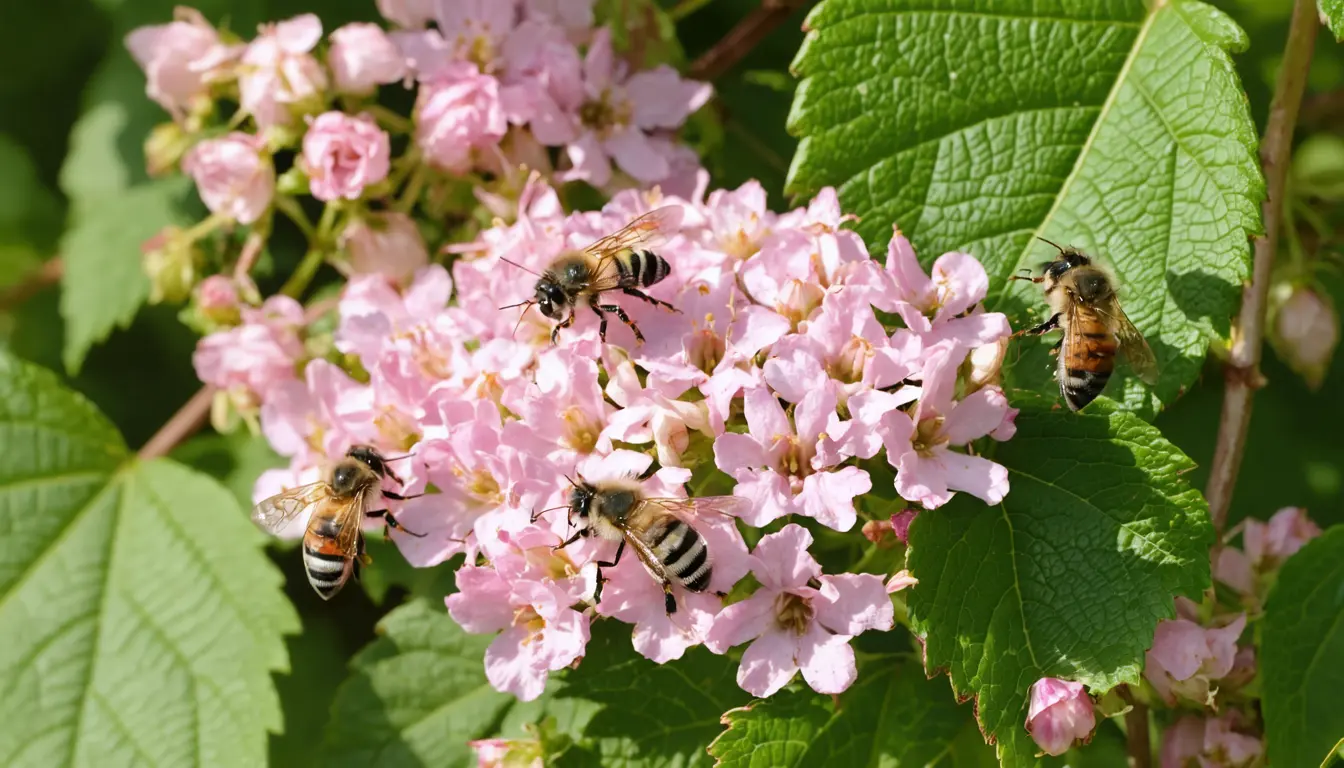
- Other pollinators actively avoided honeybees in 28% of interactions on bramble and 36% on ivy, and honeybees displaced or chased rivals in at least one in five of their winning outcomes.
- The only species to challenge honeybees was the ivy bee, a nonnative solitary bee first recorded in Britain in 2001, and it defended flowers by displacing and chasing them.
- Warmer periods were associated with more competitive interactions between flower visitors.
Why it matters
- constraint Apiary-siting rules need a distance at which the effect fades, and a study confined to sites within 300 meters of colonies cannot supply one.
- exposure Bumblebees and hoverflies forage better in cool weather and honeybees in warm, so if warm spells become more common we'd expect those two wild groups to face the sharpest rise in contests.
- precedent Hive numbers are increasing, with registered beekeepers up about 2.5-fold since 2010, so honeybee density on forage plants is more likely to rise than fall; the figure counts beekeepers, not colonies.
The unit of observation is the interaction, not the bee [4]. Each time one insect disrupted or blocked another at a flower, the researchers scored a win, a loss or a share [5]. Spread evenly, 93 hours across five sites and two years comes to about 19 hours per site [4][2][21]. The report does not give the number of interactions behind the 28% and 36% avoidance figures, so those percentages cannot be set against a sample size [8].
Every site sat within 300 meters of known honeybee colonies [2]. Honeybee density therefore varied only within the range found near hives [6]. The thing this doesn't tell you is what a patch far from any hive looks like, and without one, counts alone cannot separate the effect of honeybees from other differences between patches, such as how much was in bloom.
Very few aggressive interactions were started by anyone but honeybees [9]. Lead author Victoria Buckle, a Ph.D. student at Anglia Ruskin University, said, "An interesting exception was the ivy bee, which would win contests more often against honeybees." [18][16] One nonnative species holding its flowers does not show that bumblebees, other solitary bees or hoverflies could do the same [10].
Two explanations for the heat result are on offer. Heat stress can make flowers produce less nectar, and scarcer forage could be one reason for more contests [12]. Temperature may also change who is on the flowers: a previous study found that a 12 degrees Celsius increase led to a 10-fold increase in honeybees leaving their nests [14]. An observational design cannot tell us which of the two, or both, is at work.
On the purpose of the work, Buckle said, "The aim of our study was not to discourage beekeeping, but to better understand how competition happens between wild and managed pollinator species with the aim of helping to conserve our wild pollinators, which play such an important ecological role." [15]
What to watch
- Interaction counts by plant and site, so the 28% and 36% avoidance figures can be given a sample size.
- A follow-up with sites at varied distances from colonies, or with none nearby, to test whether the effect fades with distance.
- Whether other studies outside Cambridge see ivy bees defending flowers against honeybees.
Clarity's read
What the record supports and how the coverage leans. The claims behind it follow.
Reality
- Evidence55
- Adoption
- Insufficient
- Hype gap+15
- Incentives
- Insufficient
- Confidence50
Claim ledger
Ranked by verification strength, evidence, and original report placement.
- [1]
The study was led by researchers at Anglia Ruskin University, was published in the journal Ecological Entomology, and took place over two years.
- [2]
The study used five sites in and around Cambridge, all within 300 meters (980 feet) of known honeybee colonies.
- [3]
The researchers focused on insects foraging on bramble and ivy, both important sources of nectar and pollen that attract large numbers of visitors when in bloom.
- [4]
During 93 hours of observation, researchers recorded all interactions in which one pollinator disrupted or prevented another from accessing a flower.
- [5]
Outcomes were recorded as a win (one insect gained access, causing a loss of forage for another), a loss, or a share (both gained access with no conflict).
- [6]
Higher densities of honeybees were associated with both lower numbers of other pollinators and more competitive interactions, and honeybees had a higher proportion of wins in encounters with other flower visitors.
- [7]
On bramble, a doubling of honeybee density was associated with a 14% reduction in the abundance of bumblebees; on ivy, an increase in honeybees was linked to fewer solitary bees and hoverflies.
- [8]
Honeybees were actively avoided by other pollinators in 28% of interactions on bramble and 36% on ivy, and they physically displaced or chased rival pollinators in at least one in five winning outcomes on both plant species.
- [9]
The researchers recorded very few aggressive interactions that were not initiated by honeybees.
- [10]
The only species that challenged honeybees was the ivy bee, a nonnative solitary bee first recorded in Britain in 2001, which was observed defending its food source by displacing and chasing honeybees.
- [11]
Periods of higher temperatures were associated with an increase in competitive interactions.
- [12]
Heat stress can cause flowers to produce less nectar, and the more limited forage available could be one reason for the increase in interactions between species.
- [13]
Low temperatures can improve the foraging capacity of hoverflies and bumblebees, which are sensitive to higher temperatures; the opposite is true for honeybees.
- [14]
A previous study found that a 12 degrees Celsius temperature increase led to a 10-fold increase in honeybees leaving their nests.
- [15]
The aim of our study was not to discourage beekeeping, but to better understand how competition happens between wild and managed pollinator species with the aim of helping to conserve our wild pollinators, which play such an important ecological role.
- [16]
An interesting exception was the ivy bee, which would win contests more often against honeybees.
- [17]
The number of honeybee hives in the U.K. is increasing, with the number of registered beekeepers rising from 19,000 in 2010 to 47,000 last year.
- [18]
Victoria Buckle is the lead author of the study and a Ph.D. student at Anglia Ruskin University.
- [19]
Honeybees won the majority of their interactions, doing so by instigating aggressive interactions and often winning resources by chasing other insects away.
- [20]
Registered U.K. beekeepers rose about 2.5-fold between 2010 and last year.
- [21]
Spread evenly, 93 hours of observation across five sites is about 19 hours per site.
- [22]
The study suggests climate change could further intensify competition between wild and managed pollinators.
Get this ledger inside ChatGPT. Ask about any of our stories and the answer brings its figure, each claim’s verdict and the sources. Free, no account.
Sources
1 independent publisher whose own reporting we read for this story.
- phys.orgIvy bees fight back against honeybees that drive other pollinators off flowers
1 article · October 14, 2026
Topics and entities
Follow any of these and your For You feed starts watching them — no settings page required.