ScienceNot yet confirmed elsewhere1 publisher2 min readPublished
Chinese Academy of Sciences team charts rice gene activity across 61 developmental stages
Chinese Academy of Sciences researchers built a 3D atlas of rice gene activity spanning 10 organs and 61 developmental stages, they report in Cell. Its seed-signaling results are predictions, offered as candidates for further experiments.
The Scientist · Science desk
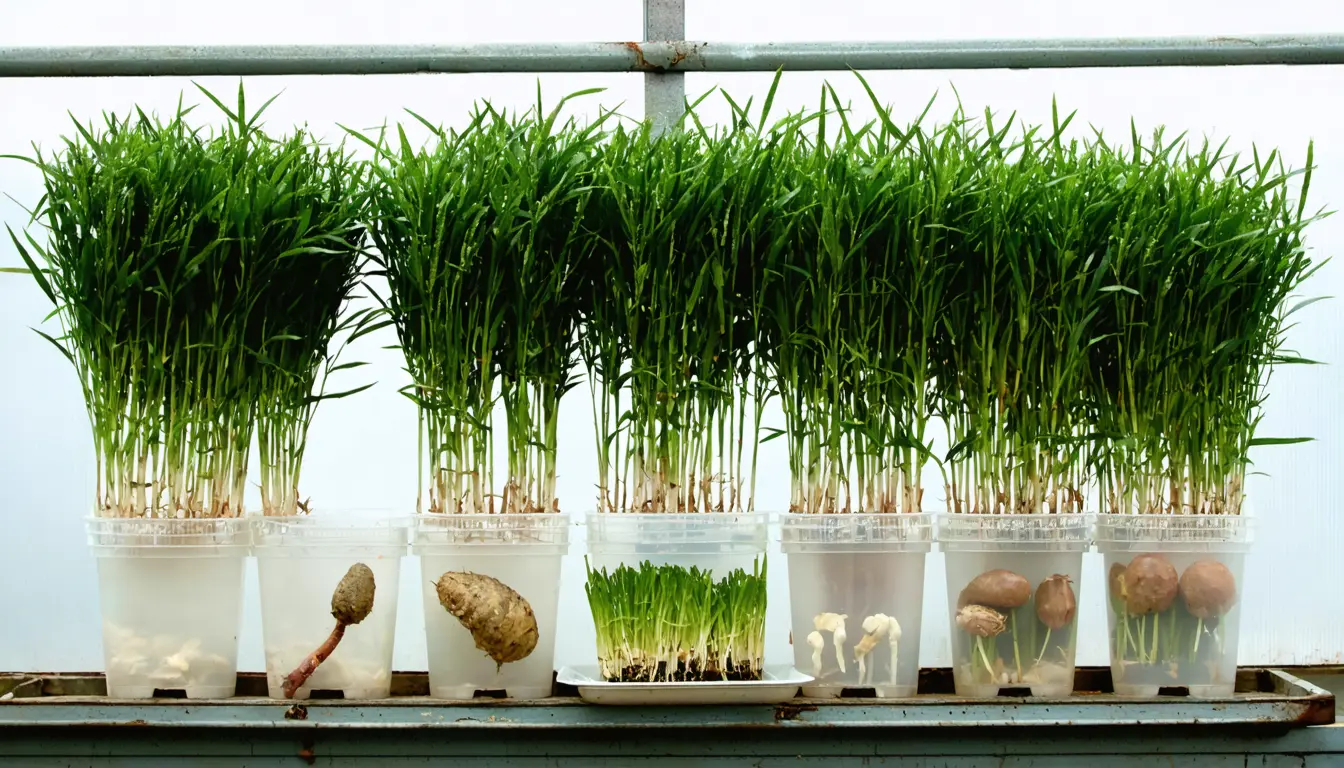
Key figures from the rice atlas study: its datasets identified 119 cell types and 133 subtypes across different organs and developmental stages, and the atlas covers 10 organs.
| Figure | Value | Note | Claim |
|---|---|---|---|
| Cell types identified | 119 cell types | 4 | |
| Subtypes identified | 133 subtypes | 4 | |
| Organs in the atlas | 10 organs | 1 |
What happened
- The work was led by professor Yang Weicai at the Institute of Genetics and Developmental Biology, with several other research teams collaborating.
- The team's datasets cover the entire rice life cycle. They draw on single-nucleus RNA sequencing, high-resolution spatial transcriptomics and a gap-free reference genome.
- Those datasets identified 119 cell types and 133 subtypes across the organs and developmental stages sampled.
- The master regulator OsARF1, a single gene that regulates many processes, is reported to work through different regulatory networks in different cells and tissues.
- The seed coat, endosperm and embryo communicate through signaling peptides and their receptors, and the communication pattern changes across stages of seed development.
Why it matters
- capability Once the datasets can be queried, a lab studying one rice gene can ask in which of 119 named cell types, and at which stage, that gene acts.
- constraint The seed-signaling output is a shortlist of predicted ligand-receptor pairs. Each one still needs a bench experiment before anyone treats it as a signal.
- decision Anyone picking OsARF1 as an editing target should expect different effects in different tissues, since the reported networks are cell-specific. In our view that makes cell-level readouts the sensible first check.
Spatial transcriptomics keeps track of where in a tissue a gene is active. Single-nucleus sequencing reads individual nuclei. The team used both, plus a gap-free reference genome [3]. Pairing the two is the usual way to get position and cell identity into one dataset, and it is what lets a "3D" atlas carry cell-level labels at all.
Two of the headline outputs are computational inferences. The developmental trajectory linking cell states from the proembryo to mature organs is described as inferred [5]. The map of seed tissues talking to each other comes from PlantPhoneDB, a tool for predicting communication between plant cells [8]. A predicted ligand-receptor pair is a hypothesis about a signal. The paper's own description fits that: the researchers say the findings give a resource of potential pairs, offering candidates for further experimental investigation [10].
The endosperm result shows what the spatial layer buys. Expression differs between the upper and lower sides of the endosperm [7]. A sample of whole endosperm would blend those two sides into one average, and the difference would not show up.
The write-up does not report nuclei counts, replicate numbers, the rice variety behind the reference genome, or any trait or breeding test. The 61 stages and 10 organs are totals, and how many stages each organ contributes is not stated. The work is framed as developmental biology.
The paper is Yi Jing et al., "A spatiotemporal lifecycle atlas decodes spatial coordination in rice," in Cell [11].
What to watch
- Bench experiments that test the predicted ligand-receptor pairs in rice seed development, which the researchers call candidates.
- Any study linking OsARF1's cell-specific networks to a measurable trait in rice.
- Independent groups reusing the atlas to place their own genes of interest in its cell types.
Clarity's read
What the record supports and how the coverage leans. The claims behind it follow.
Reality
- Evidence55
- Adoption
- Insufficient
- Hype gap−5
- Incentives
- Insufficient
- Confidence55
Claim ledger
Ranked by verification strength, evidence, and original report placement.
- [1]
A study published in Cell presents a three-dimensional spatiotemporal atlas of rice covering 10 organs and 61 developmental stages across the life cycle, from seed to seed.
- [2]
The study was conducted by a research team led by professor Yang Weicai of the Institute of Genetics and Developmental Biology (IGDB) of the Chinese Academy of Sciences, in collaboration with several other research teams.
- [3]
The researchers combined high-resolution spatial transcriptomics, single-nucleus RNA sequencing and a gap-free reference genome to build datasets spanning the rice life cycle.
- [4]
The datasets identified 119 cell types and 133 subtypes across different organs and developmental stages.
- [5]
Through multimodal integration, the researchers reconstructed an inferred developmental trajectory graph linking cell states from the proembryo to mature organs and identified trajectory-associated regulators.
- [6]
The researchers found that the pleiotropic master regulator OsARF1, a single gene that regulates many biological processes, achieves multifunctionality through specific regulatory networks in different cells and tissues.
- [7]
The researchers uncovered widespread asymmetric gene expression across organs, including differences between the upper and lower sides of the endosperm, illustrating how spatial expression patterns guide tissue patterning and resource distribution.
- [8]
The researchers used PlantPhoneDB, a database and computational tool for predicting communication between plant cells, to map interactions among different seed cell populations.
- [9]
The analysis revealed that the seed coat, endosperm and embryo engage in highly coordinated communication through key signaling peptides and their receptors, with communication patterns changing across different stages of seed development.
- [10]
According to the researchers, the findings provide a resource of potential ligand-receptor pairs involved in seed development, offering candidates for further experimental investigation into how communication between different cell populations helps coordinate plant development.
- [11]
The publication is Yi Jing et al., 'A spatiotemporal lifecycle atlas decodes spatial coordination in rice', Cell (2026), DOI 10.1016/j.cell.2026.09.023.
Sources
1 independent publisher whose own reporting we read for this story.
- phys.org3D map of rice development charts gene activity across plant's entire life cycle
1 article · October 13, 2026
Topics and entities
Follow any of these and your For You feed starts watching them — no settings page required.