ScienceNot yet confirmed elsewhere1 publisher2 min readPublished
Rice domestication began with rare wild plants that held their seeds, an NYU biologist writes
An NYU lab biologist writes that rice cultivators more than 8,000 years ago drew on genetic variation already present in wild plants. The passage we read ends before any mutation ages or sample sizes appear, so the evidence in it is descriptive.
The Scientist · Science desk
What happened
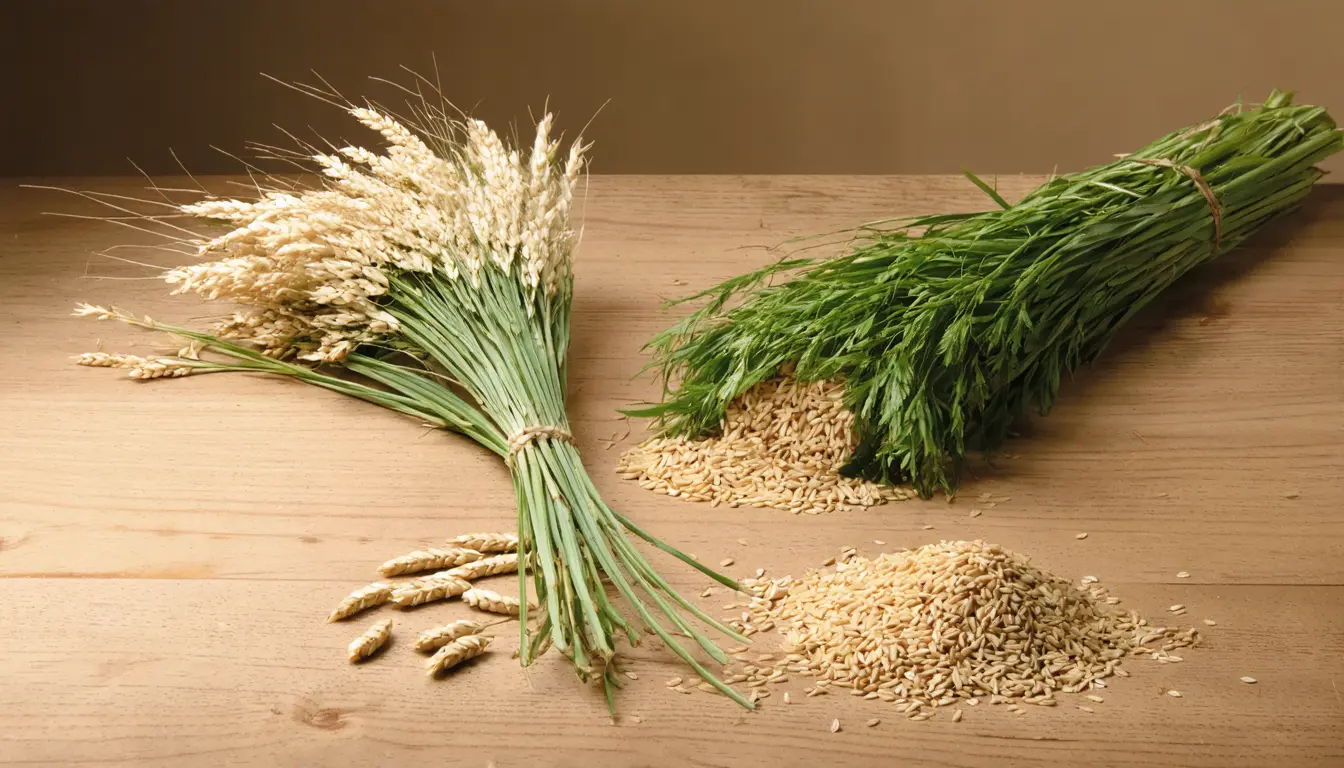
- People in the Lower Yangtze Valley began cultivating the wild grass Oryza rufipogon, which still grows in parts of China, India and Southeast Asia.
- The author's group asked whether such traits already existed in the wild or emerged under human selection, and whether domestication was fast or took thousands of years.
- Methods developed over the past decade let researchers estimate how old a mutation is and reconstruct how its frequency in a population changed.
Why it matters
- constraint Newer studies point to many genome-wide changes, so showing that one shattering gene was already in the wild population would not show the whole domestication package was.
- capability If dating shows the key variants predate cultivation, wild populations become a plausible place to look for traits such as cold tolerance and flowering time. That step is our extrapolation and depends on the dating.
- constraint The headline extends the claim to corn, but the genetic detail in the passage concerns rice, so the maize half is asserted in the headline only.
The headline claim is testable, and the essay names the test. A variant already circulating in wild Oryza rufipogon [1] should be older than cultivation. A variant that arose under cultivation should be younger, and its frequency should climb from near zero. The essay says methods from the past decade estimate the age of mutations and reconstruct how their frequency changed over time [7]. The author's group framed its questions in those terms: were the valued traits and their mutations already present in the wild, or did they emerge under human selection [6]?
What the essay offers directly is a description. In its account, people picked out rare individual plants that held on to their seeds, grew upright and carried other traits that eased the harvest, perhaps without meaning to at first [3]. The word "rare" points toward standing variation, since those plants existed before anyone chose them.
The essay does not say how old the underlying allele was. A rare non-shattering plant could carry an old variant or a fresh mutation, and its appearance cannot say which. The essay names SH4 and qSH3 as the genes whose mutations make domesticated rice lose the ability to shatter [4]. We'd expect an age estimate at those loci to be the most informative.
Age would still leave one question open. The essay says the answers may help separate deliberate human choice from unconscious selection in human-modified environments [10].
The author is an evolutionary biologist in Michael Purugganan's lab at NYU, where the group uses genomics to study rice domestication and dispersal [8]. The headline, which reads "Ancient people relied on genetic variation already present in wild plants to domesticate crops like rice and corn" [11], states the conclusion.
What to watch
- Published age estimates for the SH4 and qSH3 variants, set against the start of cultivation more than 8,000 years ago.
- Whether the same dating approach is reported for maize, which the headline names but the passage does not examine.
- The number of rice plants sampled, since the claim depends on how many wild and domesticated genomes were compared.
Clarity's read
What the record supports and how the coverage leans. The claims behind it follow.
Reality
- Evidence35
- Adoption
- Insufficient
- Hype gap+10
- Incentives
- Insufficient
- Confidence40
Claim ledger
Ranked by verification strength, evidence, and original report placement.
- [1]
Oryza rufipogon is a wild grass found today in parts of China, India and Southeast Asia.
- [2]
More than 8,000 years ago, people living in the Lower Yangtze Valley began cultivating Oryza rufipogon.
- [3]
People selected rare individual plants that failed to release their seeds, kept an upright posture and had other traits that made their seeds easier to harvest, perhaps inadvertently at first.
- [4]
Mutations in the SH4 and qSH3 genes cause domesticated rice to lose the ability to shatter, that is, to release its seeds to the ground.
- [5]
Newer studies indicate that numerous genome-wide changes, not only a few mutations in single genes, are important for crop domestication and diversification.
- [6]
The author's group asked whether the traits people value, and their underlying mutations, were already present in the wild or emerged under human selection, and whether domestication was rapid or took place over thousands of years.
- [7]
Methodological advances over the past decade help scientists estimate the age of mutations and reconstruct how their frequency in a population has changed over time.
- [8]
The author is an evolutionary biologist in Michael Purugganan's lab at New York University, where the group uses genomics to study rice domestication and subsequent dispersal.
- [9]
Known domestication-linked mutations provide a way to study the history of traits such as nonshattering, cold tolerance and the time taken to produce flower or grain.
- [10]
The answers may help clarify the relative roles of deliberate human choices and unconscious selection in domestication, for example selection by growth in human-modified environments.
- [11]
The essay is headlined 'Ancient people relied on genetic variation already present in wild plants to domesticate crops like rice and corn'.
Sources
1 independent publisher whose own reporting we read for this story.
Topics and entities
Follow any of these and your For You feed starts watching them — no settings page required.
Entities
- Oryza rufipogonFollow
- Oryza sativa subspecies japonicaFollow
- Michael PuruggananFollow
- New York UniversityFollow
- The ConversationFollow