A diving hypothesis for human endurance draws praise and objections from anthropologists
Two researchers propose that diving for food about 2 million to 3 million years ago helped shape human endurance. The hypothesis, published September 17 in PaleoAnthropology, has drawn both support and sharp objections.
The Scientist · Science desk
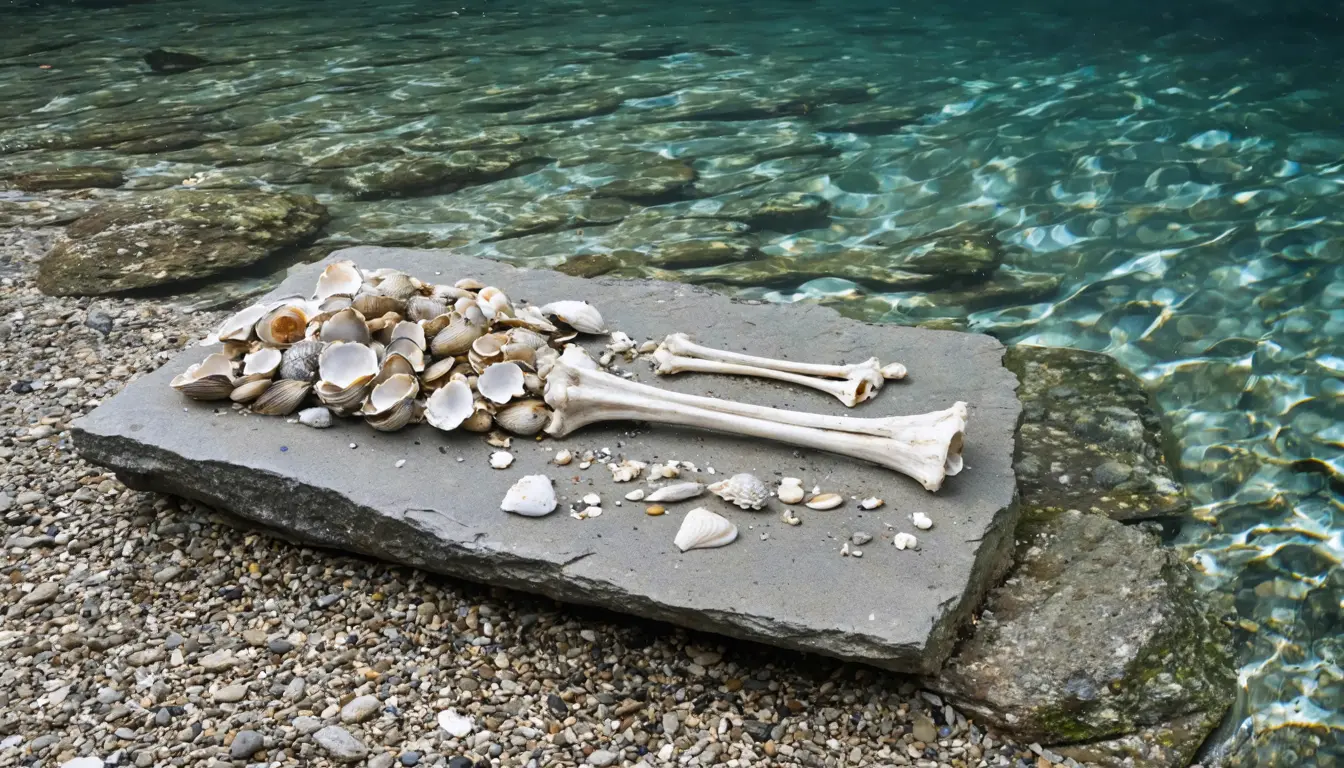
Joordens and Schagatay propose divers evolved heavy bones and downward-facing noses. The Sama-Bajau dive four to six hours a day and have bigger spleens. Lieberman disputes the aerobic and heavy-bone links. Ruff says the idea should be taken seriously. The 1960 aquatic ape idea was shunned.
- decision Joordens and Schagatay Propose Homo divers evolved heavy bones to stay underwater and downward-facing noses to keep water out, claim 15
- capability Sama-Bajau Dive several meters deep four to six hours a day and evolved bigger spleens than non-diving counterparts, claim 5
- contradiction Daniel Lieberman, Harvard Argues endurance diving does not require enhanced aerobic capacity, as diving slows the heart rate, claim 8
- contradiction Daniel Lieberman, Harvard Says heavy bones could have come from heavy work, not from helping divers with buoyancy, claim 16
- precedent Christopher Ruff Says occasional aquatic foraging differs from the discredited theory and should be taken seriously, claim 9
- precedent 1960 aquatic ape hypothesis Popularized in media without adequate peer review, then shunned as fossils pointed away from water, claim 12
| Who | How | Kind | Claim |
|---|---|---|---|
| Joordens and Schagatay | Propose Homo divers evolved heavy bones to stay underwater and downward-facing noses to keep water out | decision | 15 |
| Sama-Bajau | Dive several meters deep four to six hours a day and evolved bigger spleens than non-diving counterparts | capability | 5 |
| Daniel Lieberman, Harvard | Argues endurance diving does not require enhanced aerobic capacity, as diving slows the heart rate | contradiction | 8 |
| Daniel Lieberman, Harvard | Says heavy bones could have come from heavy work, not from helping divers with buoyancy | contradiction | 16 |
| Christopher Ruff | Says occasional aquatic foraging differs from the discredited theory and should be taken seriously | precedent | 9 |
| 1960 aquatic ape hypothesis | Popularized in media without adequate peer review, then shunned as fossils pointed away from water | precedent | 12 |
What happened
- The pair are Josephine Joordens, an evolutionary anthropologist at the Max Planck Institute in Leipzig, and Erika Schagatay, a Mid-Sweden University physiologist, and they call the idea "dive first, run later."
- Their living model is the Sama-Bajau, who dive several meters deep for four to six hours a day and have bigger spleens than non-diving counterparts.
- The authors suggest early divers evolved heavy bones to stay underwater and downward-facing noses to keep water out, then passed endurance traits to lighter-boned, more terrestrial populations.
- Christopher Ruff of Johns Hopkins said the proposal is different from the discredited aquatic ape theory of a primarily aquatic existence, and that it should be taken seriously.
- Daniel Lieberman of Harvard argues that endurance diving does not require enhanced aerobic capacity, because diving slows the heart rate and running speeds it up.
Why it matters
- contradiction The same heavy bones the authors tie to staying underwater are, in Lieberman's reading, the product of heavy physical work, so one trait supports two stories.
- constraint The physiological evidence comes from living divers, so the window of 2 million to 3 million years ago rests on inference from today's bodies to early Homo.
- precedent The 1960 aquatic ape idea circulated in media accounts without adequate vetting and was shunned as fossils pointed away from water, so a narrower diving claim will be read against that record.
The work combines two kinds of evidence. Schagatay has spent decades observing and monitoring the Ama in Japan and the Sama-Bajau in Southeast Asia, and Joordens studied the fossil evidence and combed the literature on aquatic activities [4]. Schagatay's step from divers to ancestors is physiological. The divers can "pace" breathing and breath-holding to avoid fatigue [6], and in early Homo, she says, that could have paved the way for the cardiorespiratory stamina needed in modern endurance running [7].
That step is the one Lieberman's heart-rate objection targets. He also disputes the nose argument. Many diving mammals have forward-facing noses, he says, and other reasons, such as keeping the air in the nostrils moist, were probably more important in selecting for that feature [17].
Other anthropologists are mixed. Christopher Tryon of the University of Connecticut said that at first he could not tell whether the idea was groundbreaking or dumb [11]. He described a field reluctant to consider water at all: "There's been this reluctance to really think about anything sort of water-related as important in human evolution" [13]. Leslea Hlusko, a paleobiologist in Burgos, Spain, said the study "shows there is a lot of evidence" for forage diving as an early evolutionary driver [10].
Joordens said human evolution "was likely a very complex and very dynamic process" [14].
The thing this doesn't tell you is how much of human endurance traces to diving. We'd expect the dispute to narrow to one question: whether any trait measured in living divers carries over to running performance.
What to watch
- Measurements in living divers, such as spleen size or breath-hold pacing, tested against running performance, which would address Lieberman's heart-rate objection.
- Fossil or skeletal work that separates heavy bones built by diving from heavy bones built by physical labor.
- Published replies from Lieberman, Ruff, Hlusko or Tryon that move beyond the first reactions.
Clarity's read
What the record supports and how the coverage leans. The claims behind it follow.
Reality
- Evidence30
- Adoption
- Insufficient
- Hype gap−5
- Incentives
- Insufficient
- Confidence40
Claim ledger
Ranked by verification strength, evidence, and original report placement.
- [1]
Joordens and Schagatay propose on September 17 in PaleoAnthropology that humans evolved endurance not just by running down prey on the African savanna but also by diving for food in lakes or coastal waters.
- [2]
The researchers propose that some Homo species wound up shallow-water diving repeatedly about 2 million to 3 million years ago, much the way the Sama-Bajau do today.
- [3]
Evolutionary anthropologist Josephine Joordens of the Max Planck Institute for Evolutionary Anthropology in Leipzig and physiologist Erika Schagatay of Mid-Sweden University in Ostersund call their idea the 'dive first, run later' hypothesis.
- [4]
Schagatay has spent decades observing and monitoring modern sea-foraging people such as the Ama in Japan and the Sama-Bajau in Southeast Asia, while Joordens studied fossil evidence and combed the literature about aquatic activities.
- [5]
The Sama-Bajau spend four to six hours per day repeatedly diving several meters deep to catch fish and collect shellfish and other food, and they evolved bigger spleens than their non-diving counterparts.
- [6]
The Sama-Bajau have the ability to 'pace' breathing periods and breath-holding to avoid fatigue.
- [7]
Schagatay says that in our ancestors, such diving physiology could have paved the way for the cardiorespiratory stamina needed in modern endurance running.
- [8]
Daniel Lieberman of Harvard argues that endurance diving does not require an enhanced aerobic capacity, because diving slows the heart rate whereas running speeds it up.
- [9]
Ruff said, "Occasional aquatic foraging is quite a different proposal" from the discredited theory's primarily aquatic existence, and should be taken seriously.
- [10]
Hlusko said the study "shows there is a lot of evidence" for forage diving as an early evolutionary driver.
- [11]
Tryon said, "I could not work out [at first] if this was groundbreaking or dumb."
- [12]
In 1960, researchers proposed the aquatic ape or waterside hypothesis, that ancestors evolved longer legs and other adaptations from swimming in watery habitats; it was popularized in media accounts but not adequately vetted in peer-reviewed journals, and was shunned as additional fossils pointed away from a life in water.
- [13]
Tryon said, "There's been this reluctance to really think about anything sort of water-related as important in human evolution."
- [14]
Joordens said human evolution "was likely a very complex and very dynamic process."
- [15]
The two suggest Homo divers evolved heavy bones to help stay underwater and downward-facing noses to keep water out, and eventually passed endurance-boosting traits on to other populations with lighter bones and a more terrestrial lifestyle.
- [16]
Lieberman disputes how and why heavy bones arose, saying they could have developed in people who used their bodies for heavy work and not because such bones helped divers with buoyancy.
- [17]
Lieberman says the downward-pointed nose is not meaningful given that many diving mammals have forward-facing noses, and that other reasons, such as keeping the air in nostrils moist, were probably more important in selecting for this feature.
Get this ledger inside ChatGPT. Ask about any of our stories and the answer brings its figure, each claim’s verdict and the sources. Free, no account.
Sources
1 independent publisher whose own reporting we read for this story.
- sciencenews.orgA duo goes against the tide to explain an origin of human endurance
1 article · October 13, 2026
Topics and entities
Follow any of these and your For You feed starts watching them — no settings page required.