A postdoctoral researcher ties Busoga's hunger to cane contracts that mills sign mainly with men
Researcher James Kintu says mill contracts signed mainly with men explain why a third of Busoga households went whole days without food. Cane area there tripled between 2000 and 2024, and the link to hunger rests on interviews.
The Scientist · Science desk
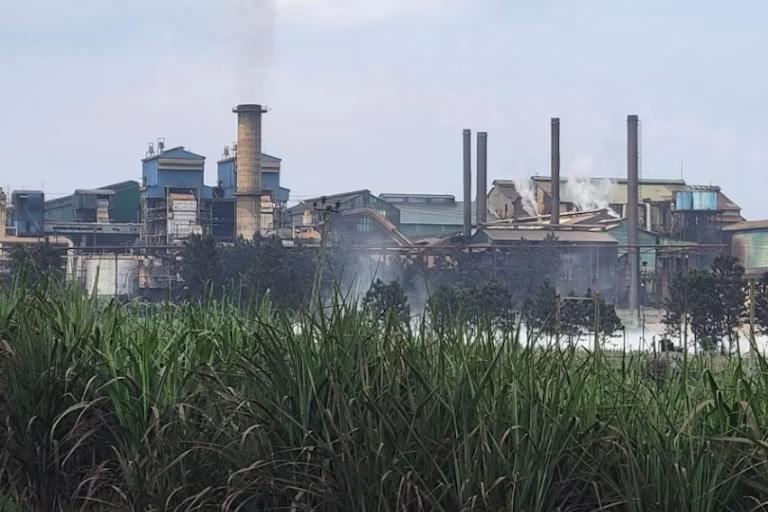
Key figures from James Kintu's research: in the Jinja and Buyende districts, up to 80% of farmland owned by families is used to grow sugarcane to sell. Busoga has 4.3 million people, most farming small, rain-fed plots. Kintu interviewed 27 officials, local leaders and farmer representatives.
| Figure | Value | Note | Claim |
|---|---|---|---|
| Family-owned farmland in cane to sell, up to | 80% | 6 | |
| People in Busoga | 4.3 million | 2 | |
| Officials, leaders, reps | 27 interviewed | 5 |
What happened
- Seven mills operate in and around Busoga, and tens of thousands of families sell them cane as outgrowers under contract.
- Kintu interviewed 27 officials, local leaders and farmer representatives and put his questions to four groups of farmers.
- Mills recruit outgrowers through male household heads, whose names are the ones that appear on the contracts.
- The harvest payment is a single lump sum, paid to whoever signed the contract.
- When an outgrower dies, his contract usually stays in his name, and his widow has no standing with the mill.
Why it matters
- decision Kintu's remedy puts the choice with the government and the mills: issue contracts to women and let widows inherit contracts automatically.
- constraint Extension advice stops at the registered contract holder, so it does not reach his wife, who grows the household's food on the leftover land.
- exposure Where inherited land is sold, young men turn to day-wage cane cutting, and a Buyende technical officer told Kintu most such workers are children.
- contradiction The Land Act requires a spouse's written consent for family land deals, yet cane contracts rarely pass through a land office, so nobody checks.
The hunger figure and the fieldwork do not cover the same ground. The census counts households across Busoga [1], a region of 4.3 million people who mostly farm small rain-fed plots [2]. Kintu's interviews were in two districts, Jinja and Buyende [5].
Land is where his case starts. In those two districts, about 20% of available farmland can grow food crops, while up to 80% of family-owned farmland grows cane for sale [6]. That is up to four times as much land in cane as in food [14]. The two percentages use different bases, available farmland and family-owned farmland, so the ratio is approximate.
Kintu's argument is about who controls what grows on the rest. He wrote that cane prices are dropping [15], but that "the main problem is that sugar mills mainly sign contracts with men." [16] Decisions about land and cash then sit with men, while feeding the family falls mainly on women, who plant whatever land is left with food crops [17]. In one focus group, women described husbands signing multiyear contracts over the family's entire land without consulting them [8]. A political leader in Buyende, speaking anonymously, told Kintu that many men now keep the cane money and do not use it to buy food [18].
The claim that men keep the cash comes, in the account Kintu published, from that one anonymous leader and from women in a focus group. Those are reports of what people say happens.
The thing this doesn't tell you is how much of the one-third figure the contracts explain. Interviews can show who signs and who is paid. Sizing the effect would need hunger measured across households by who holds the contract. In our view the account is a credible explanation for Jinja and Buyende and a hypothesis for the rest of Busoga.
On the children cutting cane, the checkable part is enforcement. A study Kintu cites found 83 labor officers in Uganda where 1,344 were needed [20], about 6% of the number [21].
What to watch
- A study that compares hunger in households where a woman holds the cane contract with households where a man does would test the claim directly.
- Whether any mill or the government begins issuing contracts to women or transferring them to widows on a husband's death.
- Whether cane prices keep dropping, since Kintu says they are falling and the effect on household cash would then compound the contract problem.
Clarity's read
What the record supports and how the coverage leans. The claims behind it follow.
Reality
- Evidence40
- Adoption
- Insufficient
- Hype gap+25
- Incentives35
- Confidence45
Claim ledger
Ranked by verification strength, evidence, and original report placement.
- [1]
In the 2024 census, about a third of Busoga households reported going whole days without food.
- [2]
Busoga has 4.3 million people, most of whom farm small, rain-fed plots.
- [3]
The area planted with sugarcane in Busoga tripled between 2000 and 2024.
- [4]
Seven mills now operate in and around the Busoga region, and tens of thousands of families also grow cane on their own land as outgrowers, selling it under contracts with the mills.
- [5]
For his doctoral research Kintu visited the Jinja and Buyende districts of Busoga, interviewed 27 officials, local leaders and farmer representatives, and asked four groups of farmers for their views.
- [6]
Only about 20% of the available farmland in the Jinja and Buyende districts is available to grow food crops, and up to 80% of farmland owned by families is used to grow sugarcane to sell.
- [7]
Mills recruit sugarcane farmers through male household heads, whose names appear on the contracts.
- [8]
In one focus group, women described husbands signing multiyear contracts covering the family's entire land without consulting them.
- [9]
The payment is a lump sum at harvest, made to whoever signed the contract.
- [10]
Uganda's Land Act says family land cannot be sold, leased or mortgaged without a spouse's written consent, but cane deals rarely go through a land office, so no one checks whether consent is given.
- [11]
When an outgrower dies, the contract usually remains in his name and his widow has no standing with the mill, according to Kintu's research, although Uganda's constitution recognizes women's right to inherit land.
- [12]
Government extension officers visit only registered contract holders and do not advise the wives of contract holders.
- [13]
Kintu says the government and sugar companies need to end the practice of contracting only with men, set up contracts with women farmers too, and make sure women from cane-farming families inherit contracts automatically when their husbands die.
- [14]
Up to four times as much family farmland is in cane as is available for food crops in Jinja and Buyende.
- [15]
Kintu wrote that the prices of sugarcane are dropping.
- [16]
Kintu wrote that "the main problem is that sugar mills mainly sign contracts with men."
- [17]
Per Kintu's research, decisions about what to use land and cash for are in the hands of men, while the work of feeding families falls mainly on women, who are left only with planting what little land remains with food crops.
- [18]
A political leader in Buyende, speaking anonymously, told Kintu that many men now keep the cane money and do not use it to buy food for the home.
- [19]
Young men who inherit family land sometimes sell it to pay for a motorcycle, school fees or a family obligation, and many then cut and load cane for daily wages; a technical officer in Buyende told Kintu that most of those workers are children.
- [20]
Uganda's employment law bars child labor but enforcement is weak: one study found there were only 83 labor officers in Uganda while 1,344 were needed.
- [21]
The 83 labor officers in Uganda are about 6% of the 1,344 the study said were needed.
Get this ledger inside ChatGPT. Ask about any of our stories and the answer brings its figure, each claim’s verdict and the sources. Free, no account.
Sources
1 independent publisher whose own reporting we read for this story.
- phys.orgUganda's sugarcane boom leaves families hungry: What needs to change
1 article · October 14, 2026
Topics and entities
Follow any of these and your For You feed starts watching them — no settings page required.
Topics
- Agriculture in UgandaFollow
- Food SecurityFollow
- Gender and land rightsFollow
- Contract farmingFollow