Quantum mechanics sets a minimum thermalization time, a Nature Physics paper argues
Researchers in Barcelona, Vienna and Geneva report in Nature Physics that thermalization takes at least about hbar/(2 kB T) away from absolute zero. One author calls the assumptions very weak, though the result covers only systems already guaranteed to thermalize.
The Scientist · Science desk
What happened
- Physicist Martí Perarnau-Llobet said experiments, numerical simulations and analytical calculations had already hinted that a fundamental limit on thermalization existed.
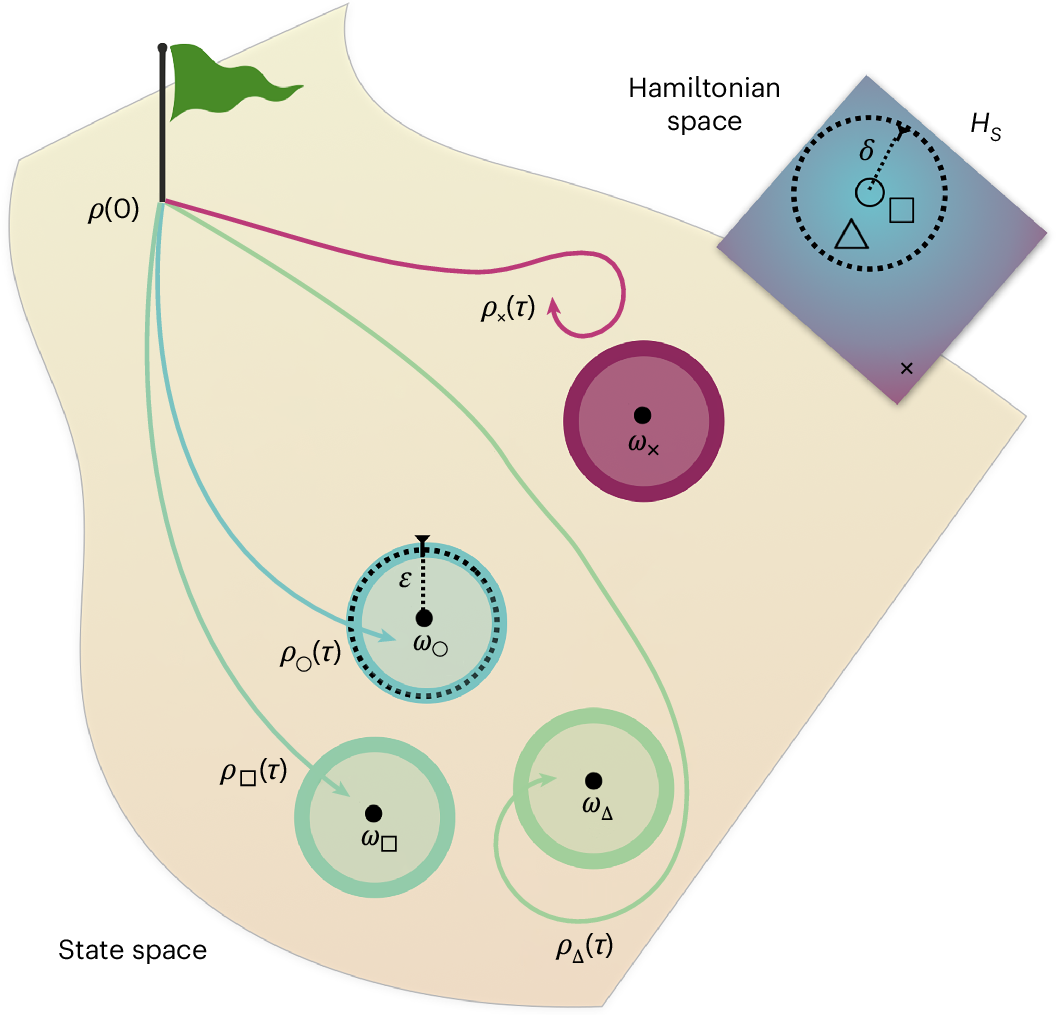
- The team defined a thermalization machine that takes a quantum system from some initial state to a thermal state at a set temperature, with a refrigerator or kettle as examples.
- Gibbs state sampling, where the Hamiltonian is known, can be done arbitrarily fast, while Hamiltonian learning, where it is unknown, admits a time bound.
Why it matters
- constraint The 'any machine' claim holds for machines that must also work on nearby systems. A device tuned to one known system sits outside the result.
- decision At room temperature the floor is about 13 femtoseconds. For appliance and plant design, heat transfer is still what to optimize.
- precedent The authors say their strategy could yield insights on broader physics questions. If it does, the robustness-based definition would be a template for other speed limits.
The paper's claim that the bound holds no matter how the machine is built rests on a definition, and the authors put their effort there. Without one there is no bound, because some machines can bring a system to equilibrium arbitrarily fast [12]. A machine might simply swap a hot cup of coffee for an iced one [12]. Pavel Sekatski of the University of Geneva called that cheating. "Such examples where you can finely tune your algorithm to thermalize a specific system can be avoided by carefully defining thermalization," he told Physics World [5].
The definition asks one thing of the machine. If a quantum system has a Hamiltonian close to the original, the machine must be able to thermalize that system too [6]. The same machine that cools one cup of coffee has to cool cups with slightly different sugar or milk, so a swap tuned to a single cup fails on the next [6]. That requirement and consistency with quantum mechanics are the two assumptions the bound rests on [7].
Perarnau-Llobet said those restrictions are mild. "These restrictions on these thermal machines are actually very weak, and the notion is very general," he said [8]. Even so, a machine built for one known system falls outside the theorem.
Physics World's report does not give a measured thermalization time for any device. Taking 300 K as room temperature, the expression works out to about 13 femtoseconds [13]. In our view that makes the bound a statement about what is possible in principle. For a kettle or a refrigerator we'd expect the speed of heat transfer to limit the process long before this floor matters.
The paper also has a place in computer science. Abiuso, of the Institute for Quantum Optics and Quantum Information in Vienna, described the setting: "We don't know what the Hamiltonian of the quantum system is, but we do have access to the quantum system, and we want to produce the thermal state" [10]. His Barcelona co-author John Calsamiglia added that while the task is "harder than GSS, it is still easier than HL" [11]. The researchers say the same strategy could lead to insights on broader questions in physics [14].
What to watch
- Whether anyone pins down the conditions under which thermalization is always guaranteed, which the paper leaves as an open puzzle.
- A comparison of the hbar/(2 kB T) floor with a measured thermalization time on a real quantum platform, which Physics World's report does not describe.
- Follow-up work from the authors on the broader physics questions they say the same strategy could address.
Clarity's read
What the record supports and how the coverage leans. The claims behind it follow.
Reality
- Evidence55
- Adoption
- Insufficient
- Hype gap−5
- Incentives
- Insufficient
- Confidence55
Claim ledger
Ranked by verification strength, evidence, and original report placement.
- [1]
According to new work in Nature Physics, the minimum time for a system to thermalize to a particular temperature does not depend on the details of the machine; quantum mechanics imposes the limit.
- [2]
Martí Perarnau-Llobet of the Autonomous University of Barcelona said there was suggestive evidence from experiments, numerical simulations and analytical calculations that a physical system cannot be made to thermalize faster than some fundamental limit.
- [3]
Researchers in Barcelona, Vienna and Geneva defined a thermalization machine that evolves a quantum system from some initial state to a thermal state at a particular well-defined temperature; a refrigerator or kettle would be such a machine, and the beer or water the system.
- [4]
The exact conditions under which thermalization is always guaranteed remain an unanswered puzzle, and the researchers chose to focus on systems that do have this guarantee.
- [5]
Pavel Sekatski of the University of Geneva told Physics World: "Such examples where you can finely tune your algorithm to thermalize a specific system can be avoided by carefully defining thermalization," calling such tuning cheating.
- [6]
The researchers require that if a quantum system has a Hamiltonian close to the original one, the thermalization machine must be able to thermalize that system too, so the same machine that cools one cup of coffee must cool cups with slightly different sugar or milk.
- [7]
Assuming the thermalization machine is consistent with quantum mechanics and works for some quantum systems that are close to each other, the researchers show that, away from absolute zero, the fastest thermalization time is approximately hbar/(2 kB T), where hbar is Planck's constant and kB is Boltzmann's constant.
- [8]
Perarnau-Llobet said: "These restrictions on these thermal machines are actually very weak, and the notion is very general."
- [9]
Gibbs state sampling, which takes a known Hamiltonian and works out the thermal state at a particular temperature, can be performed arbitrarily fast, while Hamiltonian learning, where the Hamiltonian of an accessible quantum system is unknown, admits a bound on the time taken.
- [10]
Paolo Abiuso of the Institute for Quantum Optics and Quantum Information in Vienna said: "We don't know what the Hamiltonian of the quantum system is, but we do have access to the quantum system, and we want to produce the thermal state."
- [11]
John Calsamiglia, a Barcelona co-author, added that while the task they considered is "harder than GSS, it is still easier than HL".
- [12]
In some cases one can engineer a machine that takes a particular system to equilibrium arbitrarily fast, for instance a machine that swaps a hot cup of coffee for an iced one.
- [13]
At 300 K, about room temperature, hbar/(2 kB T) is about 1.3e-14 seconds, roughly 13 femtoseconds.
- [14]
The researchers say their strategy could lead to insights on broader questions in physics.
Get this ledger inside ChatGPT. Ask about any of our stories and the answer brings its figure, each claim’s verdict and the sources. Free, no account.
Sources
1 independent publisher whose own reporting we read for this story.
- physicsworld.comYour beer can only cool so fast. Blame quantum mechanics
1 article · October 15, 2026
Topics and entities
Follow any of these and your For You feed starts watching them — no settings page required.
Entities
- Nature PhysicsFollow
- Physics WorldFollow
- Martí Perarnau-LlobetFollow
- Pavel SekatskiFollow
- Paolo AbiusoFollow