Footprints from Italy's Bletterbach show dinosaur ancestors took erect posture in stages
Researchers led from the Museum für Naturkunde Berlin report that dinosaur ancestors reached erect walking in stages, completed by the Middle Triassic. The evidence is a newly named print type from Italy's Bletterbach set against other Permian and Triassic trackways.
The Scientist · Science desk
What happened
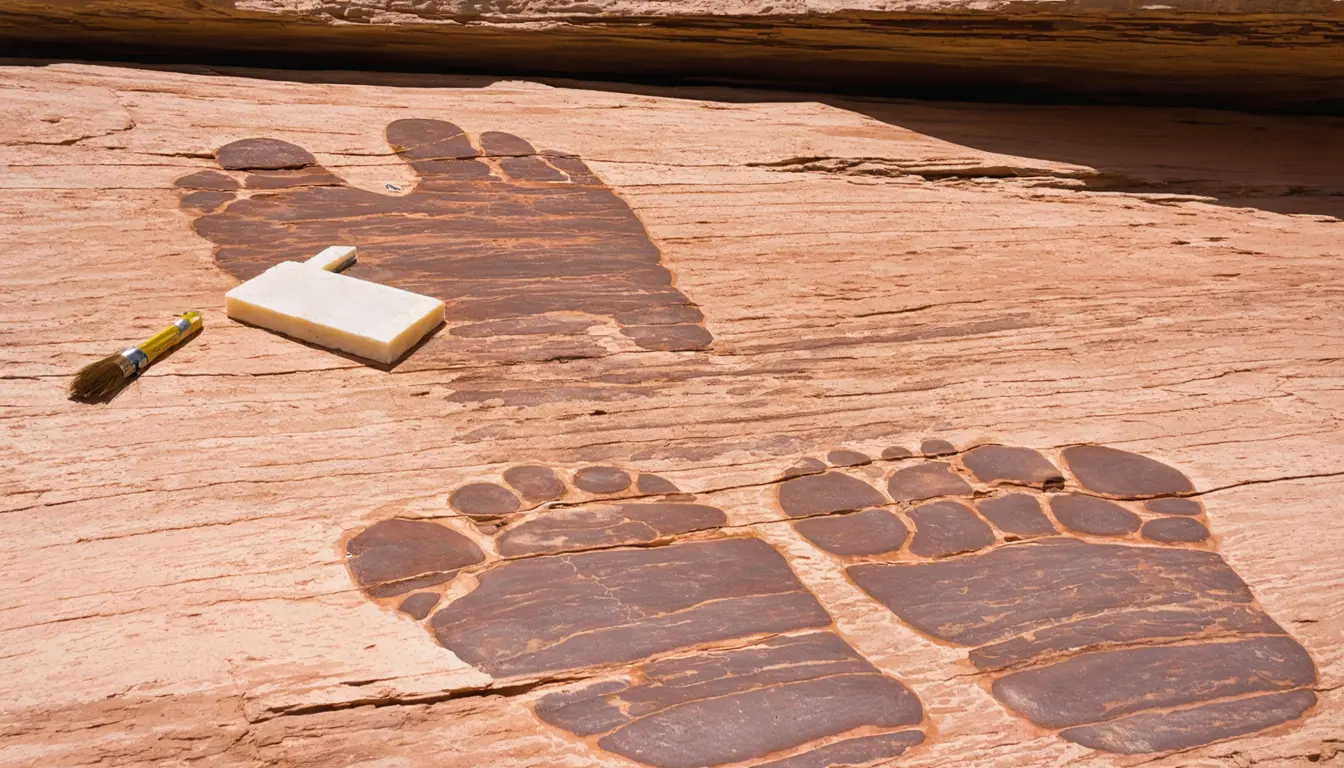
- The team concluded the Bletterbach prints belong to Chirotheriidae but differ from every other print in that group, and named them Pachychirotherium gardenaensis.
- Until now the material had been considered similar to Early Triassic prints such as Protochirotherium, and assumed to show an erect stance.
- The posture change came with longer middle toes, walking on the digits alone and smaller hands, features the authors call essential for later bipedality.
- According to the study, bipedality followed shortly afterward among the first dinosaurs and dinosaur relatives.
Why it matters
- contradiction The older reading of these prints as erect-stance tracks sits awkwardly with a sequence that starts sprawling in the late Permian. The summary does not say where Pachychirotherium itself falls on that scale.
- constraint The trackmaker is a match by morphology and measurements to Erythrosuchidae or similar-limbed animals, so the animal behind the prints is inferred from foot and hand shape.
- capability Archosauriform skeletons from the Permian are scarce, so a named late-Permian print type adds a data point on locomotion where body fossils are few.
The Bletterbach prints in the Italian Dolomites are described in the study as the earliest archosauriform footprints [1]. Getting from there to a claim about posture took two separate steps. In the first, Marchetti and Hendrik Klein of Saurierwelt reanalyzed the old material together with some newly described specimens, now held at the University La Sapienza of Rome and the Naturmuseum Südtirol in Bozen [6]. In the second, the team analyzed archosauriform trackways from the Permian and the Triassic and compared posture across them [9].
The first step settles what the prints are. The second carries the posture claim, and "stepwise" is a claim about an ordered series, which needs trackways from several points in time. The thing this doesn't tell you is how many trackways sit at each step. The phys.org summary does not give a count or the number of sites. In our view, a handful of trackways per interval would make a sequence of stages hard to tell from one abrupt change that the record samples unevenly.
The summary reports the foot and hand changes as occurring alongside the posture change [10]. That is co-occurrence in the trackways. Cause would need a separate test.
Marchetti argues for the method on its own terms. "In fact, trace fossils are the only fossils to directly register the locomotion of living animals," he said [11].
The paper appears in Palaeontology under DOI 10.1111/pala.70089 [12].
What to watch
- The full Palaeontology paper, for the number of trackways at each interval and how Pachychirotherium itself scores between sprawling and erect.
- Whether other Permian and Triassic trackways, scored on digit length, ground contact and hand size, fall in the same order.
- Whether limb skeletons of Erythrosuchidae agree with the posture the tracks imply.
Clarity's read
What the record supports and how the coverage leans. The claims behind it follow.
Reality
- Evidence55
- Adoption
- Insufficient
- Hype gap+10
- Incentives
- Insufficient
- Confidence50
Claim ledger
Ranked by verification strength, evidence, and original report placement.
- [1]
A research team led by Lorenzo Marchetti of the Museum für Naturkunde Berlin described the earliest archosauriform footprints (Pachychirotherium gardenaensis) from the GEOPARC Bletterbach, UNESCO World Heritage Dolomites, Italy.
- [2]
The study found that the transition from sprawling to erect locomotion was a stepwise process that started in the late Permian and was completed only by the Middle Triassic.
- [3]
The stepwise transition led shortly afterward to the acquisition of bipedality among the first dinosaurs and dinosaur relatives.
- [4]
Archosauriforms, the direct ancestors of archosaurs, appeared during the late Permian, shortly before the end-Permian extinction, and their fossil record in the Permian is scattered.
- [5]
Until now the Bletterbach material was considered similar to Early Triassic archosauriform footprints such as Protochirotherium, known from Germany, Poland and Morocco, and was assumed to indicate an erect stance in the animals that made it.
- [6]
Marchetti, in collaboration with Hendrik Klein of Saurierwelt, reanalyzed the material along with some newly described specimens, now stored at the University La Sapienza of Rome and the Naturmuseum Südtirol in Bozen.
- [7]
The scientists concluded the specimens belong to the ichnofamily Chirotheriidae and are taxonomically different from all other footprints in that group, and named them Pachychirotherium gardenaensis, meaning 'thick chirotheriid from Gardena'.
- [8]
A comparative study of Pachychirotherium and the feet and hands of archosauriforms, based on morphology and measurements, attributed the footprints to archosauriforms, more specifically to Erythrosuchidae or animals with very similar limb morphology.
- [9]
An analysis of archosauriform trackways from the Permian and Triassic revealed a stepwise transition in walking posture from sprawling in the late Permian to erect by the Middle Triassic.
- [10]
The posture transition occurred alongside an increase in cursoriality (longer middle digits of the foot) and digitigrady (only the digits touched the ground), and a reduction in the size of the hands, all features essential for the later evolution of bipedality in dinosaurs and their close relatives.
- [11]
"In fact, trace fossils are the only fossils to directly register the locomotion of living animals," said Marchetti of the Museum für Naturkunde Berlin.
- [12]
The study by Lorenzo Marchetti et al. was published in the journal Palaeontology (2026), DOI 10.1111/pala.70089.
Get this ledger inside ChatGPT. Ask about any of our stories and the answer brings its figure, each claim’s verdict and the sources. Free, no account.
Sources
1 independent publisher whose own reporting we read for this story.
- phys.orgFossil footprints reveal how dinosaur ancestors gradually shifted from sprawling to upright walking
1 article · October 15, 2026
Topics and entities
Follow any of these and your For You feed starts watching them — no settings page required.
Topics
- Vertebrate ichnologyFollow
- PaleontologyFollow
- Dinosaur evolutionFollow