InvestNot yet confirmed elsewhere1 publisher3 min readPublished
Price decides whether Hanmi's Eppe takes share from Mounjaro and Wegovy
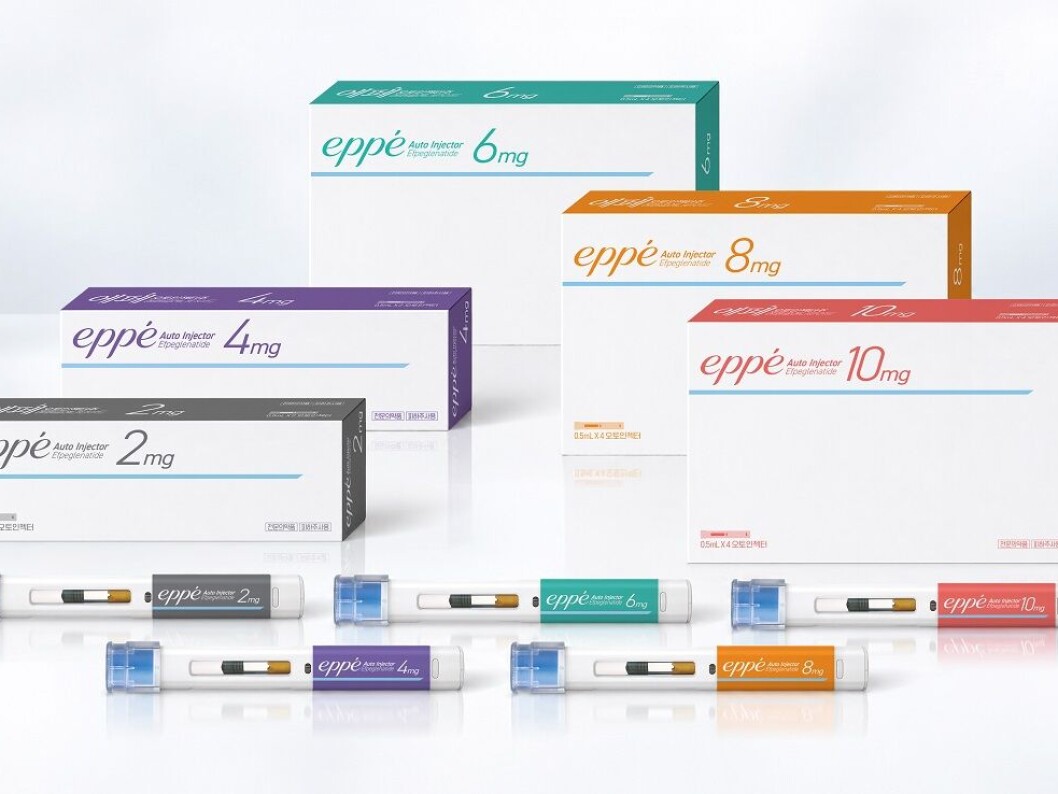
Hanmi Pharmaceutical's Eppe, Korea's first home-grown GLP-1 obesity drug, is approved and expected to launch at about half Wegovy's 200,000-won-plus price. Its trial weight loss trails both incumbents, so the launch price will set how much of a Mounjaro-dominated market it can reach.
The Investor · Invest desk
What happened
- Mounjaro sold 323.2 billion won in Korea in the first quarter, more than triple Wegovy's 104 billion won, out of 450.2 billion won in uninsured obesity-drug sales, Iqvia data show.
- In a study of 288 patients who stopped obesity treatment, cited by iM Securities, 47.6 percent blamed costs or insurance coverage.
- Supplies of Saxenda, a once-daily injection, end in Korea in late August next year as demand moves toward pills and shots given every two weeks or monthly.
Why it matters
- decision Hanmi is pricing inside a band of about 40,000 won, from iM's 110,000-won estimate up to the roughly 150,000 won an industry source treats as the limit, and each won of margin it keeps shrinks the gap that gives patients a reason to switch from Wegovy.
- constraint If Eppe sells mainly as a cheaper follow-on to Mounjaro, its volume depends on how many patients Mounjaro starts, and first-line patients stay with the stronger drugs.
- exposure Oral Wegovy can also compete for the maintenance patients Eppe would aim at, after 194 patients who switched to the pill from injections lost a further 4.1 percent of body weight in three months.
At iM Securities' estimate of roughly 110,000 won a month, Eppe would cost at most 55 percent of Wegovy's entry price of more than 200,000 won for four weeks [7][6][16]. Wegovy sells in four-week supplies, so a year is 13 purchases: at least 2.6 million won, against about 1.32 million won for Eppe [17]. That forecast is close to half. The line an industry source drew for Korea JoongAng Daily is looser. "Pricing Eppe above the mid-100,000 won range could put it at a competitive disadvantage," the source said [1]. The source added that a gap of only 20,000 to 30,000 won from Wegovy's price would leave customers little incentive to choose Eppe [1]. At the midpoint of that range, 150,000 won is about 75 percent of Wegovy's entry price [18]. Hanmi has not announced a price [5].
Eppe has to sell on the discount. Against the incumbents' pivotal trials, its average weight loss is about 61 percent of Wegovy's and 43 percent of Mounjaro's, from a shorter trial with a different design [19][3]. At 55 percent of Wegovy's price, Eppe's cost per percentage point of weight lost would be about 10 percent below Wegovy's on those headline numbers [23].
Any share Eppe wins has to come from the two leaders. On Iqvia's first-quarter figures, Mounjaro held about 72 percent of uninsured obesity-drug sales and Wegovy about 23 percent [22]. GLP-1 injections took 95.1 percent of the market [2]. Take out the two leaders and every other GLP-1 injection combined sold roughly 1 billion won in the quarter [20].
The more plausible way in is after Mounjaro. Some users have floated losing weight on Mounjaro first and then switching to the cheaper Eppe to keep it off, Korea JoongAng Daily reported [15]. "Given the cost of these drugs, [taking Mounjaro first before switching to Eppe] could be a viable approach," said Oh Sang-woo, a professor of family medicine at Dongguk University Ilsan Hospital [9]. "Until recently, it was popular to lose weight with Wegovy at first, then switch to the oral weight-loss drug Qsymia to keep it off," he said [9].
If Hanmi launches near iM's 110,000 won, Eppe has a case as the maintenance drug. If it prices above about 150,000 won, the industry source's own test says the incentive is gone [1][18]. The third possibility is that the field moves past it: Eli Lilly's eloralintide and tirzepatide combination reached up to 23.3 percent weight loss over 48 weeks in a Phase 2b trial [12]. The report does not say how often Eppe is dosed, so this record cannot place it on convenience.
I think the forecast price wins Eppe a maintenance niche and little of Mounjaro's first-line business. The case against that view rests on the patients who quit over cost. If a drug at half the price keeps them on treatment from the start, Eppe could take first-line patients too. A launch at 150,000 won or more that still wins share from Wegovy would prove the price test wrong.
What to watch
- Hanmi's announced launch price, set against iM's 110,000-won monthly estimate and the roughly 150,000-won level an industry source called the limit.
- Iqvia's next quarterly split of uninsured obesity-drug sales, to see whether Eppe's revenue comes out of Wegovy's 23 percent or Mounjaro's 72 percent.
- Any cut to Wegovy's price, which would narrow Eppe's discount without any move from Hanmi.
Clarity's read
What the record supports and how the coverage leans. The claims behind it follow.
Reality
- Evidence55
- Adoption8
- Hype gap+10
- Incentives40
- Confidence50
Claim ledger
Ranked by verification strength, evidence, and original report placement.
- [1]
"Pricing Eppe above the mid-100,000 won range could put it at a competitive disadvantage." "If the gap between [its price and] Wegovy's is only 20,000 to 30,000 won, customers will have little incentive to choose Eppe."
ReportedSupportedSource: Unnamed pharmaceutical industry source quoted by Korea JoongAng Daily2 sources— create a free account to open themView cited source - [2]
GLP-1 injections captured 95.1 percent of Korea's uninsured prescription obesity-drug market in the first quarter.
ReportedSupportedSource: Iqvia data, via Korea JoongAng Daily2 sources— create a free account to open themView cited source - [3]
Eppe delivered average weight loss of 9.02 percent over 40 weeks, though differences in trial design make direct comparisons of efficacy difficult.
ReportedSupportedSource: Korea JoongAng Daily2 sources— create a free account to open themView cited source - [4]
The Korean government approved Hanmi Pharmaceutical's Eppe Auto Injector, based on efpeglenatide, as Korea's 45th developed compound; it is Korea's first domestically developed GLP-1 obesity drug.
- [5]
Hanmi Pharmaceutical has not yet announced a price for Eppe; industry observers expect the injector to launch in the 100,000 won range.
- [6]
Wegovy starts at more than 200,000 won for a four-week supply.
- [7]
In its Thursday sales forecast for Eppe, iM Securities estimated an annual treatment cost of $980, roughly 110,000 won a month.
- [8]
A study of 288 patients who stopped obesity treatment found 47.6 percent blamed costs or insurance coverage; the study was cited in the iM Securities report.
- [9]
"Given the cost of these drugs, [taking Mounjaro first before switching to Eppe] could be a viable approach." "Until recently, it was popular to lose weight with Wegovy at first, then switch to the oral weight-loss drug Qsymia to keep it off."
ReportedSupportedSource: Oh Sang-woo, professor of family medicine, Dongguk University Ilsan Hospital, quoted by Korea JoongAng DailyView cited source - [10]
Sales of prescription obesity drugs not covered by insurance totaled 450.2 billion won in Korea in the first quarter, with Mounjaro posting 323.2 billion won, more than triple Wegovy's 104 billion won.
- [11]
In pivotal trials, Wegovy produced average weight loss of 14.9 percent after 68 weeks and Mounjaro 20.9 percent after 72 weeks.
- [12]
Eli Lilly's combination of eloralintide and tirzepatide achieved up to 23.3 percent weight loss over 48 weeks in a Phase 2b trial.
- [13]
Supplies of Saxenda, a once-daily injection, are set to end in Korea in late August next year, and the market is shifting toward pills and longer-acting injections given every two weeks or once a month.
- [14]
A study presented at the European Association for the Study of Diabetes found 194 patients who switched from injectable semaglutide or tirzepatide to once-daily oral Wegovy lost an additional 4.1 percent of body weight on average over three months.
- [15]
Some users have floated losing weight with Mounjaro first before switching to Eppe, which will likely be cheaper, to keep the weight off.
- [16]
At iM Securities' 110,000 won a month, Eppe would cost at most about 55 percent of Wegovy's entry price of more than 200,000 won per four weeks.
- [17]
Annual cost: Wegovy at least 2.6 million won (13 four-week supplies); Eppe about 1.32 million won at iM's monthly estimate.
- [18]
A price at the midpoint of the 'mid-100,000 won range', about 150,000 won, is about 75 percent of Wegovy's 200,000 won entry price.
- [19]
Eppe's 9.02 percent headline weight loss is about 61 percent of Wegovy's 14.9 percent and about 43 percent of Mounjaro's 20.9 percent, from trials of different length and design.
- [20]
All GLP-1 injections other than Mounjaro and Wegovy sold roughly 1 billion won combined in the first quarter.
- [21]
The pricing band between iM's 110,000 won monthly estimate and the roughly 150,000 won ceiling cited by an industry source is about 40,000 won.
- [22]
Mounjaro held about 72 percent and Wegovy about 23 percent of Korea's uninsured obesity-drug sales in the first quarter.
- [23]
On headline numbers, Eppe's cost per percentage point of weight lost would be about 10 percent below Wegovy's at iM's price estimate.
Sources
1 independent publisher whose own reporting we read for this story.
- koreajoongangdaily.comPrice, potency and convenience: The hurdles facing Korea's future obesity drugs
1 article · October 8, 2026
Topics and entities
Follow any of these and your For You feed starts watching them — no settings page required.
Topics
- GLP-1 and obesity pharmacotherapyFollow
- Drug pricingFollow
- South Korean pharmaceutical marketFollow