Science1 publisherNot yet confirmed elsewhere3 min readPublished
253-year coral core from Olowalu records land runoff rising with West Maui's sugarcane era
University of Hawai'i and USGS scientists found runoff signals in a 253-year Olowalu coral core climbed sharply as 20th-century sugarcane spread. The record gives West Maui reef restoration a dated reference, though the sugarcane link rests on timing in one coral colony.
The Scientist · Science desk
What happened
- The core, analyzed by Kekuewa and colleagues and published in the journal Coral Reefs, runs from about 1760 to 2013.
- Coral calcification rose through much of the record, then began to fall around the late 1960s, at the same time as sugarcane expanded.
- Olowalu is one of Hawai'i's largest continuous reef systems and an important source of coral larvae for reefs across Maui Nui.
Compiled by The ScientistSomething wrong?How this is made
Why it matters
- capability Groups setting sediment and nutrient goals for Olowalu can now compare against reef chemistry laid down before Western contact and plantation farming.
- constraint Coastal development grew in the same era, so this one core cannot split the 20th-century change between cane fields and construction.
- precedent Pairing skeletal chemistry with land-use archives and climate indices is a design other Hawaiian reefs with long-lived colonies can repeat to date their own runoff history.
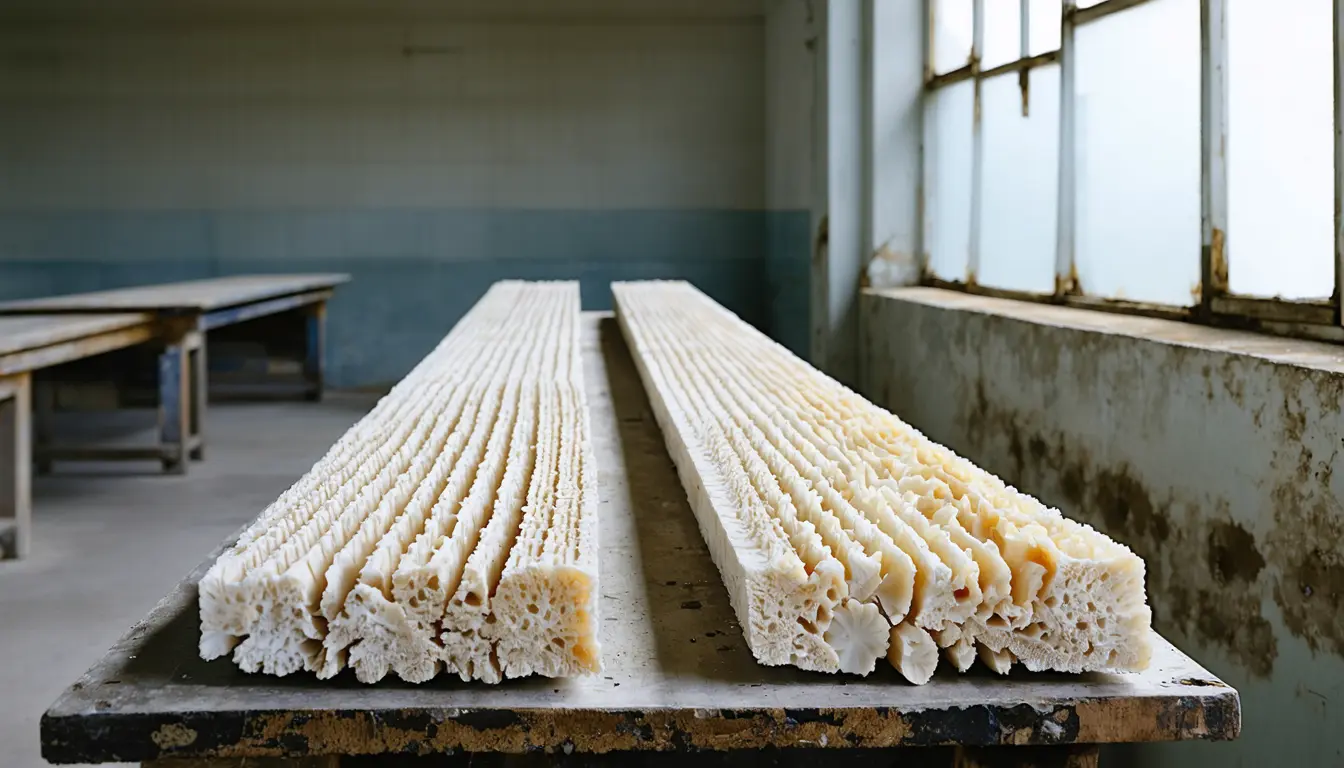
Corals build their skeletons in increments, the way trees add rings, and elements from the surrounding seawater are locked into each layer as it forms [6]. Measure the chemistry along a core and you have a dated log of the water over the reef. This one came from a single massive colony, analyzed by a team from the University of Hawai'i Sea Grant program, the university's School of Ocean and Earth Science and Technology and the U.S. Geological Survey [1].
What I like about the design is what the team set beside that chemistry: the coral's own growth, historical records of land-use change and large-scale climate patterns such as El Nino [7]. Seawater chemistry moves with ocean climate as well as with what washes off the land. Without the climate series, a run of unusual years could pass for a new field upslope. According to the release, the coral recorded both natural climate variability and major changes within the watershed [8].
The sugarcane connection is a match in timing. The chemical changes are dated to the period "as sugarcane agriculture expanded" [4], and the release describes the late-1960s turn in coral growth as "concurrent with" sugarcane expansion [5]. One core can show that two things moved together. It cannot rank the causes of a change on a coast where several things were changing at once.
Most of the series shows a coral growing faster, with calcification rising through much of the record [5]. The decline covers roughly the final 45 years of 253, under a fifth of the series [13]. The release did not disclose the size of that decline or of the 20th-century chemical changes, or what drove the earlier rise in growth.
I think the reference half of the result stands on firmer ground than the causal half. Chemistry laid down before Western contact and plantation agriculture is a direct measurement of the reef in an earlier state [3]. The core cannot show whether keeping sediment on land now would bring calcification back. It records what arrived with the fields, and it stops in 2013 [2].
Samuel Kekuewa is a Hawai'i Sea Grant postdoctoral affiliate researcher [12]. "One of the important lessons from this study is that some of the changes that occurred on land more than a century ago can still provide important context for what we see on reefs today," he said [10]. He also pointed to the restoration already under way: across Hawai'i, Kekuewa said, communities are already doing a large amount of work to restore watersheds, retain sediment on land and protect the downstream coral reefs. "Records like this can help provide the long-term context needed to support and guide that work," he said. [11]
What to watch
- Whether cores from other Olowalu colonies, or from other West Maui reefs, show the same 20th-century chemical rise and late-1960s growth turn.
- Whether West Maui watershed projects adopt the paper's pre-plantation chemistry as a numeric target for sediment and nutrient reductions.
- Records extending past 2013, where this core ends, that show whether calcification kept falling.
Clarity's read
What the record supports and how the coverage leans. The claims behind it follow.
Reality
- Evidence55
- Adoption
- Insufficient
- Hype gap+5
- Incentives
- Insufficient
- Confidence50
Claim ledger
Ranked by verification strength, evidence, and original report placement.
- [1]
Research led by the University of Hawai'i Sea Grant College Program, the UH Manoa School of Ocean and Earth Science and Technology (SOEST) and the U.S. Geological Survey analyzed a 253-year-old core from a massive coral colony at Olowalu Reef off West Maui.
- [2]
The study, by S. A. H. Kekuewa et al., was published in the journal Coral Reefs (2026); the coral core spans approximately 1760 to 2013.
- [3]
The core provided a rare glimpse into conditions before large-scale changes to the West Maui landscape following Western contact and through plantation agriculture and modern coastal development.
- [4]
Chemical indicators associated with sediment, nutrients and other land-derived inputs generally increased over the 253-year record, with some of the largest changes occurring during the 20th century as sugarcane agriculture expanded across West Maui.
- [5]
The coral's growth record showed that calcification increased through much of the record before beginning to decline around the late 1960s, concurrent with sugarcane expansion.
- [6]
Like the rings of a tree, corals build their skeletons incrementally; elements from surrounding seawater are incorporated into the skeleton, so measuring chemistry along the core let researchers reconstruct how conditions changed over generations.
- [7]
Researchers paired the chemical record with measurements of coral growth, historical records of land-use change and large-scale climate patterns such as El Nino.
- [8]
The coral recorded both natural climate variability and major changes occurring within the watershed.
- [9]
Olowalu is one of Hawai'i's largest continuous reef systems and an important source of coral larvae for reefs throughout Maui Nui.
- [10]
"One of the important lessons from this study is that some of the changes that occurred on land more than a century ago can still provide important context for what we see on reefs today."
- [11]
"Across Hawai'i, there is already a large amount of work being done by the community to restore watersheds, retain sediment on land and protect the downstream coral reefs. Records like this can help provide the long-term context needed to support and guide that work."
- [12]
Samuel Kekuewa is a Hawai'i Sea Grant postdoctoral affiliate researcher.
- [13]
The calcification decline occupies roughly the final 45 years of the 253-year record, under a fifth of the series.
Sources
1 independent publisher whose own reporting we read for this story.
- phys.orgOlowalu reef off Maui provides glimpse into two centuries of environmental changes
1 article · October 8, 2026
Topics and entities
Follow any of these and your For You feed starts watching them — no settings page required.