ScienceNot yet confirmed elsewhere1 publisher2 min readPublished
Phosphorus recycling in ancient seas may explain how Earth's oxygen persisted
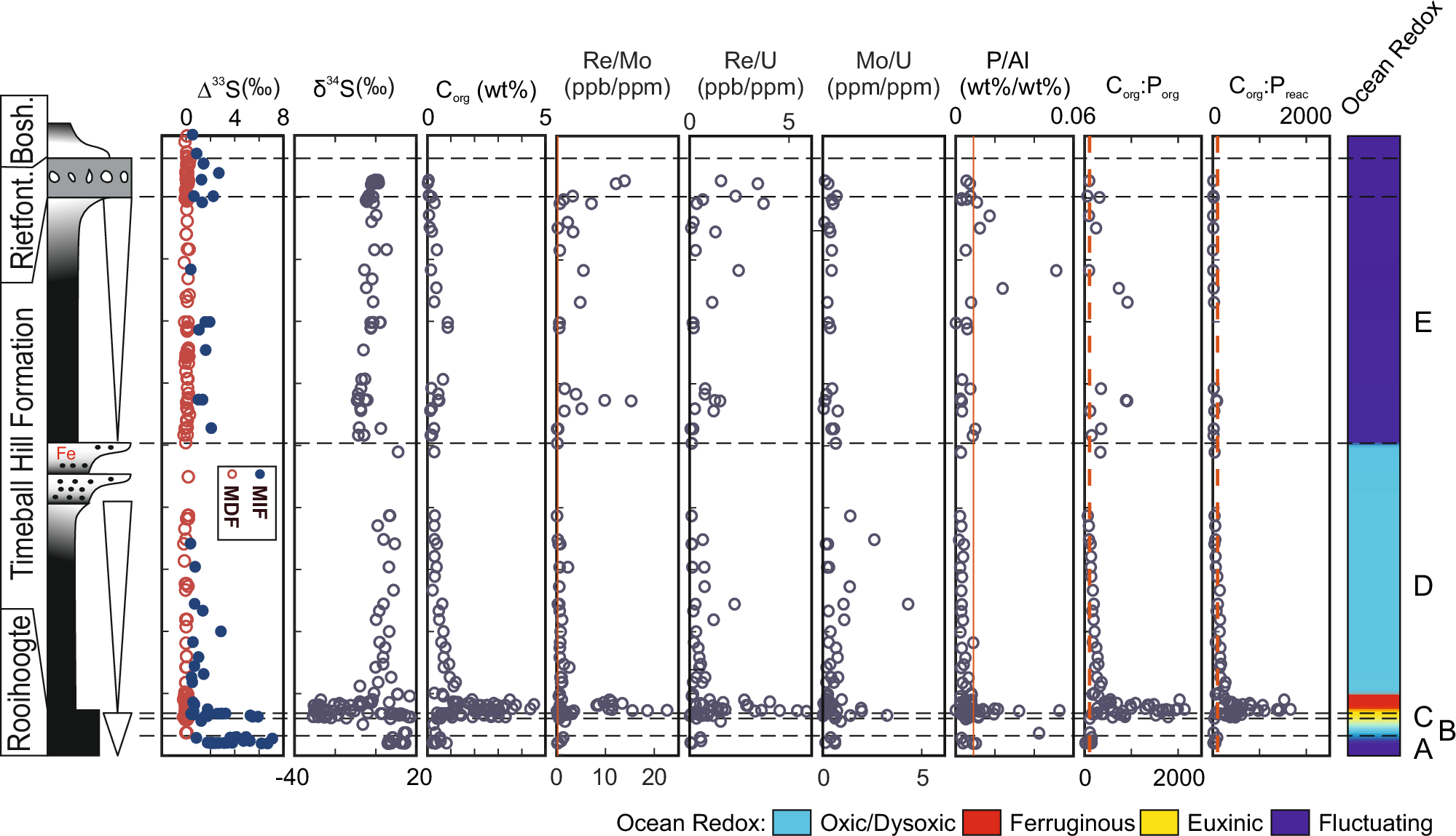
Rocks from South Africa point to an ocean phosphorus loop that helped hold oxygen high about 2.3 billion years ago, researchers report in Nature Communications. The case rests on a method that separates usable phosphorus from locked-up phosphorus in old rock.
The Scientist · Science desk
What happened
- The Great Oxidation Event made oxygen a lasting part of the atmosphere, but explaining how it stayed abundant afterward has been much harder than explaining its arrival.
- Certain microbes used sulfate, which rose as oxygen spread into seawater, to break down organic material more efficiently, and in doing so they released phosphorus back into the water.
- With more phosphorus, biological productivity rose, and more organic carbon could be buried in seafloor sediments instead of being broken down.
- Earlier work could measure how much phosphorus ancient rocks held but could say little about whether organisms could use it, because some is trapped in minerals.
Why it matters
- capability Other rock records can in principle be sorted the same way. That would give researchers a route to ancient nutrient cycles that total-phosphorus readings could not supply.
- constraint Explanations of early atmospheric oxygen now have to include the ocean's phosphorus supply, and the release says that challenges existing assumptions about the early atmosphere.
- contradiction The release summary says scientists "may have solved" the mystery, but its text says the loop "may help explain what happened." The rock evidence supports the second wording.
Phosphorus is the supply that makes the burial step possible, and burial is what the argument turns on. Decomposing organic matter can consume oxygen, so carbon that is buried in seafloor sediment leaves that oxygen in place [13]. The release describes the result as a reinforcing cycle: rising oxygen encouraged chemical changes that supported biological growth, and the growth helped maintain atmospheric oxygen [14]. "Once more of it became available in the oceans, it allowed more organic carbon to be buried," Bekker said [15].
The measurement is the part we would single out. The team dissolved the rock's mineral components one at a time and so could tell phosphorus that had been available to organisms from phosphorus locked in mineral structures [4]. The design matters because the total phosphorus in an ocean does not necessarily indicate how much is available to sustain life [5]. "We can now separate the phosphorus that was available to organisms from phosphorus that was essentially locked away," Bekker said [6].
The account here comes from a University of California, Riverside release dated October 12, 2026 [8]. It did not give the number of samples, the formations studied, the size of any change in oxygen, or which steps of the sulfate-to-burial chain were measured and which were inferred.
In our view the proposed cycle is coherent and the phosphorus separation is the firmer contribution. That holds if the dissolution steps isolate the usable fraction as cleanly as described, and other rock records of the same age could test it. The release adds that the work raises new questions about why complex life took so long to emerge [17].
What to watch
- The Nature Communications paper itself: sample counts, formations studied, and which steps of the sulfate-to-burial chain the rocks measured directly.
- Whether other groups apply the same one-mineral-at-a-time dissolution to rocks of similar age and find the same usable-phosphorus signal.
- Follow-up work on why complex life took so long to appear if oxygen was already being held high.
Clarity's read
What the record supports and how the coverage leans. The claims behind it follow.
Reality
- Evidence45
- Adoption
- Insufficient
- Hype gap+25
- Incentives40
- Confidence45
Claim ledger
Ranked by verification strength, evidence, and original report placement.
- [1]
The research was published in Nature Communications and involved scientists including University of California, Riverside geologist Andrey Bekker.
ReportedSupportedSource: University of California, Riverside release via ScienceDailyView cited source - [2]
About 2.3 billion years ago the Great Oxidation Event made oxygen a lasting component of the atmosphere; scientists have understood the transition for decades, but explaining how oxygen remained sufficiently abundant afterward has been much more difficult.
ReportedSupportedSource: University of California, Riverside release via ScienceDailyView cited source - [3]
Earlier research could determine how much phosphorus was present in ancient rocks but revealed little about whether organisms could actually use it, because some phosphorus becomes trapped in minerals.
ReportedSupportedSource: University of California, Riverside release via ScienceDailyView cited source - [4]
The researchers separated phosphorus according to the minerals that contained it by dissolving different mineral components one at a time, distinguishing phosphorus available for biological activity from phosphorus locked in mineral structures.
ReportedSupportedSource: University of California, Riverside release via ScienceDailyView cited source - [5]
The total amount of phosphorus in an ocean does not necessarily indicate how much is available to sustain life.
ReportedSupportedSource: University of California, Riverside release via ScienceDailyView cited source - [6]
"We can now separate the phosphorus that was available to organisms from phosphorus that was essentially locked away," Bekker said.
- [7]
The new approach provides a clearer way to reconstruct ancient nutrient cycles and understand how they influenced atmospheric oxygen.
ReportedSupportedSource: University of California, Riverside release via ScienceDailyView cited source - [8]
The account comes from a University of California, Riverside release published via ScienceDaily and dated October 12, 2026.
- [9]
By studying rocks from South Africa, researchers found that changes in ocean chemistry helped create a natural cycle in which biological activity supported the continued accumulation of atmospheric oxygen.
ReportedContestedSource: University of California, Riverside release via ScienceDaily2 sources— create a free account to open themView cited source - [10]
As oxygen spread into the oceans, it altered the chemistry of seawater and increased concentrations of sulfate.
ReportedContestedSource: University of California, Riverside release via ScienceDaily2 sources— create a free account to open themView cited source - [11]
Certain microbes used sulfate to break down organic material more efficiently, and in the process released phosphorus back into the water, making it available to other organisms.
ReportedContestedSource: University of California, Riverside release via ScienceDaily2 sources— create a free account to open themView cited source - [12]
With more phosphorus available, biological productivity increased, so more organic carbon could eventually be buried in seafloor sediments rather than broken down.
ReportedContestedSource: University of California, Riverside release via ScienceDaily2 sources— create a free account to open themView cited source - [13]
The decomposition of organic matter can consume oxygen, so burying more carbon helped favor the continued buildup of oxygen in the atmosphere.
ReportedContestedSource: University of California, Riverside release via ScienceDaily2 sources— create a free account to open themView cited source - [14]
The result was a reinforcing cycle in which rising oxygen levels encouraged chemical changes that supported biological growth, which in turn helped maintain atmospheric oxygen.
ReportedContestedSource: University of California, Riverside release via ScienceDaily2 sources— create a free account to open themView cited source - [15]
"Once more of it became available in the oceans, it allowed more organic carbon to be buried," Bekker said.
ReportedContestedSource: Andrey Bekker, University of California, Riverside2 sources— create a free account to open themView cited source - [16]
The release summary says scientists "may have solved" the mystery, while its text says the researchers identified a feedback loop that "may help explain what happened."
ReportedContestedSource: University of California, Riverside release via ScienceDaily2 sources— create a free account to open themView cited source - [17]
The release says the discovery raises new questions about why complex life took so long to emerge.
ReportedInsufficientSource: University of California, Riverside release via ScienceDailyView cited source - [18]
The release says the discovery challenges assumptions about Earth's early atmosphere.
ReportedInsufficientSource: University of California, Riverside release via ScienceDailyView cited source
Sources
1 independent publisher whose own reporting we read for this story.
- sciencedaily.comScientists uncover the 2.3-billion-year-old secret that helped keep Earth habitable
1 article · October 12, 2026
Topics and entities
Follow any of these and your For You feed starts watching them — no settings page required.