ScienceNot yet confirmed elsewhere1 publisher2 min readPublished
A reshuffling of cephalopod DNA hundreds of millions of years ago joined distant gene regions
University of Vienna researchers report an ancient DNA reshuffling that brought separate gene regions into contact in coleoid cephalopods. The Nature Communications paper proposes the new contacts may have helped drive their unusually complex nervous systems.
The Scientist · Science desk
What happened
- The researchers mapped how the genome is folded in three dimensions in octopuses, squid and cuttlefish.
- They set those folding maps against gene-activity patterns to test how shifts in genome structure might bear on biological complexity.
- Large chromatin domains stayed remarkably stable over long periods of evolutionary history, which suggests some features of genome architecture are strongly conserved.
- The scientists describe the proposed process, in which interactions become increasingly interconnected and hard to separate, as "regulatory entanglement."
Why it matters
- contradiction The release says DNA structure may have "a much more active role in evolution than scientists once thought", yet its own wording on the nervous-system link is "may" and "potentially".
- decision Comparisons of cephalopod genomes by sequence alone would miss a change that lives in folding, so teams studying complexity in other animals have a reason to add folding data.
- precedent Other lineages with elaborate nervous systems become obvious candidates for the same folding-versus-activity comparison.
Folding is a plausible place to look. Sections far apart along the DNA sequence can touch once the molecule folds, and contact can change which genes are active, when they are used and how strongly [7]. That can happen without any change to the genetic instructions themselves [8].
The paper's explanation rests on the entanglement idea. According to the University of Vienna release, once the newly joined regions could influence each other, they gradually built more elaborate networks of genetic regulation [12]. The authors suggest this lets a genome develop different patterns of gene activity while keeping crucial biological systems intact [10].
"The genome isn't just a sequence of genes. It's folded into a complex three-dimensional structure," said lead author Dr. Thea Rogers. "Understanding how that structure evolves is becoming increasingly important for understanding how new forms of biological complexity arise." [6]
Setting contact maps beside activity patterns can show whether the two line up. It cannot show whether the new contacts built the nervous systems or simply arrived alongside them. Settling that takes an experiment that alters a contact and watches what changes.
The timing is also loose. The reorganization is dated only to hundreds of millions of years ago [1], a wide window for tying a genome event to a trait. The summary does not state how many species or tissues were sampled, or report an experiment that disrupts the new contacts.
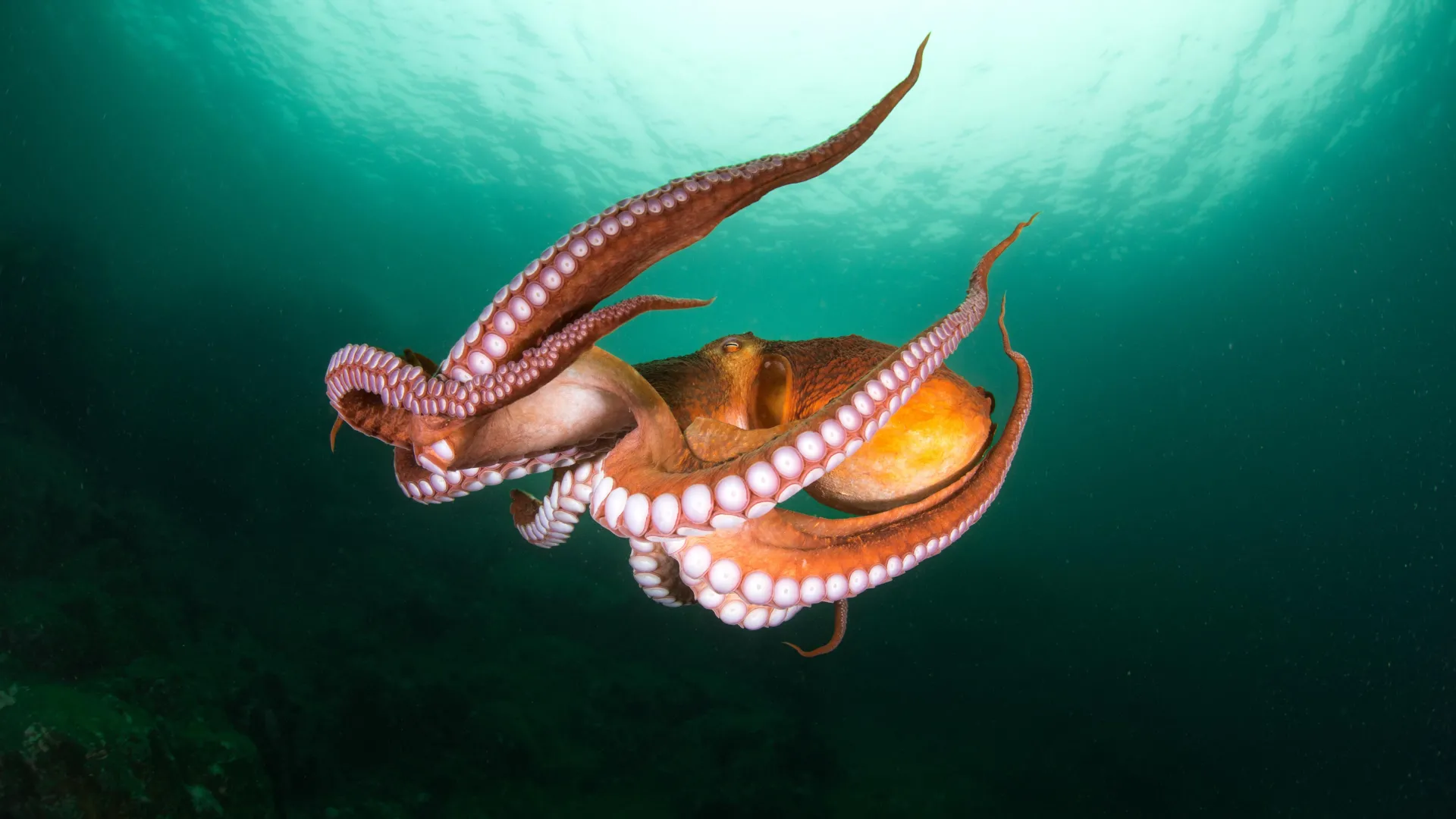
The animals involved are octopuses, squid and cuttlefish, known collectively as coleoid cephalopods [5]. The release's own verbs track the evidence: the connections "potentially" helped drive nervous-system evolution [14]. We think that is the right strength for a hypothesis that is worth testing and has not yet been tested.
What to watch
- The full Nature Communications methods: how many species and tissues were sampled, and what the folding-versus-activity comparison was controlled against.
- An experiment that alters one of the new contacts in cephalopod cells and measures what happens to nervous-system gene activity.
- Genome-folding maps from molluscs outside the coleoid cephalopods, to see whether the same contacts are missing there.
Clarity's read
What the record supports and how the coverage leans. The claims behind it follow.
Reality
- Evidence50
- Adoption
- Insufficient
- Hype gap+25
- Incentives
- Insufficient
- Confidence50
Claim ledger
Ranked by verification strength, evidence, and original report placement.
- [1]
Researchers at the University of Vienna discovered that a massive reorganization of DNA hundreds of millions of years ago brought previously separated genetic regions into contact.
- [2]
The findings were published in Nature Communications.
- [3]
The research team reconstructed the three-dimensional organization of the genome in octopuses, squid and cuttlefish.
- [4]
The team compared the arrangement of DNA with patterns of gene activity to understand how changes in genome structure might influence biological complexity.
- [5]
Octopuses, squid and cuttlefish are collectively known as coleoid cephalopods.
- [6]
"The genome isn't just a sequence of genes. It's folded into a complex three-dimensional structure," said lead author Dr. Thea Rogers. "Understanding how that structure evolves is becoming increasingly important for understanding how new forms of biological complexity arise."
- [7]
DNA folds into a three-dimensional arrangement that lets sections far apart along the sequence come into close physical contact, and these connections can influence which genes are activated, when they are used, and how strongly they function.
- [8]
Changes in the way DNA folds can alter gene activity without necessarily changing the underlying genetic instructions.
- [9]
Over evolutionary time the interactions could become increasingly interconnected and difficult to separate, a process the scientists describe as "regulatory entanglement."
- [10]
By establishing new connections among existing genetic elements, the genome may develop different patterns of gene activity while keeping crucial biological systems intact.
- [11]
Large structural regions called chromatin domains remained remarkably stable over long periods of evolutionary history, and their persistence suggests some features of genome architecture are strongly conserved.
- [12]
Once the new connections formed, the DNA regions could influence each other's activity, gradually establishing more elaborate networks of genetic regulation.
- [13]
The findings suggest that the physical structure of DNA may play a much more active role in evolution than scientists once thought.
ReportedContestedSource: University of Vienna release, carried by ScienceDaily2 sources— create a free account to open themView cited source - [14]
The newly formed connections changed how genes could interact and be controlled, potentially helping drive the evolution of the unusually complex nervous systems found in coleoid cephalopods.
ReportedContestedSource: University of Vienna release, carried by ScienceDaily2 sources— create a free account to open themView cited source
Sources
1 independent publisher whose own reporting we read for this story.
- sciencedaily.comScientists find a surprising genetic twist behind octopus intelligence
1 article · October 12, 2026
Topics and entities
Follow any of these and your For You feed starts watching them — no settings page required.
Topics
- CephalopodsFollow
- Genome architectureFollow
- Evolutionary BiologyFollow