Leadership1 publisher2 min readPublished
NRDC puts Drax's 1.2GW AI datacentre plan at 8.6m tonnes of CO2 a year
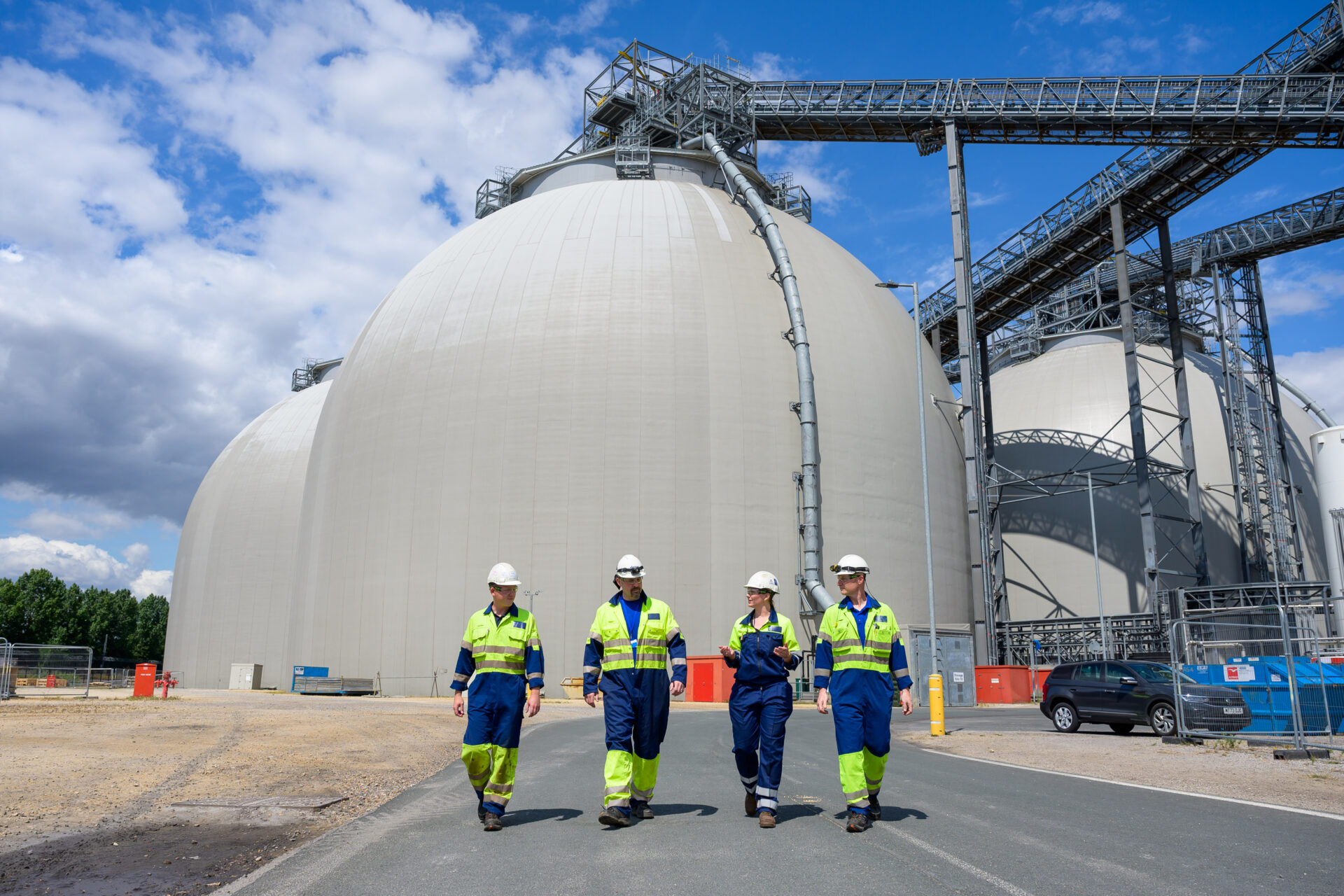
NRDC estimates Drax's planned 1.2GW datacentre would burn 4.9m tonnes of wood and emit 8.6m tonnes of CO2 a year, nearly twice the CO2 of all Gatwick flights. Drax calls the estimate inaccurate, and the accounting dispute behind it would decide what any tenant could report.
The Board Room · Leadership desk
Drafted by a language model from the sources cited here and checked against its claim ledger before publication. How we use AISend a correction
What happened
- Drax's documents put 100MW of the planned load on the grid and the rest on its own power station, a plant that already burns millions of tonnes of imported wood.
- Matt Williams, a senior advocate at NRDC, said the plant would be "one of the dirtiest datacentres out there".
- The project has not yet entered the formal planning process, and Drax said it could be fully operational from 2031 if it secures the necessary consents.
- Scottish MPs voted in September to pause new datacentre planning applications for up to a year, while the UK government has ruled out a moratorium.
Compiled by The Board RoomSomething wrong?How this is made
Why it matters
- contradiction A tenant's reported footprint at the site would turn on accounting method alone, ranging from clean under the approach Drax defends to NRDC's full count of the wood burned.
- exposure Any tenant describing the site's power as low-carbon would be resting that claim on an approach researchers say could take 150 years to turn carbon negative.
- decision Because Drax capacity is years away, the choice buyers face this year is how their supply terms count biomass power from any provider, ahead of any rule on standards.
- precedent If it clears planning, the design would show a power station hosting a large datacentre while asking the grid for only a twelfth of its load.
NRDC's estimate rests on two choices, and Drax disputes both. The first is operating hours. Working from Drax's 2025 annual report, the campaign group assumed the datacentre would run at a constant rate for every hour of the year [17][18]. At 1.2GW, that comes to about 10.5TWh of electricity a year [14]. Spread across all of it, 8.6m tonnes of CO2 is roughly 820 grams per kilowatt-hour [15]. The Gatwick comparison, about 1.8 times the 4.79m tonnes from all the airport's flights in 2024, depends on that assumption [4][13].
The second choice is to count the carbon released by burning the wood. Biomass has been promoted as a clean source that could even deliver "negative emissions", on the reasoning that replacement forests take CO2 back out of the air as they grow [19]. Scientists and environmental experts strongly contest that accounting, the Guardian reported [20].
Drax's response goes to both points. A spokesperson called NRDC "a long-standing anti-biomass campaign group" and said: "Their inaccurate assertions are not independently verified and are rooted in basic errors regarding the international standards for GHG accounting of biomass and bioenergy and on the potential datacentres' power mix." [7] The power-mix objection has some force. Drax describes the 1.2GW scheme as options it is developing [1], and a site running below full load would burn less wood. The response as reported does not include an alternative emissions figure [7].
For a tenant, the accounting question matters more than the hours, because nearly all the power would come from the station. Drax's split leaves about 1.1GW, or 92 per cent of the load, on the plant [1][12]. I'd expect the small grid connection to be part of the case for building at a power station. There are 315 datacentres in the queue to connect to the UK grid, representing 73GW of demand, almost double the country's peak winter demand [9].
The site itself is a question for the 2030s [8]. Williams wants ministers to act before then. "The government must urgently set minimum standards for datacentres and rule out dirty energy generation like burning trees," he said [6]. Contracts that book biomass power as clean rely on the energy source he wants ruled out. In my view, if ministers adopted standards of that kind, those contracts would be the first to need revisiting.
What to watch
- Whether Drax files a formal planning application, and what operating hours and power mix it states for the 1.2GW site.
- Whether Drax or an independent party publishes an emissions estimate for the site under the biomass accounting standards Drax cites.
- Whether the UK government sets minimum standards for datacentre power, as NRDC's Williams has asked, or holds to its refusal of a moratorium.