InvestNot yet confirmed elsewhere1 publisher3 min readPublished Updated
Britain's Greens want data centres demoted from critical infrastructure mid-drought
Zack Polanski's freeze demand is unlikely to pass, but the argument beneath it, over a 2024 designation and two water estimates that differ by orders of scale, is where the consenting risk on Britain's AI buildout actually sits.
The Investor · Invest desk
What happened
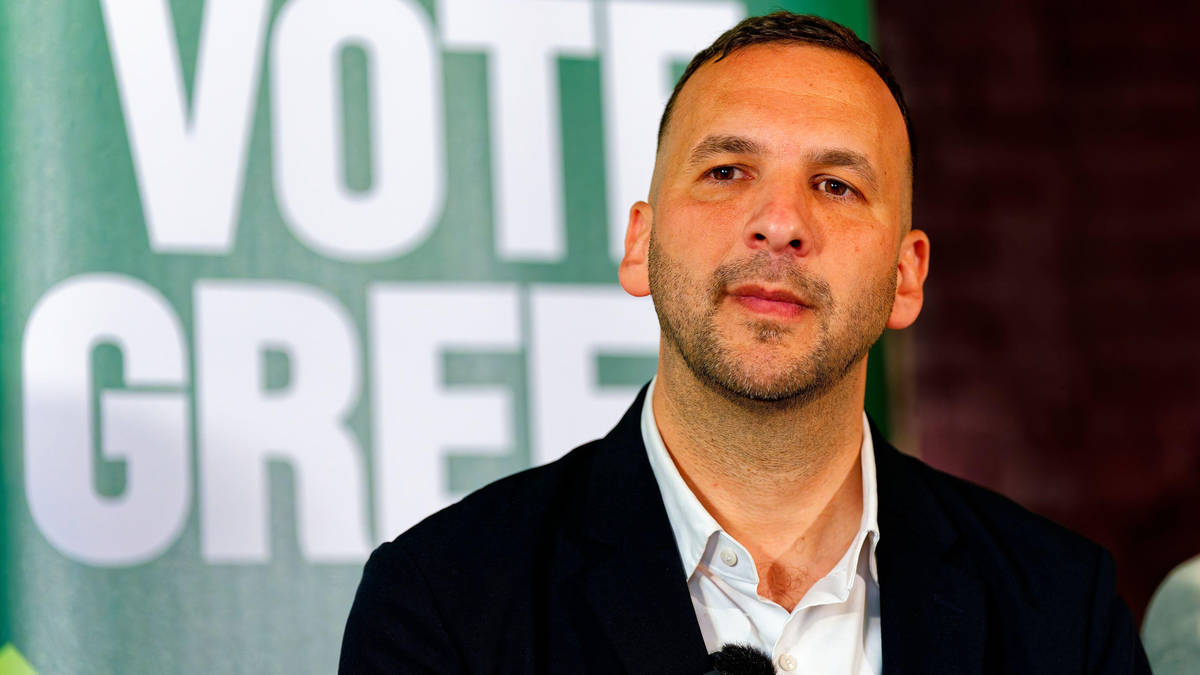
- Green Party leader Zack Polanski asked the UK government to freeze approvals for new data centres in England and to strip the facilities of their critical-infrastructure status, citing drought, rising water use and carbon emissions.
- Standing at the proposed site of an East London data centre, Polanski told the BBC that ministers should slam the brakes on approving large facilities, and told LBC that data should serve people rather than the reverse.
- The status he wants revoked was granted by a 2024 government decision that reclassified data centres as critical national infrastructure, a designation carrying extra state support and other perks.
- A senior Labour official told POLITICO that a pause would be a disaster for jobs and national security, pushing investment abroad and leaving sensitive health and defence data on overseas computers.
- Polanski stopped short of demanding a full moratorium, proposing instead that consent be limited to small facilities serving their immediate communities.
Why it matters
- contradiction Because operators file no water data at all, the number that governs a planning decision is whichever advocacy estimate goes unrebutted on the day, and the two in circulation differ by more than a factor of three at sector scale.
- exposure Two Home Counties schemes now carry a published emissions figure bigger than an oil major's entire UK footprint, which makes those individual consents, rather than the national AI strategy, the thing an objector can actually reach.
- cost Whitehall's defence of the designation comes with conditions on clean power, water management and community spending, and each of those conditions is a line item that raises the delivered cost of a British site against a foreign one.
- precedent American pauses arrived where the argument was framed around household bills rather than local water, so the route to a British freeze runs through electricity prices, not drought maps.
The two water numbers in this fight measure different things, which is why both sides can cite them honestly. The Water Research Centre's February estimate, roughly 1.9 billion litres of drinkable water a year for England's data centres, or 0.2% of the non-household market [7], works out at about 5.2 million litres a day across the entire sector [18]. The Global Action Plan figure the Greens prefer puts a single large facility at up to 1.5 million litres a day [8], which annualises to 547.5 million litres, so England's whole metered sector amounts to roughly three and a half of the Greens' buildings [19]. A sector total at the meter measures something different from a per-site ceiling, and both figures can hold. That 0.2% share, incidentally, implies a non-household market of around 950 billion litres a year [20], which is the denominator doing most of the reassuring.
The carbon side is more tractable, and more revealing about method. Foxglove's projection for Wapseys Wood in Buckinghamshire and Quest Park in Bedfordshire, more than 4.5 million tonnes a year at full operating capacity on 1.3GW of draw [9], sits about 15% above the 3.9 million tonnes Ember attributes to ExxonMobil's entire UK operation in 2023 [11][21]. Run 1.3GW flat out and you get 11.4 TWh a year, so 4.5 million tonnes implies something near 395 grams of CO2 per kilowatt hour [22], an assumption about the electricity these halls will buy, a variable that shifts with grid mix rather than a fixed property of the halls. It is the exact term the senior Labour official was reaching for in conceding the designation is "not a blank cheque for Big Tech" and that developers must use clean power, manage water responsibly and invest in host communities [15].
For anyone underwriting a British site, the 2024 designation [5] is worth less as a subsidy line than as a ranking. The Greens' objection is that these facilities would come ahead of homes for water and electricity in a shortage [6], which is another way of saying the status is an availability assumption, and availability is what a colocation contract actually sells. Demote it in a summer the Green Party says has three quarters of the country scrambling for consistent supply [23], and the uptime story gets rewritten before any covenant does.
The counter-thesis is strong. Polanski stopped short of a full moratorium [14], his party does not hold the pen, and Whitehall has dug in on jobs and data sovereignty [13]. Neil Ross of Public First reads UK opposition as local and environmental where American anger is about household bills [16], and local objections travel through planning committees rather than statute, which is the slower route, or rather the more expensive one, because it lands on named schemes and specific months. This is probably wrong, but I would price a water reporting duty here, since Toby Perkins chairs a Commons inquiry that has already framed the issue as missing safeguards [12], and disclosure is the cheapest safeguard to legislate; a freeze looks like the less likely outcome. If the consents at Wapseys Wood and Quest Park land on schedule and the designation survives that inquiry intact, I was pricing noise.
What to watch
- Any UK operator voluntarily publishing site-level water withdrawal, which would end the two-number argument on the industry's own terms.
- Whether Labour attaches enforceable clean-power and water conditions to the critical national infrastructure designation instead of defending it unconditionally.
- Whether members of the Commons inquiry adopt the freeze language, moving it from opposition rhetoric into select committee text.
Clarity's read
What the record supports and how the coverage leans. The claims behind it follow.
Reality
- Evidence40
- Adoption20
- Hype gap+32
- Incentives75
- Confidence45
Claim ledger
Ranked by verification strength, evidence, and original report placement.
- [1]
Green Party leader Zack Polanski asked the UK government to freeze approvals for new data centres in England.
- [2]
Polanski also asked the government to strip data centres of their critical-infrastructure status, citing drought, rising water use and carbon emissions.
- [3]
Polanski told the BBC at the proposed site for an East London data centre that the government should "slam the brakes" on approving large data centres.
- [4]
Polanski proposed allowing only small facilities that actually serve their immediate communities.
- [5]
The UK government's 2024 decision upgraded data centres to critical national infrastructure status, a designation that comes with extra state support, among other perks.
- [6]
The Greens say they are fighting to avoid a future in which energy- and water-guzzling data centres take priority over homes for water and electricity in the event of a shortage.
- [7]
In February, the Water Research Centre estimated that data centres use roughly 0.2% of England's non-household water market, drawing about 1.9 billion litres of drinkable water per year.
- [8]
The Greens cite research from the Global Action Plan charity concluding that a single large data centre can use up to 1.5 million litres of water per day.
- [9]
A Foxglove analysis reported by the Guardian identified proposed sites at Wapseys Wood in Buckinghamshire and Quest Park in Bedfordshire as the source of more than 4.5 million tonnes of carbon emissions a year once at full operating capacity, while drawing 1.3GW of power.
- [10]
UK data centre operators do not have to report their water use.
- [11]
The thinktank Ember attributed 3.9 million tonnes of emissions to ExxonMobil's entire UK operation in 2023.
- [12]
Labour MP Toby Perkins, who chairs a Commons inquiry into the sector, said the findings were a reminder that data centres could pose "a serious threat" to legally binding climate goals without the right safeguards.
- [13]
A senior Labour official told POLITICO that a pause "would be a disaster for jobs and national security," warning it would push investment abroad and leave Britain reliant on overseas computing for sensitive health and defence data.
- [15]
The same senior Labour official said the position was "not a blank cheque for Big Tech," saying developers must use clean power, manage water responsibly and invest in host communities.
- [16]
Neil Ross of Public First told POLITICO that UK opposition is driven mainly by local and environmental worries, whereas US anger centres on household energy bills.
- [17]
US anger over data centres has produced moratoriums and pauses in states including New York and Texas, and a National Republican Senatorial Committee memo warned AI firms about the backlash.
- [18]
The Water Research Centre's 1.9 billion litres a year for England's data centres is about 5.2 million litres a day for the whole sector.
- [19]
At the Global Action Plan rate of 1.5 million litres a day (547.5 million litres a year), the Water Research Centre's national total equals roughly 3.5 large facilities.
- [20]
If 1.9 billion litres a year is 0.2% of England's non-household water market, that market is about 950 billion litres a year.
- [21]
Foxglove's 4.5 million tonnes for the two proposed sites is about 15% above Ember's 3.9 million tonnes for ExxonMobil's whole UK operation in 2023.
- [22]
1.3GW run continuously is about 11.4 TWh a year, so 4.5 million tonnes of CO2 implies an emissions factor near 395 grams per kilowatt hour.
- [23]
The UK is in the middle of a summer drought, which the Green Party claims has left three-quarters of the country scrambling for consistent water supply.
- [24]
Industry stakeholders argue that leisure centres, golf courses and leakage are bigger water wastage problems than data centres.
Sources
1 independent publisher whose own reporting we read for this story.
- cryptopolitan.comUK Green Party leader leads anti-data center push as AI firms lose narrative war
1 article · August 28, 2026
Topics and entities
Follow any of these and your For You feed starts watching them — no settings page required.
Topics
Entities
- Zack PolanskiFollow
- Green Party of England and WalesFollow
- Labour PartyFollow
- Water Research CentreFollow
- Global Action PlanFollow
- FoxgloveFollow
- EmberFollow
- ExxonMobil Holdings Corp.Follow
- Toby PerkinsFollow
- Caroline LucasFollow
- Neil RossFollow
- Public FirstFollow
- James MeadwayFollow
- National Republican Senatorial CommitteeFollow
- PoliticoFollow
- The GuardianFollow
- BBCFollow
- CryptopolitanFollow