Science1 publisher3 min readPublished
The IET wants a product standard for the plug-in solar the UK legalised on 27 August
Plug-in kits became legal in the UK on 27 August, and the Institution of Engineering and Technology says most residual current devices in British fuse boxes were never suitable for current flowing both ways.
The Scientist · Science desk
What happened
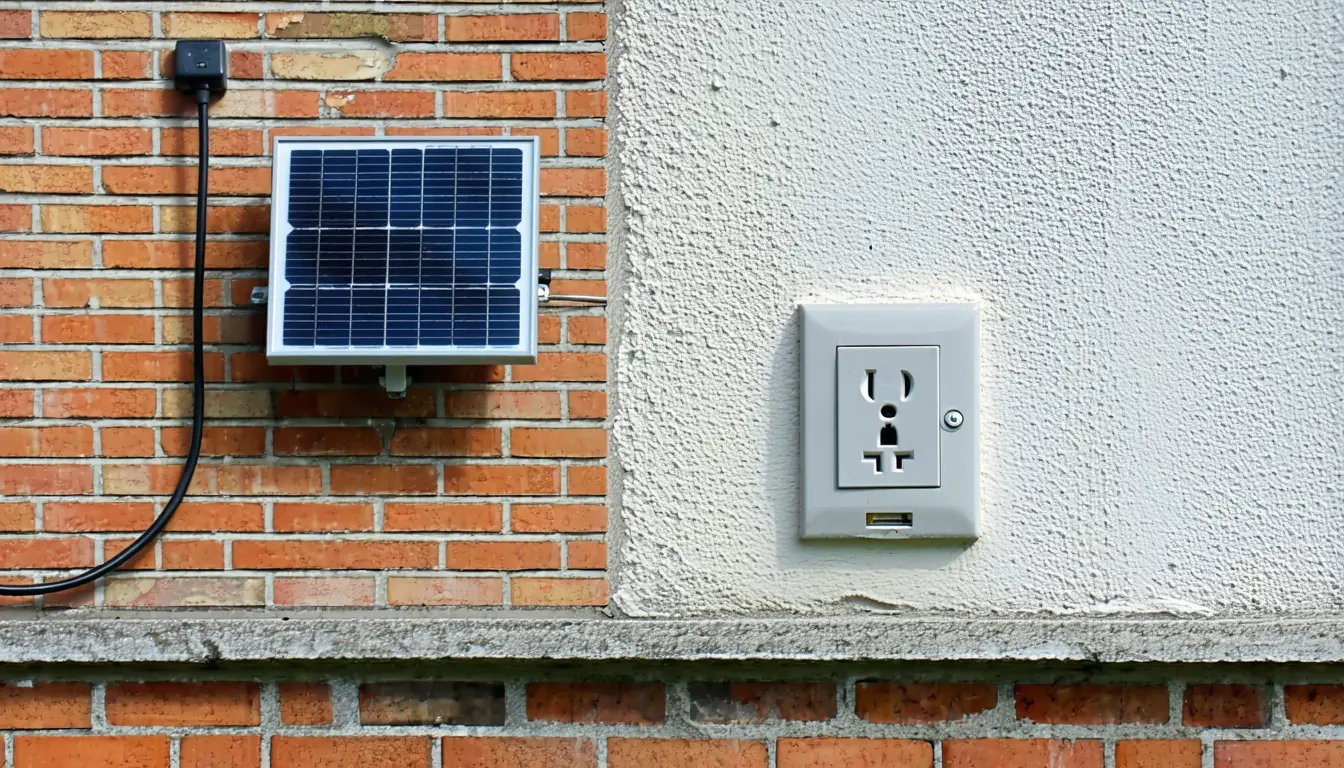
- The UK government made plug-in solar panels legal to buy and use on 27 August, presenting them as a way to raise renewable generation and cut household bills.
- A kit needs no installation cost, no certification and no planning permission, and the buyer puts it in a sunny spot and plugs it into a wall socket.
- Mark Coles, head of technical regulations at the Institution of Engineering and Technology, says most RCDs used in the UK are not suitable for current flowing in both directions and could malfunction with a plug-in kit.
- The IET put its objections to the Department for Energy Security and Net Zero before and during the consultation that closed on 30 June, and Coles says they were not addressed.
- The department says its testing looked at older household electrical safety devices and found no evidence that plug-in solar affected their ability to provide electrical protection.
Compiled by The ScientistSomething wrong?How this is made
Why it matters
- constraint The 40 millisecond trip requirement binds the RCD and nothing on the generating side, so there is no figure a kit's shutdown time can be tested against until a product standard exists.
- contradiction Coles says the RCDs used in the government-funded tests were brand new. The finding does not cover a decade-old device sitting in a household's own fuse box.
- exposure With no certification step in the purchase, the household carries the verification, and the IET's remedy is a paid electrical inspection before buying a product sold on having no installation cost.
A UK residual current device has 40 milliseconds to sense current leaking to ground and cut the supply, a limit derived from studies of how fast electric current damages the body [3][7]. Forty milliseconds is a twenty-fifth of a second [10]. No comparable figure exists for a plug-in solar kit, and Mark Coles of the IET said a kit could, if things go wrong and in very limited circumstances, take longer than that to shut down [8]. "You could be exposed to the electric current for longer than you should have been," he said. "You're in the danger zone." [9]
The institution's other worry needs more than one household. During a power cut the kits are supposed to stop generating, so that one home's wiring does not stay live, a condition called islanding [5]. Coles's concern is that several kits still producing power could deceive each other into reading a live grid, keep running, and push power past the fuse box into the hands of maintenance workers fixing the outage [5][6].
The consultation by the Department for Energy Security and Net Zero closed on 30 June and the devices were legal on 27 August, 58 days later [1][11][13]. "It was a done deal before it went out, I'm sure," Coles said. "It's been rushed. There needed to be time to develop a proper standard for these things, because we feel under certain circumstances that there's an increased risk to life." [12]
Coles says the risks appear only when several problems coincide at once, and that wide adoption will inevitably produce an injury or a death over time [19]. The published account carries no incident count, and it neither names the contractor nor cites a test report [22].
A DESNZ spokesperson told New Scientist that "we have funded an independent contractor to fully test the electrical safety of plug-in solar devices on UK electrical house wiring practice, which have found these products to be safe" [14]. The kits are popular in several European countries, and Coles says the tested units were sourced outside the UK because none was legal here at the time, and that the RCDs used in the tests were brand new [21][16]. His second objection is about what the test was measuring against: there was no clear definition or regulation for the panels tested, so units now on sale may behave differently [17]. "They spent this money on getting these units tested, but these units were non-standard units," Coles said. "So it's not like I'm testing something that's been made to a product standard and I'm seeing how it conforms to this product standard. So I don't see the point of spending the money. From our point of view, it's being rushed." [18]
What to watch
- Publication of the contractor's test report, including which RCD models and ages were on the bench, would settle whether older devices were genuinely covered.
- A UK product standard for plug-in solar kits, or a DESNZ commitment to write one, would give conformity testing something to measure against.
- Any recorded incident involving a plug-in kit and a household RCD, and whether it comes with a failure rate.