Roman inherits astronomy's thirty-year queue for observing time
The telescope's first proposal round came back twelvefold oversubscribed. Hubble and Webb have posted the same result for years: the figure describes how much telescope time exists, not Roman's standing in particular.
The Board Room · Leadership desk
What happened
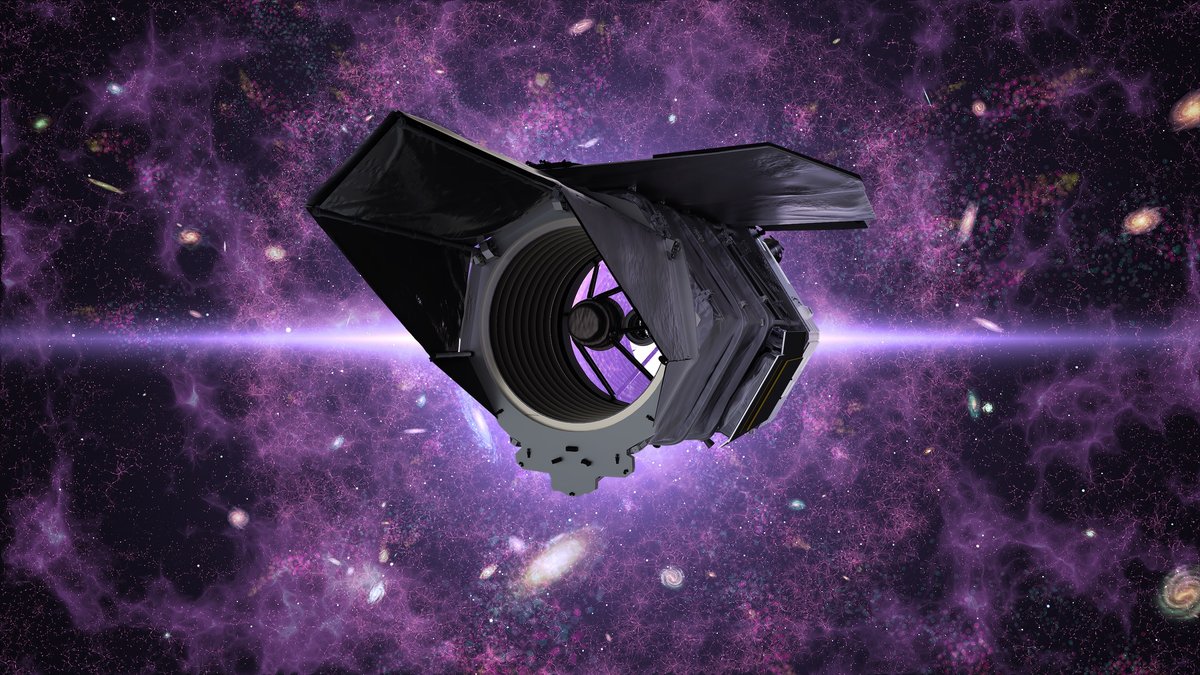
- NASA's Nancy Grace Roman Space Telescope was set to launch on Aug. 30 from Kennedy Space Center atop a Falcon Heavy rocket, with the mission ready some eight months ahead of its schedule.
- Roman's field of view is roughly 100 times larger than Hubble's while holding a similar image resolution.
- Its first call for proposals drew requests for 14,386 hours of observing time against 1,200 hours available, a twelvefold oversubscription.
- Congress appropriated roughly $7.3 billion for NASA's Science Directorate in FY2026 against roughly $7.8 billion for Exploration, with the science figure spread across more than 125 active missions.
- Roman's coronagraph, added as the design evolved, is described by NASA as a technology pathfinder for the Habitable Worlds Observatory, a 2040s flagship meant to image Earth-like planets and look for signs of life.
Why it matters
- decision The live choice is whether the next appropriation buys another flagship or more hours on instruments already flying, and a demand ratio cannot arbitrate it, because the ratio rises under either answer.
- precedent The Habitable Worlds Observatory will reach its hearings with an oversubscription figure of its own, and accepting twelvefold as vindication now sets the terms on which a 2040s build gets argued.
- exposure Because the coronagraph is the demonstration article for HWO's exoplanet imaging, an instrument that underdelivers on orbit becomes a design and schedule problem for a telescope two decades out.
The division is worth doing carefully, because the headline ratio and the useful number are not the same thing. Requests for 14,386 hours against 1,200 on offer works out to 11.99 to one [4][12]; the figure that describes the program is the remainder, 13,186 hours of proposed observing that the first cycle has no way to buy [13]. A remainder that size is a statement about how many hours exist, and it would look much the same if the instrument were half as capable, because the denominator is set by what was built and the numerator by how many astronomers are working.
The skeptic's version deserves stating: a peer-review process that clears twelve times its capacity is telling you the instrument was worth building. That is a fair point, but it does not make the number comparative. Hubble has run oversubscribed for more than thirty years, and Webb has been oversubscribed since it came online in 2022 [5][6]. A figure that holds across three instruments and three decades describes the supply of telescope time; it says nothing about the standing of the newest telescope in the queue.
The structural reason the ratio gets promoted anyway sits in the appropriation. Spread the science account evenly across the missions it carries and each averages about $58 million, and that is a ceiling rather than an estimate, since the count is more than 125 [14]. Exploration's money sits on one campaign, which is why Artemis II, which flew earlier this year, was covered as a step toward a crewed lunar landing and eventually Mars rather than as a result that had to justify itself [17].
The board-deck version of this launch is that demand validates the investment and the queue justifies the next build. It is incomplete in a specific way: the same slide would have been defensible for Hubble around 1996 and for Webb in 2023 [16], and a metric that cannot tell those years apart cannot arbitrate between building another flagship and buying more hours on what already flies. That arbitration is what the decadal surveys do, and Roman's capabilities were ranked the community's top priority for a new large space mission in the 2010 astrophysics decadal, sixteen years before the launch [9][15].
That makes this a question about what the agency is teaching its funders to read. The Habitable Worlds Observatory will bring its own oversubscription figure to its own hearings [11], and if twelvefold reads as vindication now, chronic shortage reads as sound management then. The hours stay short under either reading, and the argument for buying more of them has to be made by someone who is not also selling the next flagship.
What to watch
- Whether Roman's second call for proposals publishes a ratio near twelve once the instrument is on orbit and performing.
- Whether the FY2027 request books the coronagraph's results as a Habitable Worlds Observatory milestone or as a Roman deliverable.
- Whether the next astrophysics decadal survey ranks added observing throughput against another flagship build.
Clarity's read
What the record supports and how the coverage leans. The claims behind it follow.
Reality
- Evidence58
- Adoption74
- Hype gap−12
- Incentives62
- Confidence55
Claim ledger
Ranked by verification strength, evidence, and original report placement.
- [1]
NASA's Nancy Grace Roman Space Telescope was set to launch on Aug. 30 from Kennedy Space Center atop a Falcon Heavy rocket.
- [2]
Roman offers a field of view roughly 100 times larger than Hubble's while maintaining a similar image resolution.
- [3]
The Roman mission was ready to launch eight months ahead of schedule.
- [4]
Roman's first call for proposals drew requests for 14,386 hours of observing time against 1,200 available hours, a twelvefold oversubscription.
- [5]
Hubble has faced oversubscription for its observing time for over 30 years.
- [6]
The James Webb Space Telescope has been oversubscribed since it came online in 2022.
- [7]
In FY2026, Congress appropriated roughly $7.3 billion for NASA's Science Directorate and roughly $7.8 billion for its Exploration Mission Directorate.
- [8]
Exploration funding is concentrated around a single campaign, whereas NASA's science budget supports more than 125 active missions and thousands of competed research awards.
- [9]
Roman's capabilities trace back to a 2010 astrophysics decadal survey, which ranked it as the scientific community's top priority for a new large space mission.
- [10]
Roman's coronagraph instrument was added to the mission as its design evolved and is now described by NASA and the broader astronomy community as a technology pathfinder for the Habitable Worlds Observatory.
- [11]
The Habitable Worlds Observatory is NASA's next flagship telescope, designed to directly image Earth-like planets around other stars and search their skies for signs of life, with an eventual launch in the 2040s.
- [12]
Requests of 14,386 observing hours against 1,200 available is a ratio of 11.99 to one, consistent with the twelvefold figure.
- [13]
Roman's first proposal cycle leaves 13,186 requested observing hours unmet.
- [14]
Divided evenly, NASA's FY2026 science appropriation averages about $58 million per active mission, and that is an upper bound because the mission count is stated as more than 125 and the account also funds thousands of competed research awards.
- [15]
Roman launched sixteen years after the 2010 decadal survey that ranked it the top priority for a new large space mission.
- [16]
Hubble's oversubscription of more than 30 years as of the 2026 launch dates it to roughly 1996 or earlier, and Webb's dates from 2022, so both were oversubscribed in 2023.
- [17]
Artemis II, the flagship NASA human spaceflight mission that flew earlier this year, has been consistently presented in coverage as a stepping stone toward a crewed lunar landing and eventually a crewed mission to Mars.
Get this ledger inside ChatGPT. Ask about any of our stories and the answer brings its figure, each claim’s verdict and the sources. Free, no account.
Sources
1 independent publisher whose own reporting we read for this story.
- forbes.comNancy Grace Roman Thought Beyond A Single Mission. We Should Too.
1 article · August 29, 2026
Topics and entities
Follow any of these and your For You feed starts watching them — no settings page required.
Topics
Entities
- Nancy Grace Roman Space TelescopeFollow
- Habitable Worlds ObservatoryFollow
- Hubble Space TelescopeFollow
- James Webb Space TelescopeFollow
- NASAFollow
- Artemis IIFollow
- Falcon HeavyFollow
- 2010 Astrophysics Decadal SurveyFollow
- Jerry MoranFollow
- Nancy Grace RomanFollow
- Neil deGrasse TysonFollow
- Kennedy Space CenterFollow
- Roman Coronagraph InstrumentFollow