Los Angeles jury awards $6 million against Meta and YouTube on a platform-design theory
A Los Angeles jury found Meta and YouTube negligent in platform design and awarded one plaintiff $6 million in damages. The case reached the jury because the trial judge declined to dismiss it under Section 230, and an appeals court has yet to review that call.
The Board Room · Leadership desk
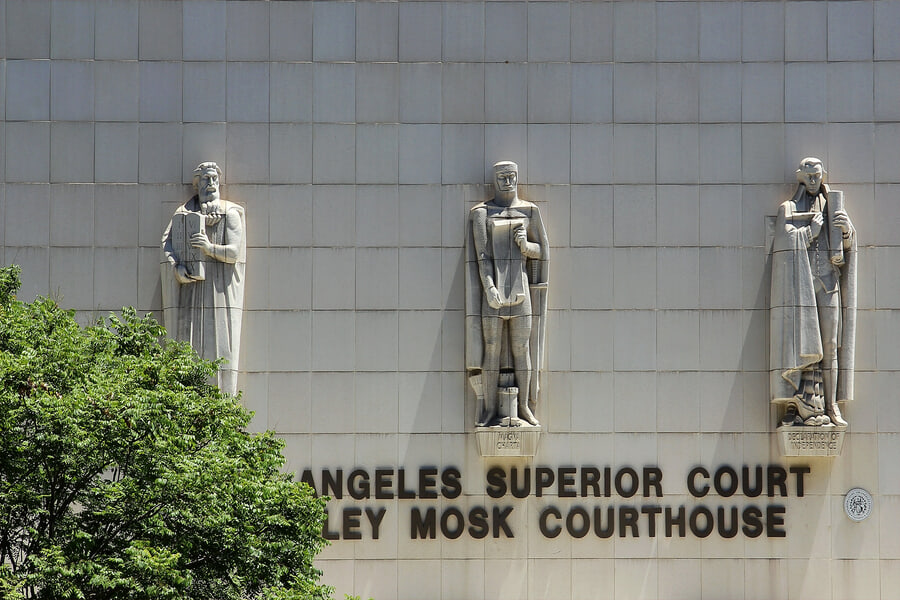
The plaintiff's counsel sought $1 billion in punitive damages. The jury awarded $3 million in punitive damages and $3 million in compensatory damages.
| Figure | Value | Note | Claim |
|---|---|---|---|
| Punitive damages sought by the plaintiff's counsel | $1 billion | 5 | |
| Punitive damages awarded | $3 million | 2 | |
| Compensatory award | $3 million | 4 |
What happened
- The jury put 70% of the responsibility on Meta and 30% on YouTube, and the $3 million compensatory award followed that split.
- Punitive damages came to $2.1 million against Meta and $900,000 against YouTube, a small fraction of the $1 billion the plaintiff's lawyers sought.
- Spokespeople for Meta and Google said the companies disagree with the verdict and plan to appeal.
- A separate New Mexico jury found Meta violated the state's consumer protection laws and ordered it to pay $375 million in civil penalties, NBC News reported.
Why it matters
- cost The $6 million award is small against the 1,600 plaintiffs still waiting, and the defendants' cost depends on whether other juries repeat the result.
- decision Meta and Google must choose between settling and trying more cases while appeals run, and each further verdict would feed the same estimate of the total bill.
- constraint The Section 230 footing of the verdict has no appellate ruling behind it yet, so it stays a trial-level result until California's courts, and probably the US Supreme Court, rule.
- exposure Reach beyond social media turns on how courts define a product, an issue Lawfare lists as open; the sources show no case against a company outside social media.
The plaintiffs argue that harm comes from features the platform owners build to shape how users interact with content, not from the third-party content itself [8]. Section 230(c)(1) bars treating a provider as the publisher or speaker of information that someone else provided [9]. Many federal courts of appeals read that language broadly, and the Lawfare analysis says it has led to the dismissal of hundreds of suits built on tort, contract and statutory claims [10]. Placing the defect in a feature is how the newer claims try to stay outside it [8][9]. More than 200 suits filed over seven years use the product-liability version, and K.G.M. is the first to reach a verdict [1].
One verdict limits what that proves. The jury found negligence in the design or operation of the platforms and a failure to adequately warn [3], and it needed nearly 44 hours over nine days to do it [11]. At one point jurors told Judge Carolyn B. Kuhl they were having trouble reaching consensus on one defendant [11]. The punitive award was $3 million against the $1 billion K.G.M.'s counsel sought [5]. That is 0.3% of the request [20].
Meta's defense goes to causation. "Teen mental health is profoundly complex and cannot be linked to a single app," a Meta spokesperson said [14]. The spokesperson also pointed to "significant emotional and physical abuse" that K.G.M. experienced when she was younger [15]. The jury found the companies' negligence a substantial factor in her harm anyway [3]. K.G.M. was selected from the consolidated cases as a test case to gauge the parties' evidence and arguments and a jury's reaction to them [6], so the next trials will show whether the causation defense fails again with different plaintiffs.
The scale depends on how many plaintiffs recover anything like this. The compensatory and punitive awards together come to $6 million [19]. Multiplied across more than 1,600 plaintiffs [7], that is about $9.6 billion [22]. It is an illustration, not a forecast. The group includes over 350 families and over 250 school districts [7], whose claims need not resemble K.G.M.'s, and the verdict has yet to be reviewed on appeal [13]. The Lawfare analysis describes the total bill as "rising into the billions" if juries in the other cases imposed similar damages, and says the result may prompt settlement negotiations in some or all of them [21].
Whether the exposure extends past social media is a separate question. The Lawfare analysis lists the nature of a product in product liability law as one of three clusters of issues the cases put to courts, alongside the scope of Section 230 and the First Amendment rights of platforms [17]. Classification is already contested inside this case. José Castañeda, a Google spokesperson, said the case "misunderstands YouTube, which is a responsibly built streaming platform, not a social media site" [16]. The jury still assigned YouTube 30% of the responsibility [4]. Review runs first through an intermediate California appellate court and then the California Supreme Court, and the federal questions on Section 230 and the First Amendment will likely reach the US Supreme Court [13].
What to watch
- Whether an intermediate California appellate court takes up the Section 230 question in the K.G.M. appeal, and how it treats the trial judge's refusal to dismiss.
- Whether the next trial among the consolidated cases returns a similar verdict, or whether settlement talks open in some of the other cases.
- How courts rule on whether platform features count as products, since that issue decides whether the theory reaches companies outside social media.
Clarity's read
What the record supports and how the coverage leans. The claims behind it follow.
Reality
- Evidence80
- Adoption
- Insufficient
- Hype gap−10
- Incentives60
- Confidence75
Claim ledger
Ranked by verification strength, evidence, and original report placement.
- [1]
The Los Angeles trial in KGM is one of more than 200 lawsuits filed over the past seven years using product liability as the legal basis; KGM is the first to go to trial and the first to reach a jury verdict.
- [2]
On March 25 the jury determined that Meta and Google were liable for negligence in designing features that led to the plaintiff's mental health distress and awarded $3 million in compensatory damages and $3 million in punitive damages; the case reached trial because the judge refused near the outset to dismiss it on Section 230 grounds.
- [3]
The jury said Meta's and YouTube's negligence in the design or operation of their platforms was a substantial factor in causing harm to the plaintiff, and that the companies failed to adequately warn users of the dangers of Instagram and YouTube.
- [4]
The jury awarded K.G.M. $3 million in compensatory damages, finding Meta 70% responsible and YouTube 30% responsible.
- [5]
The jury decided on $2.1 million in punitive damages for Meta and $900,000 for YouTube, totaling $3 million, a small fraction of the $1 billion in punitive damages the plaintiff's counsel sought.
- [6]
KGM is a bellwether case, selected among the more than 140 other similar cases consolidated before the judge as a test case to gauge the parties' evidence and arguments and a jury's reaction to them.
- [7]
The trial was the first in a consolidated group of cases brought against Meta and other companies by more than 1,600 plaintiffs, including over 350 families and over 250 school districts.
- [8]
The plaintiffs assert product liability claims resting on the notion that the harms of social media usage arise not from third-party content but from features platform owners build into their systems to shape users' interactions with that content.
- [9]
Section 230(c)(1) ensures that providers of interactive computer services cannot be held liable as though they were the publisher or speaker of any information provided by another information content provider.
- [10]
Section 230 language, interpreted broadly by many federal courts of appeals, has led to the dismissal of hundreds of lawsuits against social media companies resting on a variety of tort, contract, and statutory claims.
- [11]
Deliberations took nearly 44 hours over nine days, and the jurors told Judge Carolyn B. Kuhl they were having trouble coming to a consensus on one defendant.
- [12]
Spokespeople for Meta and Google said the companies disagree with the verdict and plan to appeal.
- [13]
The legal viability of the KGM verdict's liability and damages determinations will be reviewed first by an intermediate appellate court in the California system and then by the California Supreme Court; on the Section 230 and First Amendment issues the appellate path will likely lead to the U.S. Supreme Court.
- [14]
"Teen mental health is profoundly complex and cannot be linked to a single app," a Meta spokesperson said.
- [15]
A Meta spokesperson said K.G.M.'s "profound challenges" were not caused by social media and pointed to "significant emotional and physical abuse" she experienced when she was younger.
- [16]
José Castañeda, a spokesperson for Google, said the case "misunderstands YouTube, which is a responsibly built streaming platform, not a social media site."
- [17]
The article identifies three key clusters of legal issues these cases call on courts to address: the scope of Section 230, the nature of a product in product liability law, and the First Amendment rights of social media platforms.
- [18]
A New Mexico jury found that Meta violated the state's consumer protection laws and ordered it to pay $375 million in civil penalties; Meta has said it disagrees and plans to appeal.
- [19]
Total damages in the K.G.M. verdict are $6 million.
- [20]
The $3 million punitive award is 0.3% of the $1 billion in punitive damages sought.
- [21]
The result may prompt settlement negotiations in some or all of the other cases as both sides, particularly the defendants, estimate the risks in light of the total bill (rising into the billions) if juries in those cases imposed similar damages awards.
- [22]
Multiplying the $6 million total award by more than 1,600 plaintiffs gives roughly $9.6 billion; an illustration only, since plaintiffs differ and the verdict is under appeal.
Get this ledger inside ChatGPT. Ask about any of our stories and the answer brings its figure, each claim’s verdict and the sources. Free, no account.
Sources
2 independent publishers whose own reporting we read for this story.
- filed more than 200 lawsuits
lawfaremedia.org
1 article · October 14, 2026
- nbcnews.comfound Meta and YouTube liable
1 article · October 14, 2026
Topics and entities
Follow any of these and your For You feed starts watching them — no settings page required.
Topics
- Platform RegulationFollow
- Social media litigationFollow
- Product LiabilityFollow
- Section 230Follow