Science1 publisherNot yet confirmed elsewhere3 min readPublished
The holotype ledger: 95% of new mammals come from the South, 60% of the specimens do not stay
A Brazilian-led study in npj Biodiversity counts 1,116 mammal species described since 1990 and where their reference specimens ended up. The answer is now a number institutions can be asked about.
The Scientist · Science desk
What happened
- A study by Brazilian scientists was published in the journal npj Biodiversity on the housing of newly described mammal species' holotypes.
- The study analyzed 1,116 new mammal species described between 1990 and 2025.
- The study concluded that 95% of the 1,116 species were native to the Global South, a group of emerging countries in Latin America, Africa, Asia and the Caribbean.
- 60% of the species' holotypes are housed primarily in wealthy countries in Europe and North America.
- Only 22% of species native to the Global North described during the same period have holotypes stored outside their country of origin, and those are stored in institutions within the same geopolitical domain, which may include Australia and New Zealand.
Compiled by The ScientistSomething wrong?How this is made
Why it matters
A study by Brazilian scientists published in npj Biodiversity has counted the 1,116 mammal species described between 1990 and 2025 and asked a simple question about each one: where is the holotype [5][6]. Of those species, 95% were native to the Global South, while 60% of the holotypes are held in wealthy countries in Europe and North America [1][2]. That turns a familiar complaint into an auditable figure, which is a different kind of problem for a collections manager or a funder.
The asymmetry is visible in both directions. For species native to the Global North described in the same window, only 22% have holotypes stored outside their country of origin, and those tend to sit within the same geopolitical bloc, which the authors note can include Australia and New Zealand [7]. Looked at from the shelf rather than the field, more than 90% of all mammal holotypes held in the Global North were collected in a different country; in the Global South, fewer than 8% of mammal holotypes came from somewhere else [8][9].
Mammals are worse than comparable groups. Among freshwater fish described after 2000, 30% have holotypes outside the country of origin; among reptiles described after 1990, the figure is 50% [10][11]. According to Mario Moura of the Federal University of Paraiba, the study's first author, the mammal numbers were a surprise: colonial-era collecting was expected, but not persistence at this level in recent decades, and he describes the pattern as scientific neocolonialism being more pronounced in mammals than in other animal groups [12][13].
Brazil is the counterexample inside the dataset. It led the period with 133 new mammal species described, and 108 of those holotypes stayed in national institutions [14][3], which is about 81% retention [15] on roughly 12% of all descriptions worldwide [19].
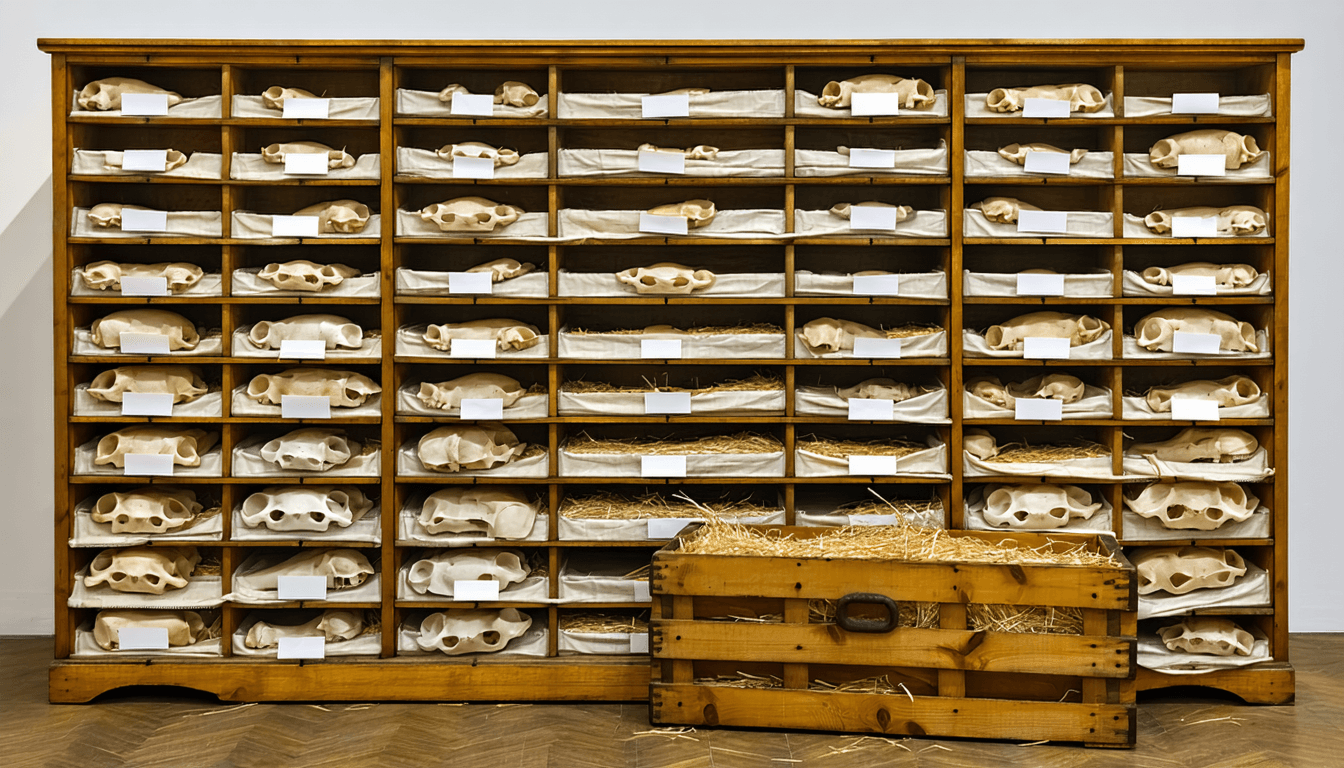
The reason this matters operationally is that holotypes are working equipment, not trophies. Anyone describing a candidate new species must compare it against the holotype of the closest known relative to confirm the find [16]. Co-author Jhonny Guedes says accessing material from one's own country when it is held abroad requires resources that are not always available, which delays the generation of knowledge [4]. The authors place the results in the context of parachute science, in which researchers from the Global North collect material in the South and deposit and study it at home, often without local collaborators [17]. Moura's group previously found parachute science accounted for most descriptions of terrestrial molluscs [20], and another study he supervised found Northern countries published more robust work on Southern biodiversity, partly on the strength of better analytical equipment [21].
Two things to watch. First, Brazil's repatriation track: one set of dinosaur fossils has already been returned and negotiations are under way for at least one more [18], which will indicate whether specimen return is becoming routine or stays case-by-case. Second, whether the 60/40 holotype split starts appearing as a reported statistic per institution and per grant, since the study has made it cheap to compute for any taxon with a described-species list.
Clarity's read
What the record supports and how the coverage leans. The claims behind it follow.
Reality
- Evidence71
- Adoption21
- Hype gap+9
- Incentives62
- Confidence56
Claim ledger
Ranked by verification strength, evidence, and original report placement.
- [1]
The study concluded that 95% of the 1,116 species were native to the Global South, a group of emerging countries in Latin America, Africa, Asia and the Caribbean.
- [2]
60% of the species' holotypes are housed primarily in wealthy countries in Europe and North America.
- [3]
Of Brazil's 133 new mammal species, 108 holotypes (more than 80%) remained in national institutions.
- [4]
Co-author Jhonny Guedes said: "Accessing material from one's own country that's held at a foreign institution requires resources that aren't always available, which delays the generation of knowledge."
ReportedSupportedSource: Jhonny Guedes, study co-author, quoted by phys.org2 sources— create a free account to open themView cited source - [5]
A study by Brazilian scientists was published in the journal npj Biodiversity on the housing of newly described mammal species' holotypes.
- [6]
The study analyzed 1,116 new mammal species described between 1990 and 2025.
- [7]
Only 22% of species native to the Global North described during the same period have holotypes stored outside their country of origin, and those are stored in institutions within the same geopolitical domain, which may include Australia and New Zealand.
- [8]
More than 90% of all mammal holotypes stored in the Global North are specimens collected in a different country.
- [9]
In the Global South, less than 8% of mammal holotypes are deposited in countries other than where they were collected.
- [10]
Among freshwater fish, 30% of species described after 2000 have holotypes outside their country of origin.
- [11]
Among reptiles, 50% of species described after 1990 are housed outside the country where the animals were discovered.
- [12]
Mario Moura, a professor at the Federal University of Paraiba (UFPB), is the first author of the study.
- [13]
Moura said: "The mammal figures surprised us. Even though early colonists collected biological material from their former colonies, we didn't expect to see such high numbers in recent decades. The problem of scientific neocolonialism is more pronounced in mammals than in other animal groups."
- [14]
Brazil led in the number of mammal discoveries during the period analyzed, with 133 new species described.
- [15]
Brazil retained about 81% of the holotypes of the mammal species it described in the period.
- [16]
Anyone describing a potential new species must have access to the holotype of the most closely related species to compare the two and confirm the specimen is a new discovery, which is why holotypes are essential to documenting biodiversity.
- [17]
The authors say the results provide new evidence of the persistence of "parachute science," whereby foreign scientists, primarily from the Global North, collect biological materials or fossils in Global South countries and take them home to be deposited and studied, often without involving local researchers.
- [18]
Brazil is seeking to repatriate scientific materials including dinosaur fossils taken to foreign institutions; after successfully repatriating one set of fossils, negotiations are under way to return at least one more.
- [19]
Brazil's 133 descriptions represent about 12% of the 1,116 mammal species described worldwide between 1990 and 2025.
- [20]
In a previous study, Moura and his team found that parachute science was responsible for most descriptions of terrestrial mollusks.
- [21]
Another study supervised by Moura showed that, despite having far fewer native species described between 1990 and 2025, Northern countries published more robust studies on this biodiversity, partly because they have more advanced analytical techniques and equipment.
Sources
1 independent publisher whose own reporting we read for this story.
- phys.orgMost mammal species discovered in the Global South since 1990 end up in Northern collections
1 article · August 18, 2026
Topics and entities
Follow any of these and your For You feed starts watching them — no settings page required.