Science1 publisher2 min readPublished
DNA and a slow mating call separate a new Amazonian frog from its lookalikes
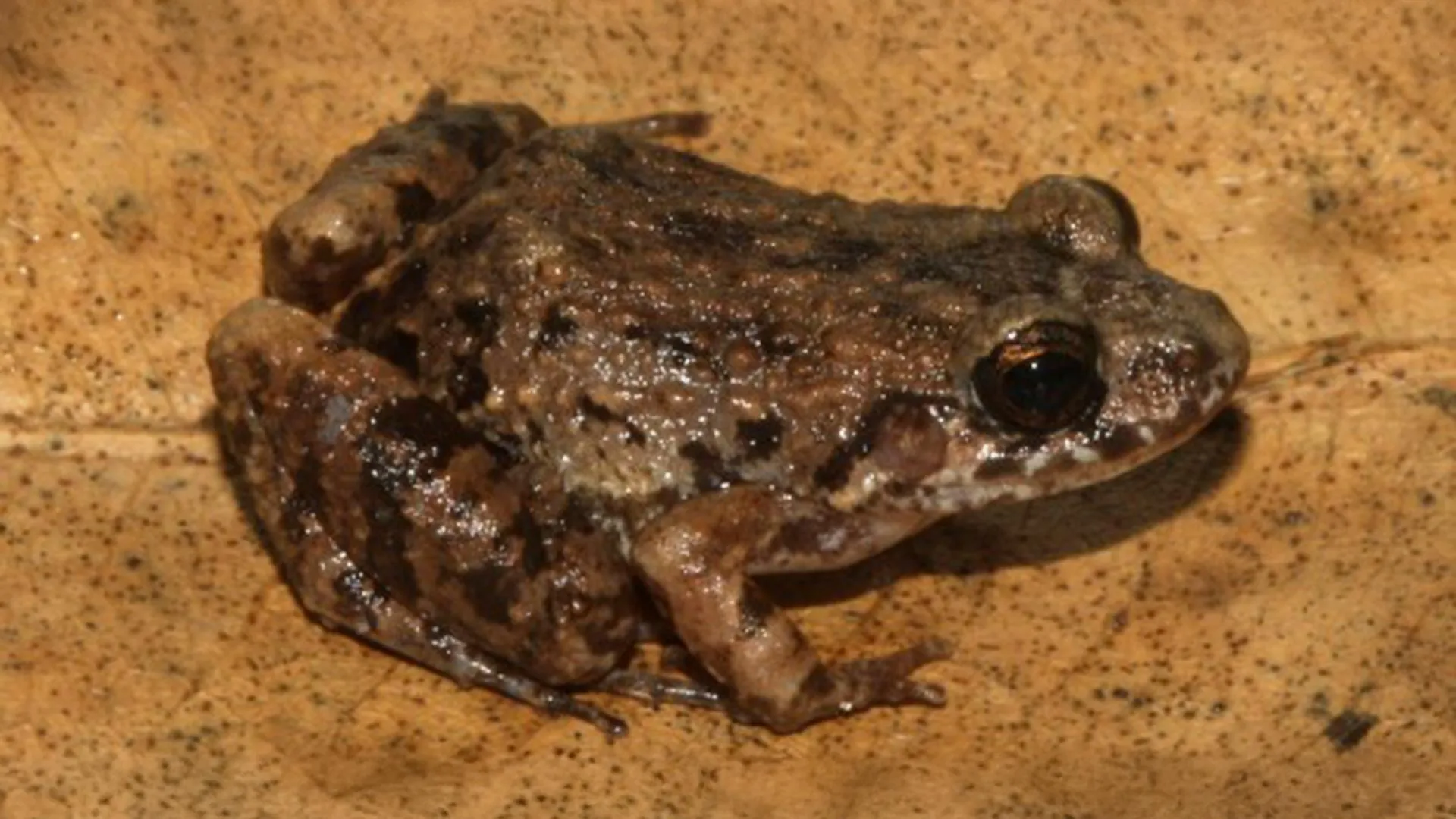
Adenomera varcena was described from seasonally flooded forest in western Acre, a habitat its genus was not thought to occupy. The same work reports further Adenomera lineages that still have no names.
The Scientist · Science desk
What happened
- Researchers described a previously unknown frog, Adenomera varcena, from the seasonally flooded forests of the western Amazon, publishing the description in the journal Ichthyology & Herpetology.
- The animals came from field expeditions in the Upper Jurua region of western Acre, in forest fragments near the Moa and Croa rivers, close to Cruzeiro do Sul.
- Separating the frog from its relatives took DNA data, recordings of its calls, body shape, habitat information and specimens already held in scientific collections.
- Adenomera frogs are generally associated with dryland forest, so a species living in seasonally flooded forest is a habitat association new to the genus.
- The team also reports evidence that numerous other Adenomera lineages remain formally undescribed.
Compiled by The ScientistSomething wrong?How this is made
Why it matters
- constraint Resolving this genus takes DNA and calls. Each new name here needs a sequencer and a recordist present while males are calling, which raises the cost of every species added.
- decision Survey planning for Adenomera has to widen. Teams that treated the genus as a dryland group were not sampling the forest type this species lives in.
- exposure A frog tied to an ecosystem defined by seasonal flooding is exposed to changes in flood timing, and how far that exposure goes is currently unknown.
- precedent With unnamed lineages already flagged inside one genus, the next papers are set up as splits, and each split shrinks the range that the older, broader name was thought to cover.
Adenomera varcena calls with a short note delivered at a slow rhythm, and the description lists further acoustic features that set it apart from its closest relatives [3]. The visible difference is one character: the underside of the forearm lacks a dark spot [4]. Cryptic diversity is the term for this situation, where animals that look nearly identical belong to separate species [15]. External appearance is one of the five kinds of evidence the description leans on [6].
That matters for anyone working from museum collections. A frog already in a jar cannot be assigned by call unless somebody recorded the living animal before it was preserved, which is why a species like this can sit in a collection for years misidentified as a neighbouring species.
The name itself points at the habitat: varcena refers to Amazonian floodplain forest, under water during part of the year [8]. How much that seasonality matters to the frog is unresolved, because too little is known of its ecology and natural history to say how environmental change would reach it [10].
The claim that Amazonian species counts run low does not rest on this one name. It rests on the rest of the genus, where the team reports numerous Adenomera lineages that have still not been formally described [9]. The release describes them as numerous without giving a number.
Thiago R. Carvalho, a professor at the Federal University of Minas Gerais who worked on the description with Celio F. B. Haddad of Sao Paulo State University, said the species' preference for this specific ecosystem makes altered flood dynamics a plausible influence on its reproductive behaviour, though the extent is unknown [11] [13]. On the naming backlog he was blunter. "Species may become locally extinct even before they're formally recognized as species through their naming and description," Carvalho said [12].
Whether Adenomera varcena is rare is a separate question. A description fixes a name to a type series and a locality; it does not carry a population estimate or a range, and none was published here. Answering it would take surveys of flooded forest across the upper Juruá, with the calls recorded.
What to watch
- Whether follow-up work names the undescribed Adenomera lineages, and how many of them turn out to be floodplain specialists.
- Any range or abundance data for Adenomera varcena. A conservation assessment would need it, and the description does not include it.
- Whether call recordings start being attached to existing museum series of Adenomera, since calls cannot be taken from preserved specimens.