Build1 publisherNot yet confirmed elsewhere2 min readPublished
MintNeuro's $5M round tests whether device makers will share one neural-chip platform
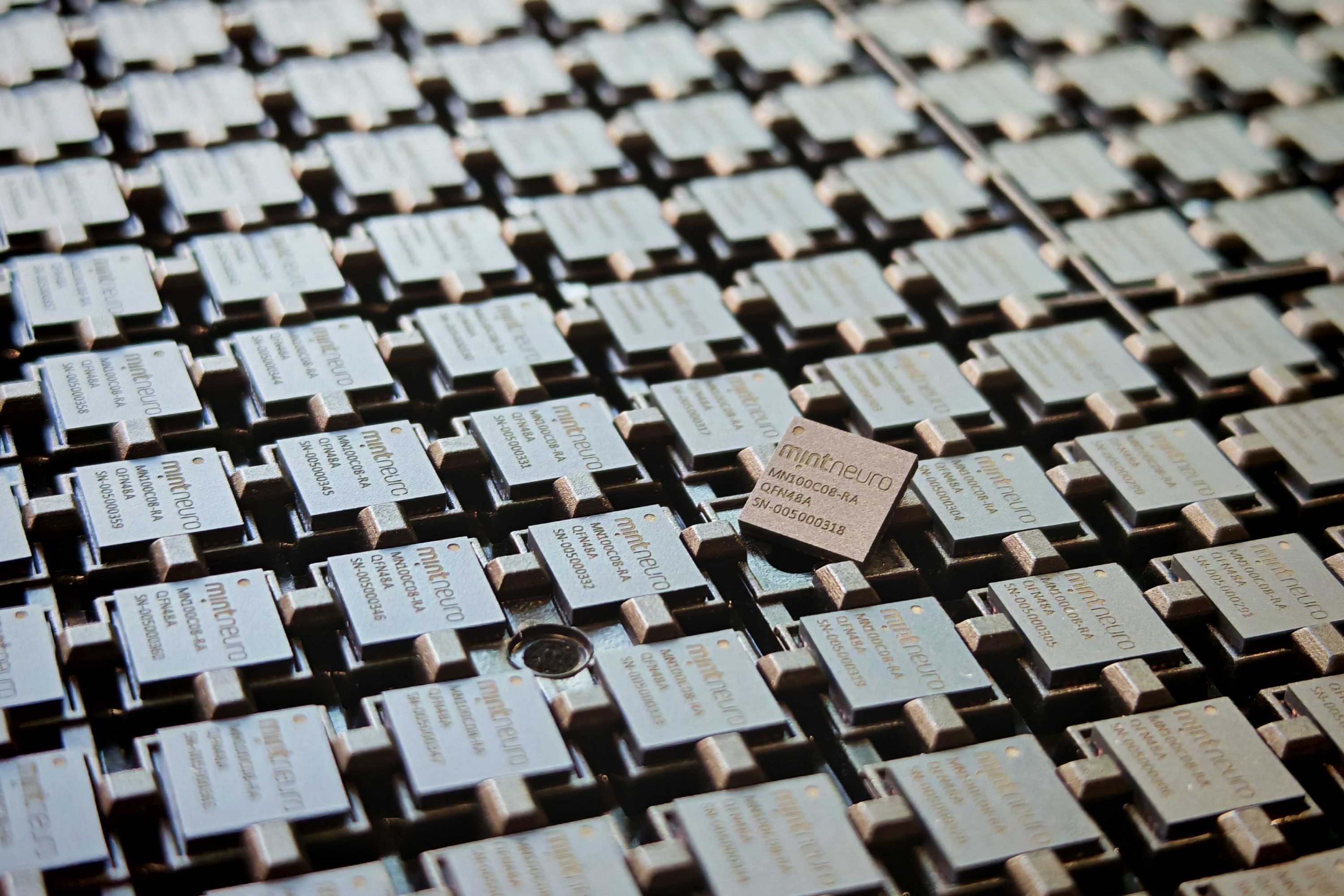
MintNeuro raised $5 million in a round led by Odyssey Ventures to move its neural-interface chips from working silicon into commercial supply. The money pays to find out whether device makers beyond its first supply customer will design products around the same parts.
The Engineer · Build desk
What happened
- In April, MintNeuro and Motif Neurotech announced a multi-year chip supply deal for Motif's minimally invasive neurostimulator, whose first target is treatment-resistant depression.
- According to MintNeuro, it has delivered working silicon and hit integration milestones both with Motif and with a second developer, Amber Therapeutics.
- 33East, JSK Investments and Alumni Ventures joined the round, alongside returning investors Empirical Ventures and Jumpspace Ventures.
- The raise follows a GBP 1 million round that MintNeuro announced in November 2024, according to the company's news page.
- MintNeuro spun out of Imperial College London in 2022, with Dorian Haci as CEO, Imperial's Timothy Constandinou as CTO and Newcastle's Andrew Jackson as chief scientific officer.
Compiled by The EngineerSomething wrong?How this is made
Why it matters
- decision Implant developers choosing between MintNeuro's modules, general-purpose parts and custom silicon have to verify the performance, cost and schedule claims themselves, because the funding announcement includes no independent comparison.
- exposure MintNeuro's one disclosed supply contract depends on a neurostimulator still in development, so a stall in Motif's program would stall the supplier's only signed customer commitment.
- precedent A signed supply deal from Amber or a third developer would make MintNeuro a repeat supplier across product programs. Without one, the platform is in effect a Motif component.
An implanted neural device has to sense signals, process them, deliver electrical stimulation, manage its own power and send data out wirelessly [6]. Each of those jobs has to fit hard limits on size, power use, safety and signal quality once the device is in the body [7]. MintNeuro says its modular chips spare developers two expensive routes: adapting general-purpose components, or paying for custom silicon development [17].
Purpose-built neural chips already exist. Intan Technologies sells recording ICs that put amplifiers, filters and analog-to-digital conversion on one part [8]. MintNeuro is betting on wider integration, with modules for sensing, processing and stimulation that can go into implants or wearables [9].
Sharing one platform across device makers depends on overlap. The modules pay off for the vendor when the second customer's product fits inside parts designed for the first. When it does not, each new program drifts back toward the custom silicon development the platform is meant to replace [17]. For the company's claims to carry over to a given developer, that developer's sensing, stimulation and power requirements have to sit inside what the existing modules already cover.
The new money is aimed at that test. By chip-industry standards, $5 million is a hiring budget [1]. MintNeuro plans to grow its engineering and commercial staff, bring products to market, get more pre-release silicon into partners' hands, help customers adopt the chips and establish a presence in the US [10]. Pre-release silicon in a partner's lab is how a new program reaches evaluation. Haci described the round as a transition from technology validation to commercial scale-up [11].
So far the public record shows two named developers and one signed supply contract [16]. The round announcement does not quantify chip deliveries or customer programs [5]. Runtimewire, working from a PR Newswire release [15], defined practical progress as the number of device developers that move from evaluation to sustained use [19].
What to watch
- Whether Amber Therapeutics or another developer moves from integration milestones to a signed supply agreement with MintNeuro.
- Any MintNeuro disclosure of chip delivery volumes or the number of customer programs in evaluation.
- Development progress on Motif's neurostimulator for treatment-resistant depression, which sets when the April agreement turns into volume.