Science1 publisher2 min readPublished
NTU designs a compound that cuts off a resistant lung bacterium's energy supply
NTU scientists built a compound that starves Mycobacterium abscessus of energy; paired with the drug clofazimine it cut the microbe a hundredfold in four days. Two other teams mapped the same bacterium's virus defenses and a related pathogen's toxin-firing weapon.
The Scientist · Science desk
Drafted by a language model from the sources cited here and checked against its claim ledger before publication. How we use AISend a correction
What happened
- Mycobacterium abscessus, the bug two of the teams went after, causes severe lung disease in people with cystic fibrosis and resists many first-choice antibiotics on its own.
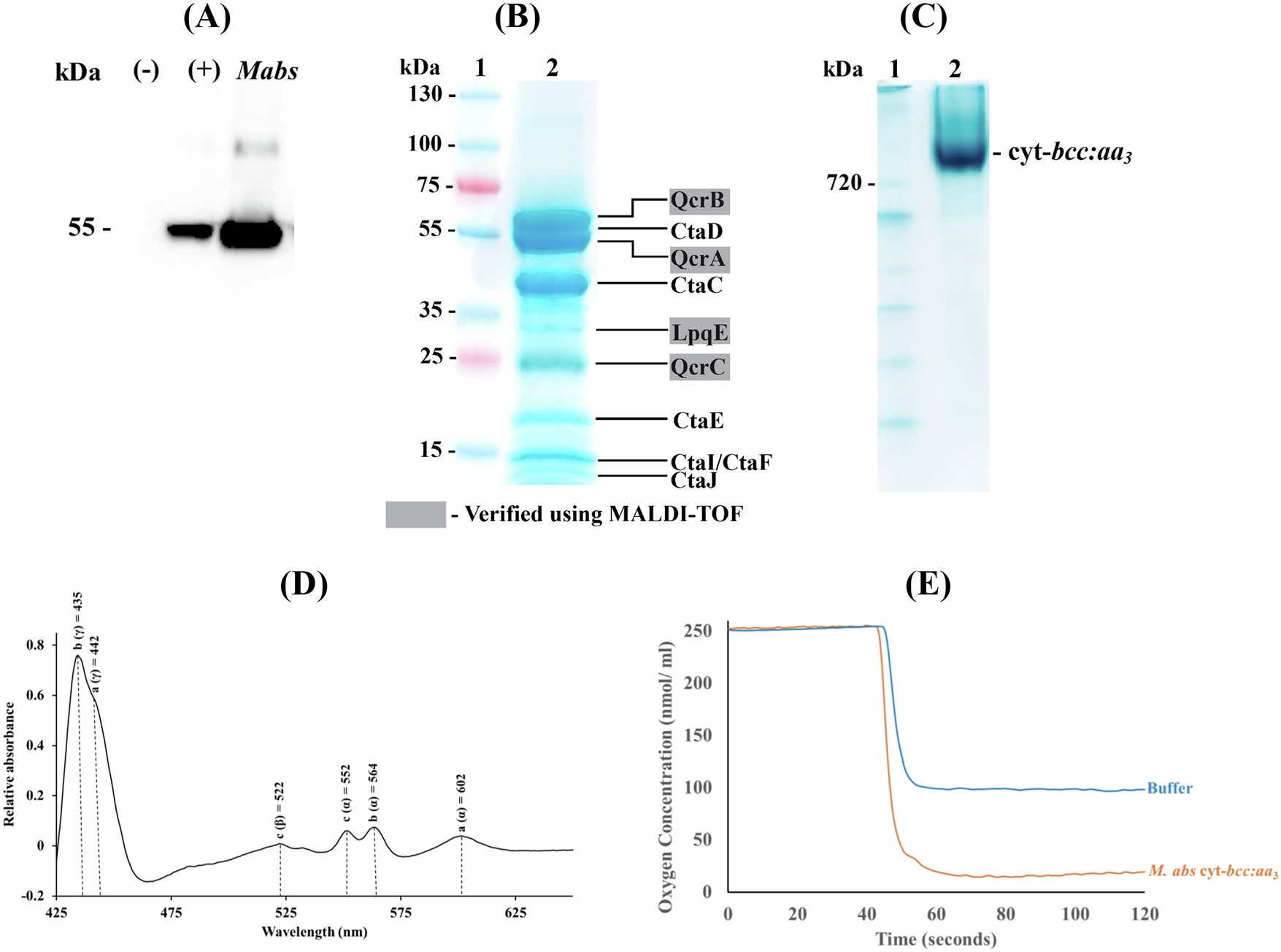
- Grüber's group used cryo-electron microscopy to pinpoint the substrate-binding pocket in the cytochrome b subunit of the energy enzyme, the spot that drives its activity.
- That enzyme is built differently in M. abscessus than in people, so a compound shaped to its pocket hits the bacterium without poisoning human cells, the team reports.
- A separate NTU team, working with Singapore's A*STAR, worked out how M. abscessus fends off bacteriophages, reporting it in the Proceedings of the National Academy of Sciences.
- A third team, with Imperial College London, mapped the structure of the apparatus a different resistant bacterium uses to fire toxins into rival microbes and host cells.
Compiled by The ScientistSomething wrong?How this is made
Why it matters
- capability Resolving the enzyme down to its binding pocket gives chemists a defined shape to design a molecule against. That is how the team reached this compound.
- constraint The reported result came only when the compound was combined with an existing antibiotic, so any treatment built on it would be given alongside other drugs.
- decision Knowing how M. abscessus survives phage attack changes how phage therapy would be designed, aiming to clear the infection without breeding fresh resistance.
The enzyme the compound shuts down sits in M. abscessus's electron transport chain, the protein relay the microbe uses to make ATP, the molecule that powers its metabolism. [5] The team designed a molecule to fit the enzyme's binding pocket and switch it off. [8]
"As the currency of life, ATP delivers the energy for essential processes in M. abscessus, including its defense mechanisms against antibiotics," said Gerhard Grüber of NTU's School of Biological Sciences, the study's corresponding author. "Silencing the electron transport chain that produces ATP is thus a potential treatment for difficult-to-treat M. abscessus infections that also disables the bacterium." [11][4]
The study is published in Nature Communications. [6] It reports the kill as a two-log reduction, a drop of about a hundredfold. [10][1] The account does not say whether that was measured in a culture dish or in an animal. A patent has been filed, and the team is working with the U.S. company Hsiri Therapeutics to license the compound, the only one of the three findings with a drug candidate behind it. [12]
The second target is how the bacterium survives viruses. Bacteriophages break into bacteria, hijack their replication machinery to copy themselves, and burst the cell open. Because that cycle kills the host, phages have been proposed as a therapy for M. abscessus. [13] The bacterium comes in two forms: a smooth variant coated in lipids called glycopeptidolipids that grows round colonies, and a rough variant that lacks the coat, grows cauliflower-shaped colonies, and causes more severe disease. [16]
Each of the three studies mapped a specific structure inside a resistant microbe and found a route to block it: the energy enzyme's binding pocket, the phage defenses of M. abscessus, and the toxin-firing apparatus of a related pathogen. [4][14][17]
The World Health Organization estimates that resistant infections, already blamed for millions of deaths a year, could kill 10 million a year by 2050 if left unchecked. [1][2]
What to watch
- Whether Grüber's compound clears M. abscessus in animal studies, since the reported result is a four-day combination test.
- The outcome of the Hsiri Therapeutics licensing talks and whether the compound enters formal preclinical development.
- Whether the NTU-Imperial toxin-apparatus structure translates into a specific way to disarm the pathogen it came from.