ScienceNot yet confirmed elsewhere1 publisher2 min readPublished
Jurassic mammaliaform Megacauda carried the bones behind mammal suckling 165 million years ago
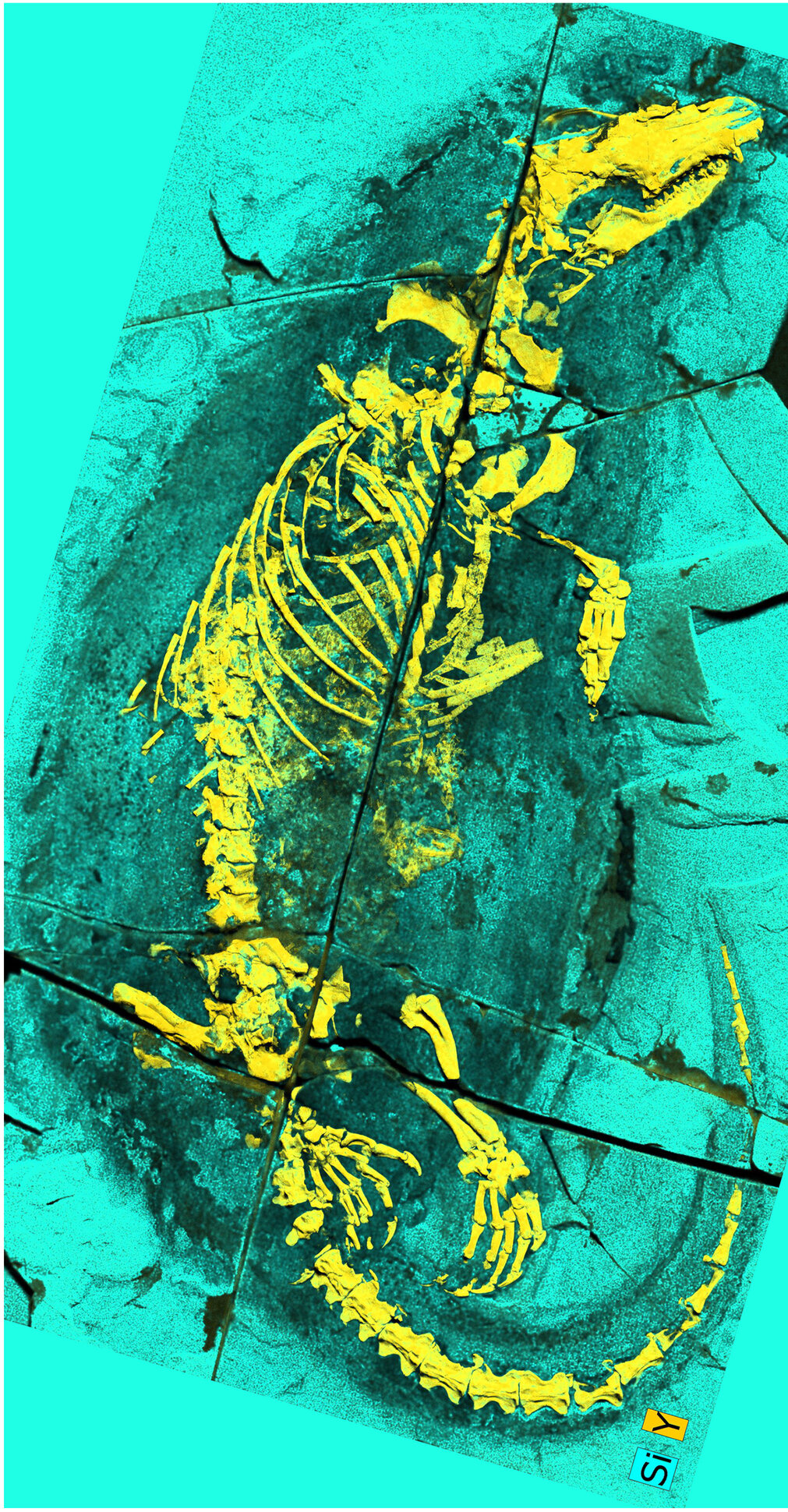
Megacauda sungei, a mammaliaform from Jurassic China, pushes the bony anatomy of mammal suckling back to nearly 165 million years ago, a Nature study reports. The structures place the groundwork for a defining mammal trait well before the first modern mammals.
The Scientist · Science desk
What happened
- A mosaic of blade-like cheek teeth like a seal's, a platypus-like pelvis and an otter-like tail point to a predator that hunted small vertebrates and invertebrates in fresh water.
- On the roof of the mouth sits a pair of small bony projections that match structures in marsupials and placentals, where they help brace the muscles used in suckling and swallowing.
- Specialized hyoid bones in the throat, the kind that in living mammals anchor the muscles of swallowing, were preserved in the same skeleton.
- At roughly the size of a modern otter, Megacauda ranks among the largest Jurassic mammaliaforms known and among the earliest to take up a semiaquatic life.
Why it matters
- capability Suckling leaves no soft tissue to fossilize, so its origin has had no firm date. Bony landmarks tied to the swallowing muscles give paleontologists a skeletal proxy to place the behavior in deep time.
- constraint Feeding young on milk is a hallmark of mammals, and its skeletal basis now appears in a Jurassic mammaliaform. That puts the trait's origin outside the modern mammal radiation and makes the boundary it was meant to draw blurrier.
- precedent If the apparatus was already ancestral, the platypus and echidna become animals that inherited and then lost parts of it, and the comparison among the three living mammal groups has to be redrawn.
The researchers treat the palate and throat anatomy as one functional system, an early version of the coordinated muscle system modern mammals use to move milk and food safely from the mouth to the esophagus [10]. Their evidence comes from high-resolution microCT scans of a skull and skeleton from the Middle Jurassic of what is now Inner Mongolia, China [2][4].
"The anatomy of Megacauda suggests that structures involved in coordinating swallowing and sucking had already begun to evolve by the Middle Jurassic," said Zhe-Xi Luo of the University of Chicago, the study's senior author. "This discovery helps us better understand the biological foundations of one of the defining characteristics of mammals: feeding young with milk" [8].
Luo's quote says "begun" for a reason: the skeleton supports an inference about suckling, not a direct observation of it.
The bigger surprise is where the new structures sit. The therian-like projections sat in the same mouth as older, more primitive bony ridges inherited from earlier mammaliaforms and their ancestors [11]. If the modern structures had simply grown out of those ridges, as the standard account held, you would not expect to find both in one animal. That coexistence is the team's reason for arguing the modern suckling anatomy did not descend directly from the ridges [11].
The finding also sorts the living mammals. Therians, the marsupials and placentals, suckle with a mechanism built on the soft palate and constrictor muscles, while monotremes such as the platypus and echidna take milk a different way and lack some of those parts [12].
Scientists from five institutions led the study: Ohio University, the University of Bonn, the University of Chicago, Shandong University of Science and Technology and Shenyang Normal University [3]. "These discoveries continue to reveal that the age of dinosaurs was also a time of extraordinary evolutionary innovation among early mammals," said Peishu Li, a co-author [15].
What to watch
- Whether other Jurassic mammaliaforms, scanned the same way, also carry the palate projections and hyoid bones.
- Functional or biomechanical modeling testing whether those bones could support therian-style suckling.
- How specialists respond to the claim that monotremes lost an inherited suckling apparatus.
Clarity's read
What the record supports and how the coverage leans. The claims behind it follow.
Reality
- Evidence60
- Adoption
- Insufficient
- Hype gap+15
- Incentives
- Insufficient
- Confidence55
Claim ledger
Ranked by verification strength, evidence, and original report placement.
- [1]
Researchers reported in Nature that key anatomical structures required for mammalian suckling, swallowing and breastfeeding evolved nearly 165 million years ago, long before the appearance of modern mammals.
- [2]
The study describes a newly discovered species, Megacauda sungei, a large mammaliaform that lived during the Middle Jurassic in what is now Inner Mongolia, China.
- [3]
The research was led by scientists from the University of Chicago, Shenyang Normal University, Shandong University of Science and Technology, the University of Bonn and Ohio University.
- [4]
The team used high-resolution microCT imaging to reconstruct the skull and skeletal anatomy of the fossil.
- [5]
Megacauda had blade-like cheek teeth resembling those of modern seals, a platypus-like pelvis and an otter-like tail, indicating it was likely a semiaquatic predator that hunted small vertebrates and invertebrates in freshwater environments.
- [6]
The researchers identified a pair of small bony projections on the roof of the mouth that closely resemble features in living therian mammals (marsupials and placentals); in modern mammals these help support the soft palate and the muscles involved in suckling, swallowing and protecting the airway.
- [7]
Because soft tissues are rarely preserved in fossils, scientists have long struggled to determine when these feeding structures first evolved.
- [8]
"The anatomy of Megacauda suggests that structures involved in coordinating swallowing and sucking had already begun to evolve by the Middle Jurassic. This discovery helps us better understand the biological foundations of one of the defining characteristics of mammals: feeding young with milk," said Zhe-Xi Luo, professor of organismal biology and anatomy at the University of Chicago and senior author of the study.
- [9]
The researchers found highly specialized hyoid bones in the throat region; in living mammals these bones help anchor muscles for swallowing.
- [10]
The evidence suggests Megacauda likely possessed an early version of the coordinated muscular system used by modern mammals to move milk and food safely from the mouth to the esophagus.
- [11]
The therian-like bony hooks existed alongside more primitive bony ridges known from earlier mammaliaforms and mammalian ancestors, and their coexistence in the same animal suggests the modern structures did not evolve directly from the primitive ridges as previously believed.
- [12]
Therian mammals use a suckling mechanism supported by the soft palate and constrictor muscles, while monotremes such as platypuses and echidnas use a different method for obtaining milk and lack some of these anatomical features.
- [13]
The new evidence suggests monotremes likely lost elements of the ancestral suckling apparatus during their evolutionary history and developed an alternative method of milk intake.
- [14]
At approximately the size of a modern otter, Megacauda is among the largest known Jurassic mammaliaforms and represents one of the earliest examples of adaptation to a semiaquatic lifestyle.
- [15]
"These discoveries continue to reveal that the age of dinosaurs was also a time of extraordinary evolutionary innovation among early mammals," said Peishu Li, a co-author of the study.
Sources
1 independent publisher whose own reporting we read for this story.
- phys.orgJurassic fossil reveals ancient origins of how mammals drink milk
1 article · October 11, 2026
Topics and entities
Follow any of these and your For You feed starts watching them — no settings page required.
Topics
- Mammalian evolutionFollow
- PaleontologyFollow