InvestNot yet confirmed elsewhere1 publisher2 min readPublished
Korean robot startups without US plants look worst placed for an FCC exemption
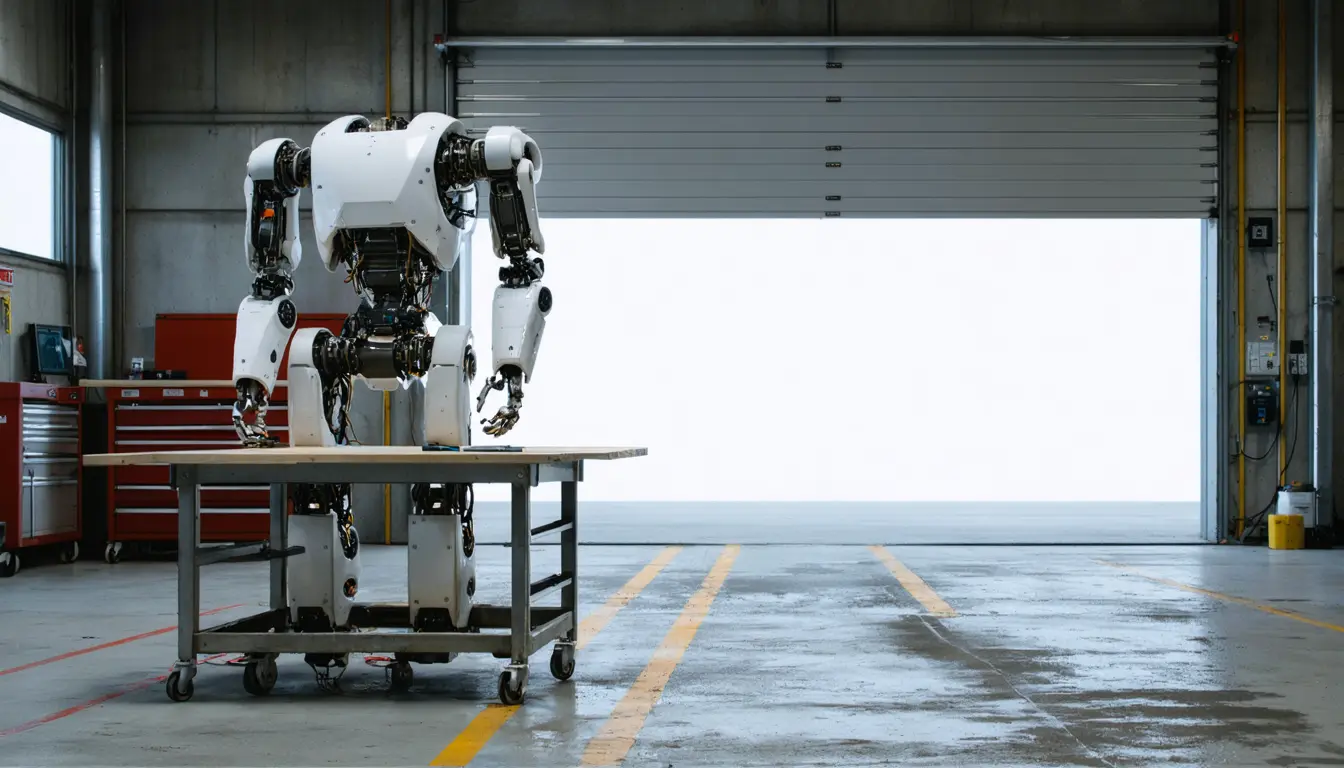
Rainbow Robotics, a Samsung Electronics subsidiary, has become the first of about 20 Korean robot makers under new US rules to seek an FCC exemption. Approval assumes expanded US production, and one startup official says the company lacks the capacity to attract that investment.
The Investor · Invest desk
Three figures. About 20 Korean robot companies fall under the new FCC rules. To avoid the rules, US-made components must make up more than 65% of total component costs, and that rises to 75% from 2029. Korean robot exports to the US reached 493.9 billion won in 2024, up 83% from 2021.
| Figure | Value | Note | Claim |
|---|---|---|---|
| Korean robot makers under rules | 20 companies | about 20 | 3 |
| US-made parts share to avoid rules | 65 % of parts cost | must exceed it; rises to 75% from 2029 | 7 |
| Korean robot exports to US, 2024 | 493.9 billion won | up 83% from 2021 | 13 |
What happened
- On July 28 the FCC added advanced mobile robots made abroad to its covered list, so new models cannot be certified and are effectively barred from sale in the US.
- Models that already hold certification can keep selling, and stationary robots such as industrial arms are excluded from the rules.
- Products the U.S. Department of War finds pose no national security risk can obtain conditional approval and be freed from the rules; the report gives a filing deadline of Jan. 1, 2028.
- About half of the roughly 20 Korean makers have signed direct export contracts with US companies, according to the office of Rep. Seo Ji-young of the People Power Party.
Why it matters
- exposure Certified models keep selling, so what the rule blocks is each maker's next model and the US export plans that run through 2027.
- cost The US production plan and its investment timeline are the applicant's to fund. A company with deep pockets can pay for it. A startup that cannot raise the capital cannot certify new models.
- contradiction One industry official quoted in the report expects Korean makers to gain indirectly because the rules target China, but the test is where a product is made. Any gain depends on Korean applicants winning approval while Chinese rivals do not.
A product avoids the rules by being made in the United States with US-made components above 65% of total component cost [7]. That caps foreign sourcing below 35% of cost today [18] and below 25% once the threshold rises to 75% in 2029 [19], a 28.6% cut in the allowance [20]. One startup official said the threshold is hard to meet even if only the actuators that serve as joints come from Korea or China [11].
That pushes makers toward conditional approval, and as of the report only Rainbow had filed [4]. Many of the roughly 20 affected makers plan to follow within the year [3]; the report does not say how many will actually do so.
Two people quoted in the report see the odds differently. One industry official argued that since the FCC designed the rules as a security check aimed at Chinese firms, Korean makers should not struggle to win conditional approval [23]. The same official said: "Many Korean robot companies export by supplying AMRs to U.S. factories, so if exports are blocked, U.S. companies are hurt as well" [24]. The startup official said: "We also lack the capacity to attract large-scale investment and produce robots in the United States, so we are just waiting for further FCC guidelines" [12].
We think both can be right. A Korean maker can answer security questions about owners and suppliers; the US production plan is the part that costs money. How the FCC treats that plan is the open variable. It is the only one that separates a well-funded applicant from a thin one.
The market at stake grew fast. Exports to the US reached 493.9 billion won in 2024, up 83% from 2021 [13]. Working back, 2021 exports were about 269.9 billion won [21], so the market added roughly 224.0 billion won in three years [22]. The report attributes that growth to technology, lower costs than US rivals and security [17]. A US production line would raise costs and wear down the price advantage over US rivals.
We think the heaviest burden falls on startup balance sheets, and three outcomes would prove that wrong. If Rainbow wins approval on a modest US plan, the production requirement is soft; the industry is watching exactly that [16]. If the FCC guidance the startup official is waiting for sets a minimum investment, that official's concern is confirmed. If the Department of War turns down Korean applicants on security grounds, the first official's expectation of easy approval fails [23].
What to watch
- Whether the FCC or the Department of War grants Rainbow Robotics conditional approval for the RB-Y1, and on what US production plan.
- Whether the FCC guidelines the startup official is waiting for set a minimum US investment or leave the production plan open.
- How many of the roughly 20 Korean makers file before year-end, against the Jan. 1, 2028 deadline.
Clarity's read
What the record supports and how the coverage leans. The claims behind it follow.
Reality
- Evidence45
- Adoption
- Insufficient
- Hype gap
- Insufficient
- Incentives
- Insufficient
- Confidence45
Claim ledger
Ranked by verification strength, evidence, and original report placement.
- [1]
Rainbow Robotics (277810.KS), a Samsung Electronics subsidiary, has asked the U.S. government for an exemption from new robot rules.
- [2]
Washington barred new certifications for humanoid robots, quadruped robots and autonomous mobile robots made outside the United States, cutting off the export path for Rainbow Robotics' mobile humanoid robot RB-Y1.
- [3]
About 20 Korean robot companies fall under the same rules, and many of them plan to file for exemptions within the year.
- [4]
Rainbow Robotics applied late last month for conditional approval under FCC rules, the first Korean company to do so, industry officials said on the 12th.
- [5]
On July 28 the FCC added advanced mobile robots produced abroad to its covered list of equipment deemed a national security risk; products on the list cannot receive certification for new models, which effectively bars them from sale in the United States.
- [6]
Existing models that already hold certification can continue to be sold, and stationary robots such as industrial robot arms are excluded.
- [7]
To avoid the rules, a product must be made in the United States with U.S.-made components accounting for more than 65% of total component costs; the threshold rises to 75% starting in 2029.
- [8]
Because the test is where a product is made rather than the nationality of the company, Korean companies are not exempt.
- [9]
Products that the U.S. Department of War determines pose no national security risk can obtain conditional approval and be freed from the rules; the filing deadline is Jan. 1, 2028.
- [10]
Applicants must submit the nationality of shareholders holding 5% or more and of management, any foreign government influence, the country of origin of all components, and plans to expand U.S. production with an investment timeline.
- [11]
One startup official said it is hard to meet the U.S. component cost threshold even if only the actuators that serve as joints are sourced from Korea or China.
- [12]
"We also lack the capacity to attract large-scale investment and produce robots in the United States, so we are just waiting for further FCC guidelines," the official said.
- [13]
Korean robot companies' exports to the United States reached 493.9 billion won in 2024, up 83% from 2021, according to a survey of the robot industry.
- [14]
According to the office of Rep. Seo Ji-young of the People Power Party, about 20 Korean companies planned to export robots to the United States through 2027 as of the FCC announcement; about half have signed direct export contracts with U.S. companies, and the rest export through other companies or are in talks to do so.
- [15]
Because the rules target China, some expect Korean companies to benefit indirectly, but there are strong concerns that startups without the means to meet U.S. local production requirements will face a heavier burden.
- [16]
The industry is watching whether Rainbow Robotics wins approval.
- [17]
Korean robot companies have grown quickly in the U.S. market on the strength of their technology, lower costs than U.S. rivals and security.
- [18]
Foreign sourcing is capped below 35% of total component cost today.
- [19]
Foreign sourcing is capped below 25% of total component cost from 2029.
- [20]
The permitted foreign share falls by about 28.6% between the two thresholds.
- [21]
Korean robot exports to the US in 2021 were about 269.9 billion won.
- [22]
Korean robot exports to the US grew by roughly 224.0 billion won between 2021 and 2024.
- [23]
One industry official said the FCC rules were created to check Chinese companies on security grounds, so it should not be difficult for Korean companies to obtain conditional approval.
ReportedContestedSource: One unnamed industry official quoted by en.sedaily.com2 sources— create a free account to open themView cited source - [24]
"Many Korean robot companies export by supplying AMRs to U.S. factories, so if exports are blocked, U.S. companies are hurt as well," the official said.
ReportedContestedSource: Unnamed industry official quoted by en.sedaily.com2 sources— create a free account to open themView cited source
Sources
1 independent publisher whose own reporting we read for this story.
- en.sedaily.comU.S. Blocks Foreign Robots; Rainbow Robotics Files First Korean Waiver Bid
1 article · October 12, 2026
Topics and entities
Follow any of these and your For You feed starts watching them — no settings page required.
Topics
Entities
- Rainbow RoboticsFollow
- Samsung ElectronicsFollow
- Federal Communications CommissionFollow
- RB-Y1Follow
- Seo Ji-youngFollow
- FCC Covered ListFollow