A Jurassic bird from Fujian had pheasant-like limbs and a sickle-shaped claw typical of deinonychosaurs
Chinese researchers describe a 150-million-year-old bird, Yuezhuornis, whose limb proportions suggest it was flightless. Phys.org calls it the earliest known flight loss in birds, while New Scientist says it may never have flown.
The Scientist · Science desk
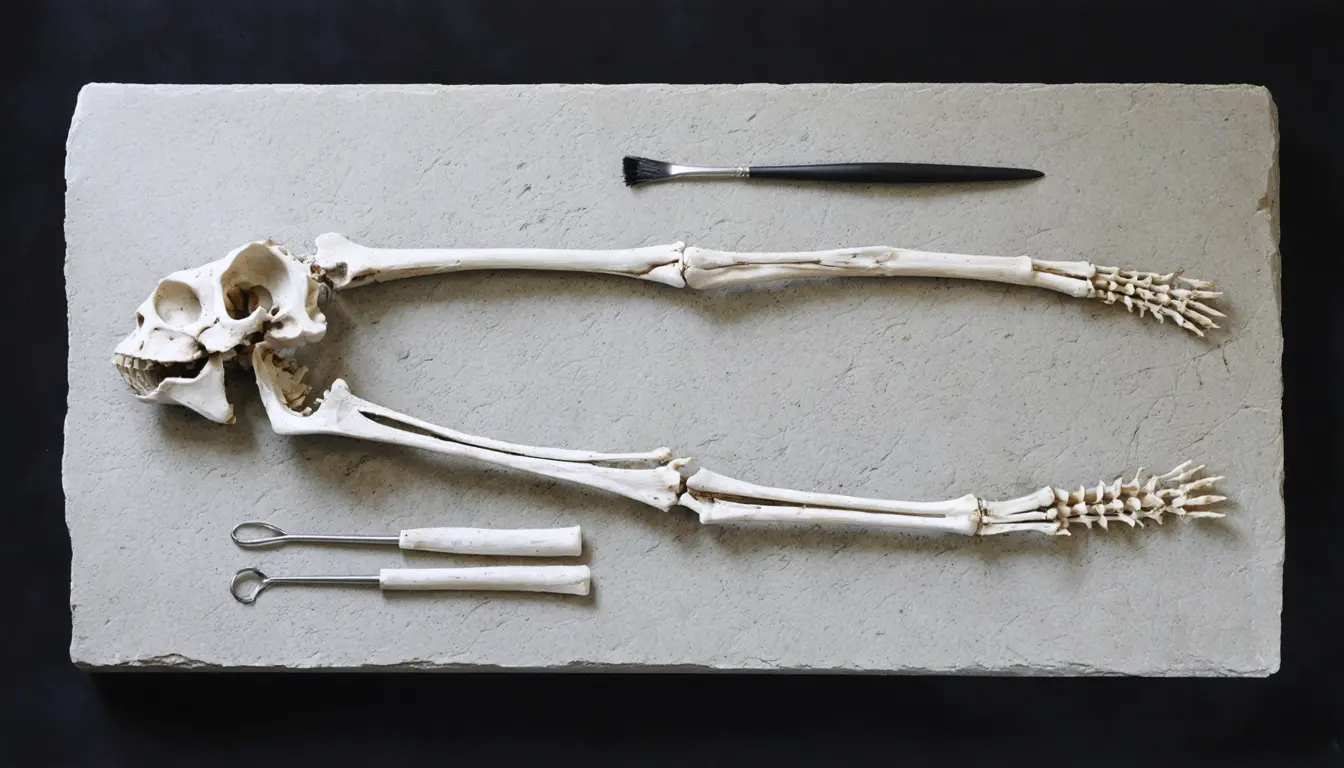
Yuezhuornis lived at least 148 million years ago, and up to 150 million years ago. Researchers compared its anatomy with nearly 400 living birds and found it most like pheasants. It weighed just over 800 grams.
| Figure | Value | Note | Claim |
|---|---|---|---|
| Lived this long ago, at least | 148 million years | up to 150 million years ago | 1 |
| Living birds compared | 400 birds, nearly | 11 | |
| Body weight, just over | 800 grams | 10 |
What happened
- Phylogenetic analyses placed it within Avialae, just crownward of Archaeopteryx and as a sister taxon to Zhengheornis.
- The fossil has closely packed, serrated teeth typical of deinonychosaurs and a hyperextensible second toe carrying a sickle-shaped claw.
- The team compared its anatomy with nearly 400 living birds and found it closest to ground-dwelling pheasants, with forelimbs shorter than hindlimbs.
- Archaeopteryx has forelimbs longer than its hindlimbs, and New Scientist says it probably flew better than Yuezhuornis.
- The animal stood about half a metre tall and weighed just over 800 grams, and Wang suspects it lived in a swamp and ran well.
Why it matters
- constraint Both accounts describe the species from a single fossil, so it can show one flightless bird near the base of the avian tree but not how common flightlessness was.
- contradiction Phys.org says the find challenges aerodynamic selection as the dominant force in early bird evolution, while New Scientist quotes Wang saying flight may not have driven the anatomy at all. The two claims differ in size.
- precedent Further finds from the Zhenghe Fauna are where the single-specimen question gets tested, since that deposit is described as a window on a poorly documented stage of Jurassic bird evolution.
The flightless label is an inference from shape. The closest living match, the pheasant, can fly in short bursts, though New Scientist calls pheasants effectively ground-dwellers [12]. A proportions match puts Yuezhuornis in that same category. It does not show the animal never left the ground for a short burst. Phys.org says the team's limb analyses suggest a terrestrial, flightless lifestyle [6], and neither news account describes direct evidence of wing function.
The thing this doesn't tell you is whether the ancestors flew. Phys.org calls the fossil the earliest known example of flight loss [20], and loss needs a flying ancestor. New Scientist says only that the find raises the possibility that some of the earliest birds never took wing, or gave up flight almost immediately after evolving it [21]. We think the limbs support a bird built for the ground near the base of the avian tree. The word "loss" adds a claim about its forebears that one animal's limbs cannot carry.
Wang describes a hybrid. "It possesses birdlike pelvic and hindlimb structures yet retains the specialized predatory foot and teeth of a small meat-eating dinosaur," said Dr. Wang Min, the corresponding author [5]. New Scientist adds that the hip bones and fibula mirror those of later Cretaceous birds and that the tail was long, like Archaeopteryx's [14]. Wang calls the sickle claw "highly functional" and says it was probably used to catch prey [17].
The argument against a straight-line story leans on the tree. The team ran two methods, maximum parsimony and Bayesian tip-dating [19], and co-author Zhou Zhonghe said the results "consistently placed Yuezhuornis firmly within Avialae" [18]. In New Scientist's account, the analysis puts Archaeopteryx, the stronger flier, as more primitive than Yuezhuornis [15]. Move Yuezhuornis below Archaeopteryx and the weaker flier would come first and the stronger flier second, an order that fits a steady march toward flight.
New Scientist lists the find among recent discoveries disrupting the straight-line view of bird and flight evolution, alongside another recently announced bird-like dinosaur from China that had evolved to fly but came from a completely different lineage [16].
What to watch
- Other Zhenghe Fauna specimens: whether more early birds show ground-dweller limb proportions would turn one animal into a pattern.
- Independent re-runs of the tree: whether other analyses keep Yuezhuornis above Archaeopteryx, since the non-linear argument depends on that order.
- Any direct evidence of wing function, such as feathers or forelimb structure, that could separate lost flight from flight never gained.
Clarity's read
What the record supports and how the coverage leans. The claims behind it follow.
Reality
- Evidence65
- Adoption
- Insufficient
- Hype gap+20
- Incentives
- Insufficient
- Confidence62
Claim ledger
Ranked by verification strength, evidence, and original report placement.
- [1]
A study in Nature describes the new species Yuezhuornis yangyuanensis, which lived in the Late Jurassic, 150 to 148 million years ago.
- [2]
The ongoing discovery of early avialans highlights the potential of the Zhenghe Fauna to shed light on a poorly documented stage of Jurassic bird evolution.
- [3]
Phylogenetic analyses placed Yuezhuornis within Avialae, just crownward of Archaeopteryx and as a sister taxon to Zhengheornis.
- [4]
The fossil preserves closely packed, serrated teeth typical of deinonychosaurs, and a hyperextensible second toe with a sickle-shaped claw.
- [5]
"It possesses birdlike pelvic and hindlimb structures yet retains the specialized predatory foot and teeth of a small meat-eating dinosaur," said Dr. Wang Min, corresponding author of the study.
- [6]
Ecomorphometric and multivariate statistical analyses found limb proportions similar to those of living terrestrial birds and some non-avialan paravians, suggesting a terrestrial, flightless lifestyle.
- [7]
The discovery challenges the notion that aerodynamic selection was the dominant force shaping early avialan evolution.
- [8]
Min Wang says the discovery could mean that powered flight did not drive the evolution of birds' unique anatomy at all.
- [9]
The almost-complete new fossil was discovered in August 2024 near Yangyuang village, Fujian Province.
- [10]
Yuezhuornis was around half a metre tall and weighed just over 800 grams; Wang suspects it most likely lived in a swampy environment and was probably a good runner.
- [11]
After comparing the anatomy with nearly 400 living birds, the researchers concluded Yuezhuornis is most like modern ground-dwelling pheasants, which have forelimbs shorter than their hindlimbs, as it did.
- [12]
Pheasants can fly in short bursts but are effectively ground-dwellers.
- [13]
Archaeopteryx has forelimbs longer than its hindlimbs and probably had stronger flying abilities than Yuezhuornis.
- [14]
Yuezhuornis had a long tail similar to Archaeopteryx, and its hip bones and fibula closely mirror those of later Cretaceous birds, according to Wang.
- [15]
The researchers' analysis suggests Archaeopteryx, a stronger flier, was more primitive than Yuezhuornis.
- [16]
New Scientist lists the find among recent discoveries disrupting the view that bird and flight evolution proceeded in a straight line, including another recently announced bird-like dinosaur from China that had evolved to fly but emerged from a completely different lineage.
- [17]
Wang says the sickle-shaped claw on the second toe was "highly functional" and probably used in prey capture.
- [18]
"The results consistently placed Yuezhuornis firmly within Avialae (the group containing modern birds and their closest extinct relatives), just crownward of Archaeopteryx and as a sister taxon to Zhengheornis," said Dr. Zhou Zhonghe, a co-author of the study.
- [19]
The research team ran phylogenetic analyses using both maximum parsimony and Bayesian tip-dating methods.
- [20]
Phys.org's account says the crow-sized fossil represents the earliest known example of flight loss in the evolutionary history of birds.
- [21]
New Scientist reports the fossil raises the possibility that some of the earliest bird species never took wing or abandoned flight almost immediately after evolving the ability.
Get this ledger inside ChatGPT. Ask about any of our stories and the answer brings its figure, each claim’s verdict and the sources. Free, no account.
Sources
4 independent publishers whose own reporting we read for this story.
- livescience.comFlightless Jurassic bird was like a carnivorous pheasant with killer claws
1 article · October 14, 2026
- nature.comSome Jurassic period birds were flightless
1 article · October 13, 2026
- newscientist.comFlightless ancient bird complicates our picture of wing evolution
1 article · October 14, 2026
- phys.orgNot all early birds evolved toward better flight, Jurassic fossil suggests
1 article · October 14, 2026
Topics and entities
Follow any of these and your For You feed starts watching them — no settings page required.
Topics
- Bird evolutionFollow
- PaleontologyFollow