InvestNot yet confirmed elsewhere1 publisher2 min readPublished
Japan's FSA asks banks and crypto exchanges to drop photo-ID checks before the 2027 deadline
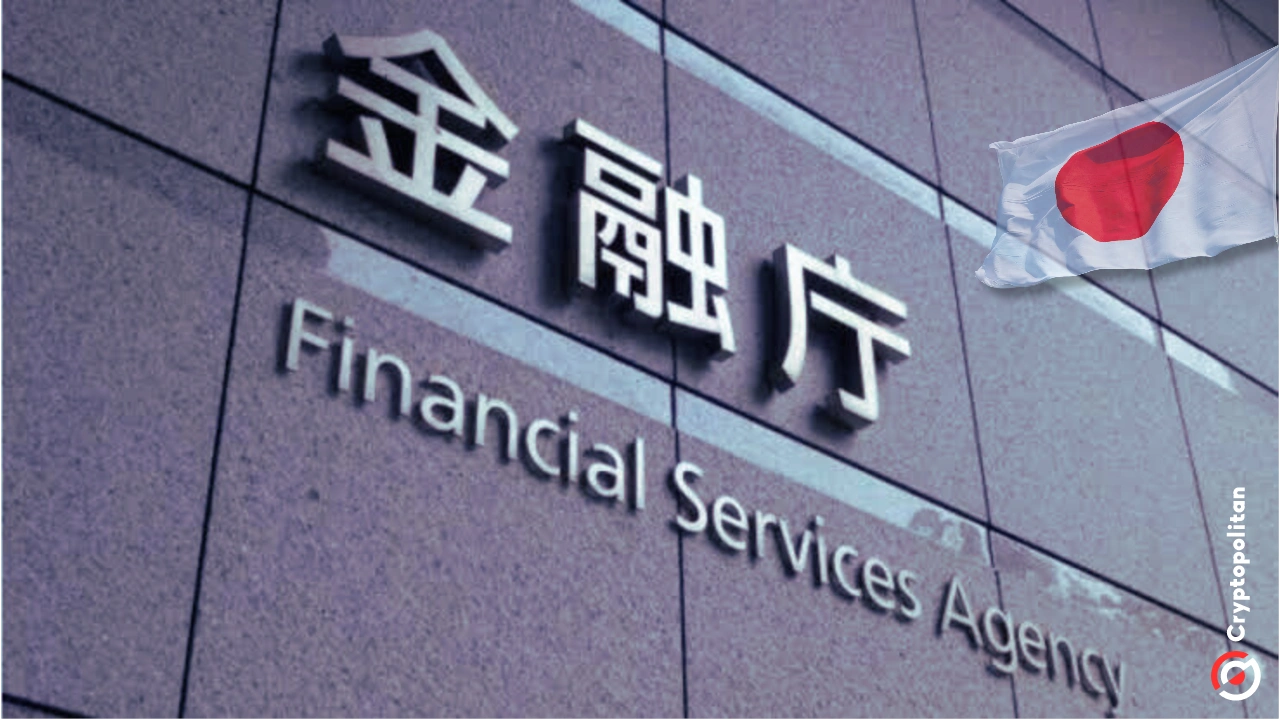
Japan's FSA asked banks and crypto exchanges to swap photographed-ID checks for IC-chip reading now, ahead of an April 1, 2027 deadline. The request follows a Times Car breach of about 1.6 million license images, Cryptopolitan reported, and leaves each firm to decide whether to pay for the switch this year or wait for the law.
The Investor · Invest desk
What happened
- The chip method reads an ID card with a smartphone and matches its stored name, address, birth date and face photo against a live image of the applicant.
- The notice also asks firms to re-examine how they confirm document thickness and faces in remote onboarding, and to tighten checks on third-party vendors.
- Crypto exchanges got the same directive as banks because the FSA treats them as financial institutions under its cybersecurity guidelines.
- Times Car, Japan's largest car-sharing service, has about 5.4 million members and roughly 70% of the country's car-sharing market.
- More than 15,000 people have signed up for a class action against Times Car being prepared by Tokyo Bar Association lawyer Yuki Makino.
Why it matters
- constraint Face capture stays and only the image upload goes, so chip reading is an added cost line that does not retire the face-check step firms already run.
- decision Each bank and exchange now chooses between paying for chip reading this year and building once against the April 2027 rule, since only the amended law binds.
- exposure Outsourced onboarding vendors come under review by their bank and exchange clients once those clients are asked to tighten vendor checks.
The FSA is using a request here [1][2]. The legal force sits in the amended Act on Prevention of Transfer of Criminal Proceeds, which applies from April 1, 2027 [2]. Counting from the October 9 notice [9], a bank or exchange that switches now pays for chip reading up to 174 days before the law requires it [13]. The agency kept the legal date and asked firms to spend ahead of it [2].
The case for haste is the stock of images already in circulation. In the Times Car breach, about 1.6 million identity-verification documents sat among roughly 6.6 million exposed user records [3], so about 24% of what leaked was ID material [14]. The exposed records also outnumber the company's membership by about 1.2 million [4][15]. According to Cryptopolitan, the FSA's notice recalled its May 2026 request with the Bank of Japan on frontier AI threats [9]. The outlet says the most capable models make it easier to turn leaked ID images into impersonation material [18]. It also reported that AI-assisted hackers using the open-source tool ARTEX and Claude Code attacked seven South Korean financial institutions [17]. Anyone holding the file can resubmit a photographed license. A chip read needs the card itself, held to a smartphone [6], and the FSA believes the method is far more effective against fraud [12].
The months before April 2027 can go three ways. Firms could treat the request as the deadline and cut over early. They could wait for the law and build once. Or the FSA could keep stacking requests, as it has with exchanges: on August 6 it and the National Police Agency asked every crypto-asset exchange operator, through the JVCEA, to strengthen document authenticity checks and withdrawal limits [10].
I think the exchanges move first. They have now received two FSA requests on identity checks 64 days apart [10][16]. The counter-case is that a request with no new legal date lets any firm build once against the 2027 rule and spend nothing extra this year. Cryptopolitan's report does not include a cost estimate, so the size of that saving is unknown. If exchanges are still taking photographed IDs in the first quarter of 2027 and the FSA has issued nothing further, the request worked as guidance and this view is wrong.
What to watch
- Whether Japan's largest banks publish dates for ending photo-ID uploads, which would show the request moving firms beyond the crypto exchanges.
- Further leaks of ID images in Japan, which would strengthen the FSA's case for pressing firms harder before April 1, 2027.
- The class action Yuki Makino is preparing against Times Car, and whether sign-ups grow beyond the current 15,000-plus.
Clarity's read
What the record supports and how the coverage leans. The claims behind it follow.
Reality
- Evidence42
- Adoption
- Insufficient
- Hype gap+20
- Incentives
- Insufficient
- Confidence40
Claim ledger
Ranked by verification strength, evidence, and original report placement.
- [1]
Japan's Financial Services Agency sent a notice on Friday asking banks and crypto exchanges to stop requiring photographed identity documents for customer verification.
- [2]
The FSA asked banks and crypto exchanges not to wait for the April 1, 2027 implementation date of the amended Act on Prevention of Transfer of Criminal Proceeds and to move now to IC chip reading.
- [3]
A roughly two-week-old breach at Times Car exposed about 1.6 million customer identity-verification documents, including driver's license images, among roughly 6.6 million user records.
- [4]
Times Car, Japan's largest car-sharing service, has about 5.4 million members and accounts for around 70% of the country's car-sharing market.
- [5]
More than 15,000 people have signed up for a class action being prepared against Times Car by Tokyo Bar Association lawyer Yuki Makino.
- [6]
The IC chip method reads data stored inside a card using a smartphone, then matches the chip's name, address, date of birth and face photo against a live image of the applicant.
- [7]
Crypto exchanges received the same directive as banks because the FSA treats crypto-asset exchange operators as financial institutions under its financial-sector cybersecurity guidelines.
- [8]
The notice recommended re-examining how banks and exchanges confirm document thickness and applicants' faces during offsite onboarding, and asked them to tighten checks on third-party vendors.
- [9]
The FSA's October 9 notice recalled its financial-sector cybersecurity guidelines and a May 2026 request, published with the Bank of Japan, on short-term measures against frontier AI threats.
- [10]
On August 6, the FSA and the National Police Agency asked all crypto-asset exchange operators, through the Japan Virtual and Crypto assets Exchange Association (JVCEA), to strengthen document authenticity checks and withdrawal limits.
- [11]
Only the document-image upload step is being scrapped; methods that capture the applicant's face remain in place.
- [12]
The FSA believes identity verification by reading IC chip data is far more effective against fraud.
- [13]
174 days separate the October 9, 2026 notice from the April 1, 2027 implementation date.
- [14]
About 24% of the exposed Times Car user records were identity-verification documents.
- [15]
The roughly 6.6 million exposed records exceed Times Car's roughly 5.4 million members by about 1.2 million.
- [16]
The FSA's August 6 request to exchanges and its October 9 notice are 64 days apart.
- [17]
Seven South Korean financial institutions were attacked by AI-assisted hackers using the open-source tool ARTEX and Claude Code.
- [18]
Frontier AI, the most advanced models capable of strong reasoning and autonomy, has amplified the ability of bad actors to turn leaked ID images into impersonation material.
Sources
1 independent publisher whose own reporting we read for this story.
- cryptopolitan.comLeaked licenses and frontier AI push Japan to scrap image-based KYC early
1 article · October 9, 2026
Topics and entities
Follow any of these and your For You feed starts watching them — no settings page required.
Topics
- AI-Enabled Fraud and ScamsFollow
- Japan Financial RegulationFollow
- KYC and Identity VerificationFollow
- Data BreachesFollow
Entities
- Japan Financial Services AgencyFollow
- Times CarFollow
- Bank of JapanFollow
- National Police Agency (Japan)Follow
- Japan Virtual and Crypto Assets Exchange AssociationFollow
- Act on Prevention of Transfer of Criminal ProceedsFollow
- Yuki MakinoFollow
- ARTEXFollow
- Claude CodeFollow
- CryptopolitanFollow