Conference Board's chief economist is betting on Warsh's vote, not the inflation prints
Dana Peterson expects no hike next month while markets price one, and her reasoning rests on a consumer decline now reaching independents and Republicans rather than on inflation reports that will not exist by the time the committee sits.
The Investor · Invest desk
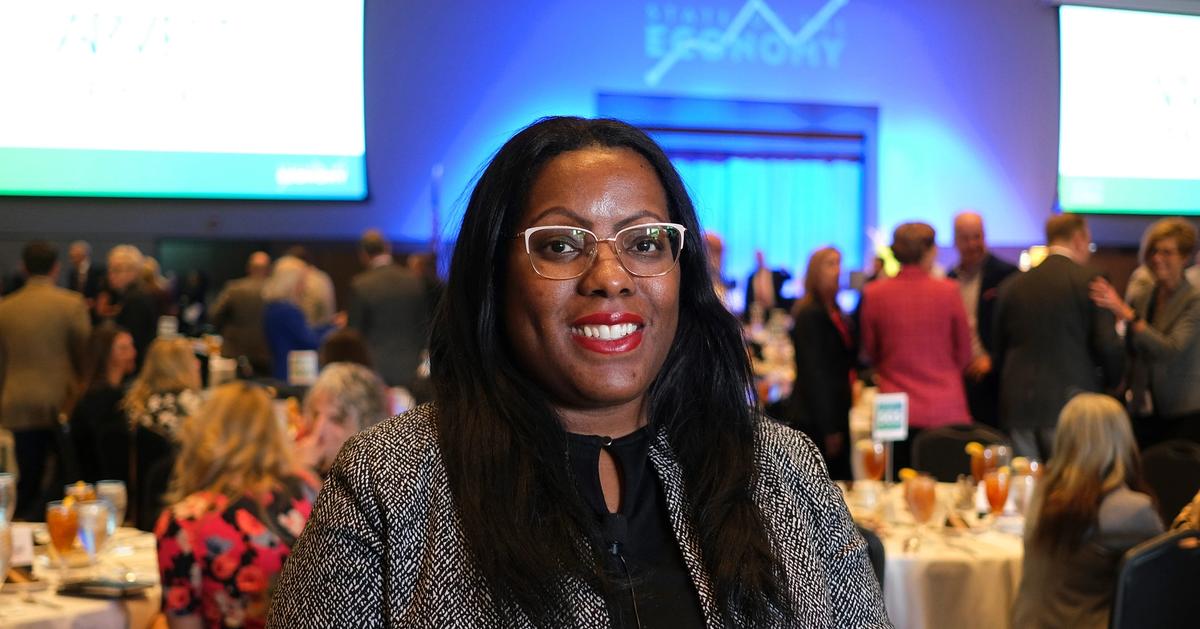
What happened
- The Conference Board's chief economist, Dana Peterson, told Semafor that consumer sentiment among Republicans and independents is starting to fade ahead of the midterm elections.
- She acknowledged that markets do expect a hike, and added that this matters because the Fed is looking for signals from markets.
- She said it would be good if Warsh reinforced that the Fed's independence was granted by an act of Congress, with President Trump renewing his attempt to fire Governor Lisa Cook.
Why it matters
- contradiction One interview supports both trades: the claims and JOLTS readings she cites argue the economy can take a hike, while the sales and PCE erosion she cites argues it cannot, so anyone sizing duration is picking which half of her evidence to weight.
- constraint Softening confidence among independents and Republicans rather than Democrats alone raises the political price of tightening in an election year, which narrows how far a chair can vote alongside market pricing without inviting a fight.
- exposure If the Treasury is buying long-term debt to lower borrowing costs, ordinary interagency talk about it becomes evidence in an independence dispute, which leaves the central bank exposed for communicating at all.
Warsh's own framing hands her the cheaper option. His symposium remarks described a steady labor market, called inflation above the 2% target for this long unacceptable, and flagged at least three more inflation reports that may influence what happens next [6][14]. Those reports arrive monthly, so at most one lands before the vote, which leaves two of the three data points he says matter unpublished when the committee sits [15]. A chair who has just asked an audience for three prints has given himself a reason to wait for two of them.
Peterson's own description makes the logic circular. She has the Fed taking signals from markets while markets price the hike she does not expect [19], so a hold next month is the chair declining the signal he says he reads [17]. That is a forecast about a committee, or more precisely about one member of it, resting on his vote instead of the CPI.
On the consumer side, her disinflation case and her confidence data are the same event described twice. The board's index fell last week to its lowest level since January, below what economists had projected, which puts every reading printed since January above the latest one [3][16]. She reports a general shift of downward optimism, with Democrats least optimistic but independents lately moving with Republicans in the negative direction, and respondents naming oil and gas prices, food, and war and conflict [2][4]. She then expects prices to keep easing partly because expensive discretionary goods, new cars among them, are getting cheaper while households rotate from discretionary to necessary purchases [7][8]. The price declines that support the no-hike call are produced by the demand erosion that shows up in her index.
This is probably wrong in one specific way, and she supplies the evidence herself: initial claims, continuing claims and JOLTS all read okay, and the risk she names, companies cutting prices or cutting labor, has not landed [9]. If claims stay flat and the next print firms, the 50-50 hike-hold she says makes sense [5] resolves toward the market, and the tightening arrives on a consumer already trading down.
Underneath sits an allocation question she declines to answer. She is uneasy about the Fed coordinating with Treasury purchases of long-term US debt aimed at lowering borrowing costs [11], and says plainly that it is unclear whether the Fed's short rates and balance sheet or Treasury's ability to buy and sell its own paper should carry the greater authority [12]. She was not surprised Warsh skipped Bessent's buybacks, his remit being monetary policy [13]. A chair silent on who is setting the long end is letting someone else decide it.
Next month prices Warsh's judgment more than it prices the data.
What to watch
- Initial and continuing claims: a flat labor read paired with a firmer inflation print would break the hold case Peterson builds.
- Whether Warsh publicly restates the statutory basis of Fed independence while the effort to remove Governor Cook proceeds.
- Whether the Fed and Treasury acknowledge any communication about the long-term debt buybacks, and in what form.
Clarity's read
What the record supports and how the coverage leans. The claims behind it follow.
Reality
- Evidence52
- Adoption
- Insufficient
- Hype gap+20
- Incentives62
- Confidence55
Claim ledger
Ranked by verification strength, evidence, and original report placement.
- [1]
The Conference Board Chief Economist Dana Peterson told Semafor that consumer sentiment among Republicans and independents is "starting to fade" ahead of the midterm elections.
- [2]
Peterson described "a general shift of downward optimism," pointing to expectations that inflation and interest rates will remain elevated, and said Democrats are the least optimistic but that more recently independents are moving with Republicans in a negative direction.
- [3]
The Conference Board said last week that its overall consumer confidence index had dropped to its lowest level since January; economists had predicted it would remain higher.
- [4]
Peterson said consumers have been citing issues including "oil and gas prices, food, and also war and conflict" on surveys.
- [5]
Peterson said "50-50 hike-hold makes sense to me," citing remaining vulnerabilities in the economy including erosion of consumer demand in sales data and in PCE data just released.
- [6]
Peterson said Warsh's speech that morning described the labor market as steady, called inflation being above the 2% target for so long unacceptable, cited continuing political uncertainty, and indicated there are at least three more inflation reports that may influence what happens next at the Fed.
- [7]
Peterson said consumers are shifting from discretionary to necessary products and services, which could be the beginning of a cycle in which consumer demand contracts enough that the Fed loosens policy or sits tight.
- [8]
Peterson cited slowing inflation plus declines in prices for more expensive discretionary items such as new cars, and said she believes that will continue to push inflation down, though it will take a while to reach 2%.
- [9]
Peterson said measures including initial jobless claims, continuing claims and JOLTS all indicate the labor market is okay.
- [10]
Peterson said "it would be good" if Warsh reinforced the fact that the Fed has been given its independence by an act of Congress, amid President Donald Trump's renewed attempt to fire Fed Gov. Lisa Cook.
- [11]
Peterson expressed concern that any coordination with the Fed on the Treasury Department's moves to bring down borrowing costs by buying US long-term debt might jeopardize the central bank's independence.
- [12]
Peterson said it is "really not clear" who should have the greater authority over the economy, the Fed with its short-term interest rates and balance sheet or the Treasury with its ability to buy and sell Treasury assets to rebalance markets, and asked whether such communication erodes Fed independence.
- [13]
Peterson said she was not surprised Warsh did not reference Treasury Secretary Scott Bessent's efforts to buy back more US debt, because Warsh's remit is monetary policy and the Treasury has fiscal policy.
- [14]
Peterson spoke on the sidelines of the Kansas City Federal Reserve's annual economic policy symposium.
- [15]
Of the at least three further inflation reports Warsh said may influence the Fed's next move, at most one will have been published by next month's meeting, leaving two unpublished at the time of the vote.
- [16]
A confidence index at its lowest level since January means every reading printed from January onward sits above the latest reading.
- [17]
Because Peterson says the Fed looks to markets for signals while markets price a hike she does not expect, market pricing is an input into the decision her own forecast contradicts.
- [18]
Peterson predicted that Fed Chair Kevin Warsh would not support an interest-rate hike at next month's Fed meeting, saying "the risk is that there's more demand destruction that leads companies to either cut prices or cut labor."
- [19]
Asked whether Warsh might support a hike next month, Peterson said "I don't think so. Markets do, and I guess that's important because the Fed is looking for signals from markets."
Get this ledger inside ChatGPT. Ask about any of our stories and the answer brings its figure, each claim’s verdict and the sources. Free, no account.
Sources
1 independent publisher whose own reporting we read for this story.
- semafor.comGOP consumer sentiment ‘starting to fade’ ahead of midterms, economist says
1 article · August 29, 2026
Topics and entities
Follow any of these and your For You feed starts watching them — no settings page required.
Topics
Entities
- Eleanor MuellerFollow
- Scott BessentFollow
- PCE dataFollow
- Lisa CookFollow
- Kansas City Fed Economic Policy SymposiumFollow
- Donald TrumpFollow
- Job Openings and Labor Turnover SurveyFollow
- Dana PetersonFollow
- Consumer Confidence IndexFollow
- SemaforFollow
- Kevin WarshFollow
- The Conference Board, Inc.Follow
- Federal ReserveFollow
- US Department of the TreasuryFollow