DNA tests show two tuna caught off Bass Strait were Pacific bluefin
CSIRO genetic tests identified two large tuna caught off Bass Strait in July 2026 as Pacific bluefin, the first confirmed recreational catches in Victoria. Anglers had assumed both fish were southern bluefin until some noticed unusual features.
The Scientist · Science desk
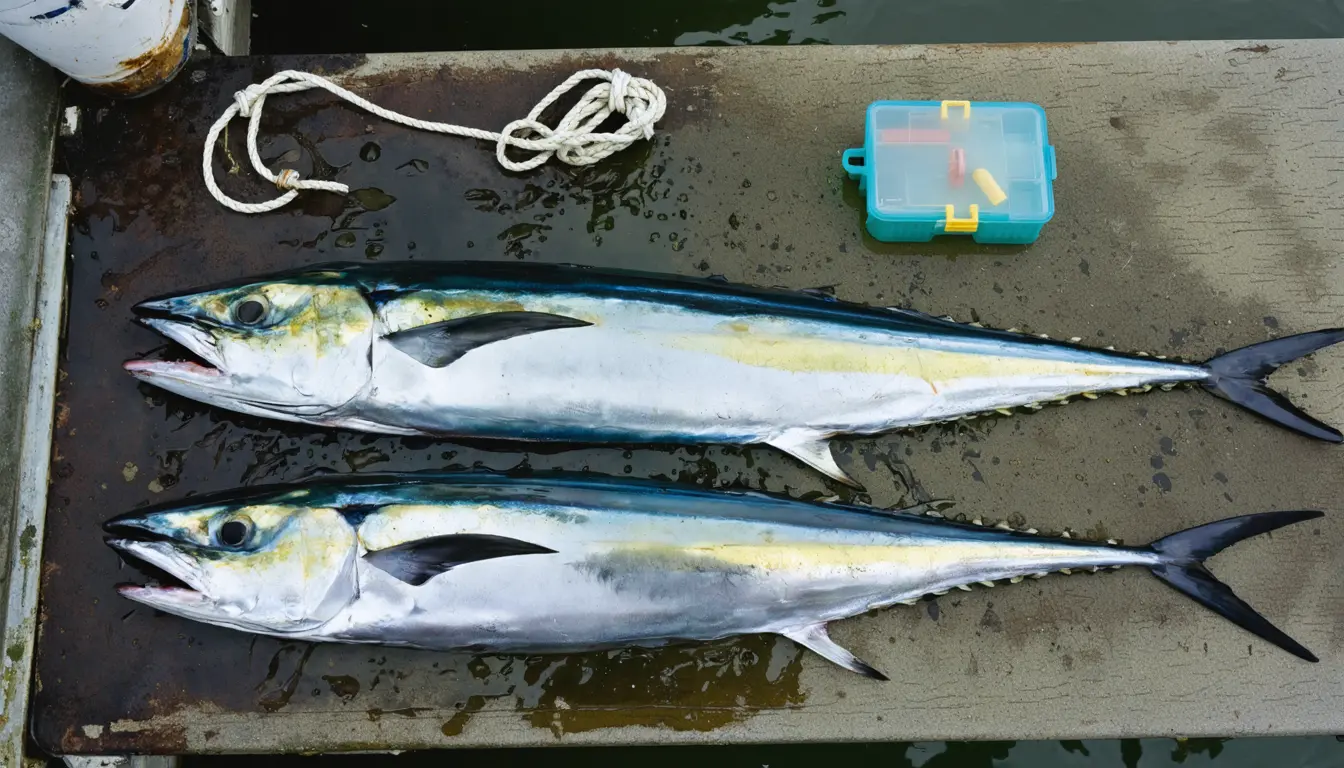
Key figures: the larger July fish weighed approximately 165 kg. Pacific bluefin tuna can approach 450 kg. Tuna later caught off Lakes Entrance weighed 130 to 217 kg and may also be Pacific bluefin.
| Figure | Value | Note | Claim |
|---|---|---|---|
| Larger July fish's weight, approximately | 165 kg | 3 | |
| Species can approach | 450 kg | 12 | |
| Lakes Entrance tuna, at least; may be Pacific bluefin | 130 kg | up to 217 kg | 15 |
What happened
- The fish were taken days apart in 50-60 m of water off Western Port Bay, one at about 165 kg and 2.12 m, the other at 131.6 kg and 2.02 m.
- Dave Standing coordinated muscle samples from both anglers, and they went via Tuna Champions ambassador Jonah Yick to Dr Peter Grewe, CSIRO's lead tuna geneticist in Hobart.
- Grewe's first test was a rapid tuna species identification assay developed at CSIRO, and it indicated both fish were Pacific bluefin.
- Longliners have caught Pacific bluefin in Victorian waters before, but usually in very deep water a long way from shore.
Why it matters
- contradiction The first-record claim is narrow. Commercial longliners already land Pacific bluefin in Victorian waters, so the new fact is a recreational catch close to shore.
- decision Anglers who land an unusual large tuna have reason to take muscle tissue quickly, as Standing did, because the species call here depended on samples reaching a CSIRO lab.
- precedent If Webster's samples also test as Pacific bluefin, the July pair would be the first of a run of 130 to 217 kg catches.
The identification rests on two genetic methods that agree. The rapid screen came first [7], and a slower sequencing analysis followed. "I'm extremely confident in these results following a secondary forensic-grade sequencing analysis further confirming our initial quick species ID test," Grewe said. [8]
The reason to test at all is that the two species are hard to separate by eye. "The Pacific and southern bluefin tuna look very similar to the naked eye, but there are subtle differences which can be used to distinguish between the two species, which include anal and second dorsal fin length, markings on their skin, body shape and average size," Yick said. [9]
Neither July fish is near the species' ceiling. Pacific bluefin can approach 450 kg [12], and the larger of the two is roughly 37% of that [14].
The same question is now open for a larger batch. Months after the July catches, anglers off Lakes Entrance began landing large numbers of tuna weighing 130 to 217 kg [15]. Preliminary assessments based on external features suggest these may also be Pacific bluefin, and local recreational fisher Simon Webster has collected samples from some of them for testing at CSIRO [15][16]. Until those results come back, the Lakes Entrance identification rests on appearance. "There's a huge amount of interest among Victorian fishers at the moment. I was told there were over 150 boats out off Lakes Entrance, Victoria, over the weekend," Yick said. [17]
The thing this doesn't tell you is whether Pacific bluefin are newly arriving or were already among earlier catches logged as southern bluefin. The species had never been confirmed by recreational fishers in Victoria before, and only a handful have been caught by recreational anglers anywhere in Australia [13]. According to Yick, both July fish were caught within 10 km of the shoreline [11].
What to watch
- CSIRO results on the Lakes Entrance samples collected by Simon Webster, which will show whether the July pair were isolated fish or the start of a pattern.
- A formal record with the sequence data and reference match behind the species call; the write-up reports the tests but does not show sequences.
- Any explanation for why Pacific bluefin are turning up close to the Victorian coast; the source text offers none.
Clarity's read
What the record supports and how the coverage leans. The claims behind it follow.
Reality
- Evidence78
- Adoption
- Insufficient
- Hype gap+8
- Incentives
- Insufficient
- Confidence72
Claim ledger
Ranked by verification strength, evidence, and original report placement.
- [1]
Two large tuna caught off Bass Strait in July 2026 were genetically tested and confirmed as Pacific bluefin tuna (Thunnus orientalis), a species rarely recorded by Australian recreational fisheries.
- [2]
The two fish were caught just days apart by Victorian anglers fishing far offshore from Western Port Bay at depths of 50-60 m.
- [3]
One fish weighed approximately 165 kg and measured 2.12 m; the second weighed 131.6 kg and measured 2.02 m.
- [4]
Both fish were initially assumed to be southern bluefin tuna (Thunnus maccoyii), a species commonly targeted by recreational game fishers in Victoria.
- [5]
Tuna Champions scientific ambassador Jonah Yick, experienced fisher Dave Standing and a few other fishers noticed several unusual features on the fish that raised questions about their identity.
- [6]
Standing contacted the anglers involved and coordinated collection of muscle samples for genetic testing; the samples went to Yick, who passed them to principal research scientist Dr Peter Grewe, lead geneticist working on tuna genomics at CSIRO in Hobart.
- [7]
Grewe ran an initial DNA screen using a rapid tuna species identification test developed at the CSIRO labs, and the results indicated both fish were Pacific bluefin tuna.
- [8]
"I'm extremely confident in these results following a secondary forensic-grade sequencing analysis further confirming our initial quick species ID test," Grewe said.
- [9]
"The Pacific and southern bluefin tuna look very similar to the naked eye, but there are subtle differences which can be used to distinguish between the two species, which include anal and second dorsal fin length, markings on their skin, body shape and average size," Yick said.
- [10]
Pacific bluefin tuna have been caught by longliners (commercial fishermen) in Victorian waters, but they are usually in very deep water, a long way from shore.
- [11]
Yick said the two fish were caught in close proximity, literally on Melbourne's doorstep, within 10 km of the shoreline.
- [12]
Pacific bluefin tuna can grow to almost three meters in length and approach 450 kg in weight.
- [13]
Only a handful of Pacific bluefin tuna have been caught by recreational anglers in Australia, and the species had never been confirmed by recreational fishers in Victoria until now.
- [14]
The larger July fish (about 165 kg) is roughly 37% of the 450 kg the species can approach.
- [15]
Months later, anglers off Lakes Entrance, Victoria, began catching large numbers of tuna weighing between 130 and 217 kg; preliminary assessments based on external features suggest these fish may also be Pacific bluefin tuna.
- [16]
Samples from some of the Lakes Entrance fish have been collected by local recreational fisher Simon Webster, and testing is underway at CSIRO to determine their identity.
- [17]
"There's a huge amount of interest among Victorian fishers at the moment. I was told there were over 150 boats out off Lakes Entrance, Victoria, over the weekend," Yick said.
Get this ledger inside ChatGPT. Ask about any of our stories and the answer brings its figure, each claim’s verdict and the sources. Free, no account.
Sources
1 independent publisher whose own reporting we read for this story.
- phys.orgOcean discovery: Pacific bluefin tuna confirmed in Victorian waters
1 article · October 14, 2026
Topics and entities
Follow any of these and your For You feed starts watching them — no settings page required.