CT reconstruction of a crushed 'hell chicken' skull suggests a fruit-eating dinosaur
Stony Brook researchers rebuilt the first nearly complete caenagnathid skull and infer from its jaw that the 12-kilogram animal mashed soft fruit. The diet is inferred from one species, so it does not yet cover the wider toothless group.
The Scientist · Science desk
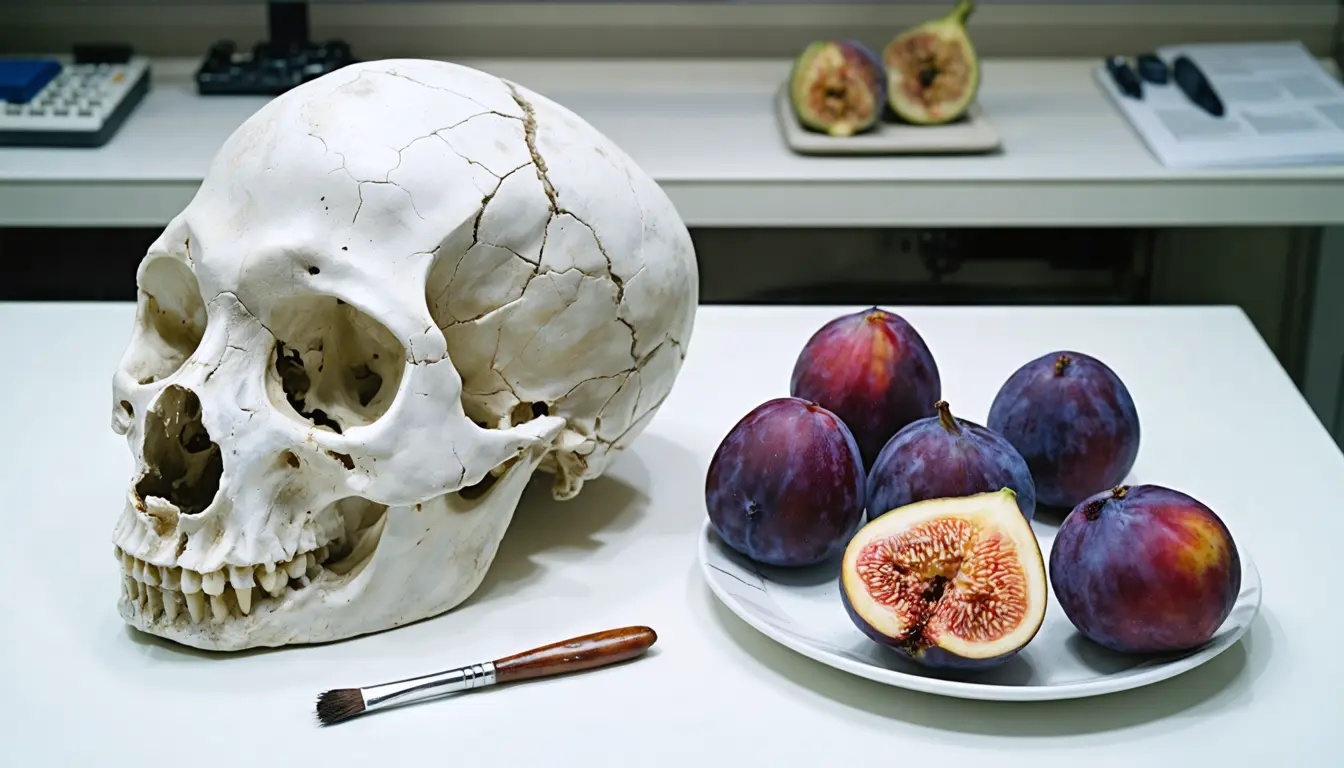
What happened
- The fossil came from the Hell Creek Formation, which extends across parts of Montana, South Dakota and North Dakota.
- No stomach stones, which many plant-eating dinosaurs used to grind food, were found in the animal's body cavity.
- Some fruit-eating parrots process soft fruit pulp with a similar front-to-back jaw motion.
Why it matters
- capability A nearly complete skull lets researchers test jaw function in a group where diet and jaw mechanics were hard to establish from scrappier fossils.
- contradiction Phys.org counts the animal among plant-eaters, but the authors' own wording is a hypothesis that it could have been specialized for soft fruit.
- constraint The link between oviraptorosaur diversification and fruit evolution is a timing overlap, and the authors say the animals' role in fruit proliferation remains unclear.
Crushed bone was the first obstacle. Parts of the skull and lower jaw had been flattened [5], so the team used CT scans to separate and rebuild individual bones digitally, then mapped where the jaw muscles attached and compared them with living birds and other dinosaurs [6]. Nobody can watch this animal eat, so jaw function has to be inferred from muscle layout.
According to phys.org's report of the Nature Communications paper, the muscles were built to slide the lower jaw backward and forward, not to deliver a strong up-and-down bite [7]. Ridges and grooves inside the mouth may have worked like a mortar and pestle on soft food [8]. Some fruit-eating parrots use a similar front-to-back motion on soft fruit pulp [10]. "We hypothesize that Infernogallus jamesi could have been specialized for processing soft, fleshy fruit," the study authors wrote [11].
Many plant-eating dinosaurs used stomach stones to grind food, and none were found in this animal's body cavity [9]. The missing stones fit a soft diet, but one body cavity is a narrow base for that inference.
Phys.org's account describes no preserved food remains and does not say whether the team excluded meat or other soft foods. The step from soft food to fruit leans on the comparison with living parrots.
The claim also covers one species. Caenagnathids are a family of toothless, slender birdlike dinosaurs [3], and this is the first nearly complete skull for the group [4]. Showing whether a sliding jaw is a family trait would take a second skull. Such skulls are rare because delicate bones and light skeletons seldom survive fossilization [4]. In our view, the findings make a soft-fruit diet a credible working hypothesis for Infernogallus and leave the family's diet open.
The evolutionary story is looser still. As flowering plants spread and produced larger, fleshier fruits, oviraptorosaurs, the wider group that includes caenagnathids, also diversified [12]. The two trends coincide in time, and the authors treat them that way. Whether these dinosaurs helped spread seeds and drive fruit evolution is an open question, and they wrote that the animals' role in the Late Cretaceous proliferation of fruit "remains unclear" [13].
What to watch
- A second well-preserved caenagnathid skull would show whether the sliding, mortar-and-pestle jaw belongs to the family or to Infernogallus alone.
- Direct evidence of diet, such as preserved food remains with a specimen, would test the jaw-based inference.
- Any work on whether these dinosaurs dispersed seeds, which the authors flag as unresolved.
Clarity's read
What the record supports and how the coverage leans. The claims behind it follow.
Reality
- Evidence55
- Adoption
- Insufficient
- Hype gap+8
- Incentives
- Insufficient
- Confidence50
Claim ledger
Ranked by verification strength, evidence, and original report placement.
- [1]
Infernogallus jamesi was a 26-pound (12-kilogram) turkey-sized birdlike dinosaur that roamed North America around 66 million years ago.
- [2]
The fossilized remains were found in the Hell Creek Formation, a rock formation extending across parts of Montana, South Dakota and North Dakota.
- [3]
Infernogallus jamesi belongs to the caenagnathid family, a group of birdlike dinosaurs known for toothless beaks and slender bodies.
- [4]
The find includes the first nearly complete skull ever found for the caenagnathid group; such skulls are exceptionally rare because delicate bones and lightly built skeletons rarely survive fossilization, which has made it hard to learn what these animals ate or how their jaws worked.
- [5]
Gregory F. Funston at Stony Brook University in New York and colleagues studied the skull, parts of which and of the lower jaw had been crushed.
- [6]
The team used CT scans to digitally separate and reconstruct individual bones, mapped where the jaw muscles attached, and compared them with living birds and other dinosaurs to determine how the jaws worked.
- [7]
The scientists found that instead of a strong up-and-down biting force, the jaw muscles were built to slide the lower jaw backward and forward, as detailed in their paper in Nature Communications.
- [8]
Ridges and grooves inside the mouth may have acted like a mortar and pestle to mash soft food.
- [9]
No stomach stones, which many plant-eating dinosaurs used to grind food, were found in the animal's body cavity.
- [10]
A similar feeding mechanism is found in some fruit-eating parrots, which use a front-to-back jaw motion to process soft fruit pulp.
- [11]
The study authors wrote: "We hypothesize that Infernogallus jamesi could have been specialized for processing soft, fleshy fruit."
- [12]
As flowering plants spread and began producing larger, fleshier fruits, oviraptorosaurs, the wider group that includes caenagnathids, also diversified; the adaptation may help explain how dinosaur diets evolved along with changing Cretaceous ecosystems.
- [13]
Whether these dinosaurs actively helped spread plant seeds and drive fruit evolution is an open question, as the researchers acknowledge; the authors wrote that their role in the Late Cretaceous proliferation of fruit "remains unclear."
Get this ledger inside ChatGPT. Ask about any of our stories and the answer brings its figure, each claim’s verdict and the sources. Free, no account.
Sources
1 independent publisher whose own reporting we read for this story.
- phys.orgToothless 'hell chicken' dinosaur may have had a taste for fruit
1 article · October 14, 2026
Topics and entities
Follow any of these and your For You feed starts watching them — no settings page required.
Topics
- Dinosaur diet evolutionFollow
- PaleontologyFollow
Entities
- Infernogallus jamesiFollow
- Gregory F. FunstonFollow
- Stony Brook UniversityFollow
- Nature CommunicationsFollow
- Phys.orgFollow