Science1 publisherNot yet confirmed elsewhere2 min readPublished
Smoke loggers on mule deer record air quality that differs tenfold from nearby stations
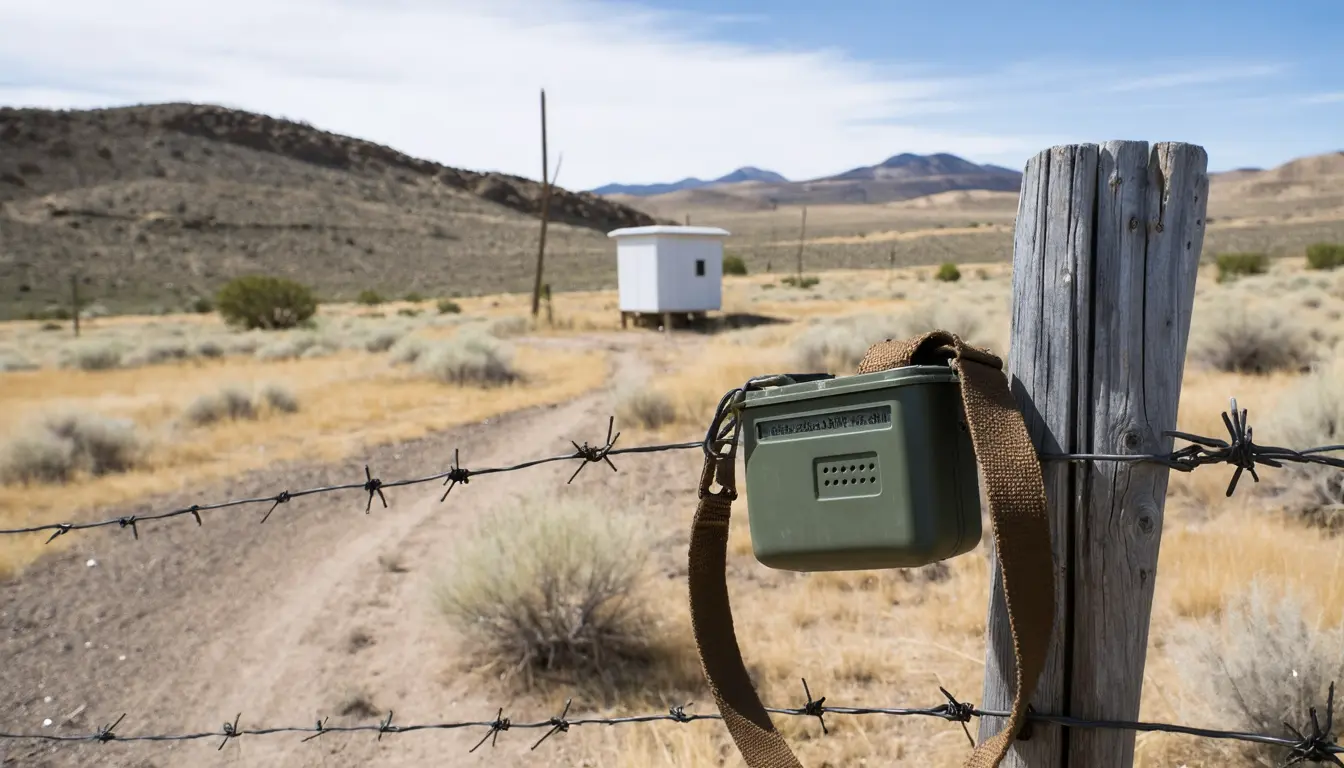
Colorado State University's open-source smoke logger, worn on mule deer collars, recorded air quality differing tenfold from the nearest monitoring stations. No deer in this year's Colorado and Utah deployment met unhealthy smoke, so the behavioral question the device was built for is still open.
The Scientist · Science desk
What happened
- The logger's design and code are free to download alongside the team's initial results in the journal Methods in Ecology and Evolution.
- A research group can build its own unit from the open design for about $100 in materials.
- On deer living in urban areas, the sensor picked up small pollution spikes from traffic.
- Partner studies on cougars, deer and elk across the western U.S., plus stationary sensors in Sierra Nevada fisher habitat, will report in later papers.
Compiled by The ScientistSomething wrong?How this is made
Why it matters
- constraint Smoke exposure taken from the nearest fixed station can be off by a factor of ten for a single animal, so credible exposure studies will need sensors on the animals themselves.
- cost Collar programs have already paid for the capture and recovery, so the extra cost of adding exposure data comes down to parts and assembly.
- capability Animal-borne readings could extend air quality coverage past the populated areas AirNow watches, and the team says that data would also inform human smoke exposure.
This year's deployment answered a measurement question because it could not answer the behavioral one. The mule deer carrying loggers in Colorado and Utah were never exposed to unhealthy levels of wildfire smoke [14]. The sensors did show that the air around an individual deer differed from the reading at the closest monitoring station by an order of magnitude, ten times higher or ten times lower [13]. "That was eye-opening for us and shows how variable air quality is at a microscale," Wittemyer said [16].
I would weigh that gap first. The EPA's AirNow network monitors air quality in populated areas [18]. In wilderness, according to Wittemyer, air quality typically is not monitored at all [6]. A study that assigns a collared animal its smoke dose from the nearest station is using a figure that, on this evidence, can miss by a factor of ten [13].
The instrument is a repurposed low-cost commercial sensor, similar to those used by the PurpleAir network, that uses a laser to measure microscopic particles [17]. The phys.org account does not say how many deer carried loggers or how the units were checked against reference-grade instruments in the field.
The cost case rests on adding to fieldwork that is already happening. Studies that capture, collar and recapture animals are resource-intensive, and many already log heart rate alongside GPS position [9]. A logger added to one of those collars reuses a capture the host study has already paid for [9]. The team is asking for partners whose projects recover their collars [11]. Parlin, who designed the device, led the work with Wittemyer and U.S. Forest Service wildlife ecologist Mark Ditmer [3].
"Wildfire is now a chronic problem in North America," Wittemyer said [4]. He set out the goal this way: "We're interested in how wildlife adjusts its behavior relative to smoke exposure, and it wasn't possible to know until now" [5]. The data to test that has not yet been collected during a severe smoke event [14].
When it is, pairing exposure with heart rate and movement will produce correlations first. A deer's heart rate on a smoky day also reflects everything else about that day, including the fire that made the smoke. Separating the two will depend on study design. "We know relatively little about the impacts of wildfire smoke on the behavior of animals in the field, especially how free-roaming wildlife respond to severe smoke events," Parlin said [8]. He said the units offer one route to "identifying refugia during smoke events" [19].
What to watch
- Published results from the cougar, deer and elk collar studies, especially any season in which a severe smoke event reached the collared animals.
- The air quality results from the sensors stationed in endangered Sierra Nevada fisher habitat.
- Any field comparison of the low-cost laser sensor against reference-grade monitors, which would set how far the tenfold gap can be trusted.