ProductNot yet confirmed elsewhere1 publisher3 min readPublished
Comac's next import substitution target is the sealant drum, not the engine
Sealants, rubber, paints, bolts and cleaning agents are now on China's replacement list. Engines get the headlines; consumables are where incumbents book reorder revenue.
The Product Desk
What happened
- An AECC chief engineer told a Guangzhou aviation forum that sealants, rubber, paints, bolts and even cleaning agents from the West are candidates for replacement.
- Some domestically made materials are already being tested on the C919, and others are under assessment by Comac.
- One local product, the HM1176 polythioether sealant, has been used on the C919 and the CJ-1000 engine series since 2025.
- Zhang Xiaoyan named PPG Industries, a major Comac supplier, among the Western producers of coatings, sealants and cockpit transparencies still on the aircraft.
- European test pilots completed in-flight assessments of the C919 in Shanghai in July, the South China Morning Post reported.
Why it matters
- exposure The categories on the list are aftermarket lines rather than shipset content, so what a second qualified source erodes is the recurring reorder revenue Western materials suppliers book long after...
- constraint Dual sourcing without displacement takes pricing power before it takes volume: an incumbent negotiating against a qualified domestic alternative has less room than one negotiating against nothing.
- decision Comac has chosen to put domestic materials on aircraft during an open European review, trading supply resilience against the risk that a regulator reads substitution as a design change.
- precedent Airbus acceptance of Chinese protective seals on A330 engines in China is the template for these materials earning revenue outside Comac programmes.
An aerospace sealant is not hard to formulate. Getting it onto an approved materials list, and keeping it there across the service life of an airframe, is the hard part, and it is also the part that pays: every drum sold after qualification is reorder business nobody has to win again. That is the layer of the C919 that Chinese suppliers have now been pointed at [1].
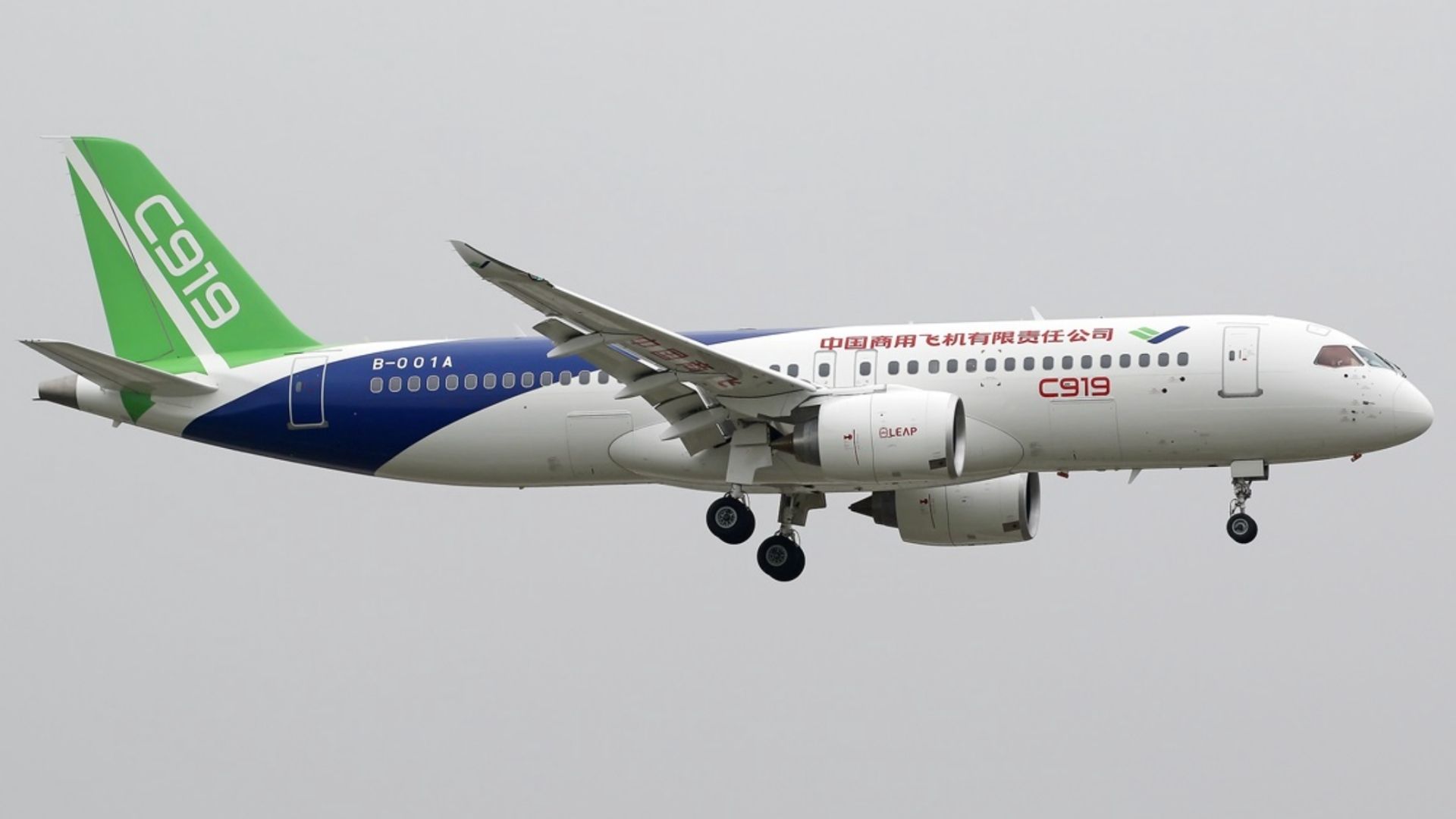
The engine is still the conspicuous dependency. The CJ-1000 remains under development at the Aero Engine Corporation of China and is meant to become a domestic alternative to the Leap-1C, which is for now the only engine a C919 can fly with, and which is built by CFM International, the GE Aerospace and Safran joint venture [7][8]. So on engines the number of qualified sources is one [17]. The consumables programme is not waiting for that to change.
What makes the account credible is that it concedes the gap. Zhang Xiaoyan said of Western materials that "their products are reliable and have truly stood the test of time" [9], and specialised cleaning agents imported from Western suppliers are reportedly still needed for some engine maintenance work [11]. The stated aim is a backup source rather than an immediate exit [15], and displacing established products is expected to take years [16]. Read as procurement rather than politics, that is a plan to hold two qualified sources on a materials list, which is a different thing from switching.
The shortcut China is reaching for is military. Zhang said anticorrosive coatings, adhesives and chemical buffering agents developed for military aircraft could be adapted to civil programmes, including the C919 and the C929 widebody still in development [12]. Existing production experience is the scarce input here, and defence work is where China already has it.
The awkwardness sits with the regulator. Zhang rejected the suggestion that substitutions could damage the C919's European certification effort, saying Comac had considered the matter and that "it will not create any adverse impact. We are simply providing an additional safeguard with the option of domestic products" [19]. Certification is not expected soon, because regulators still have to analyse flight data and finish further technical work [14]. Domestic materials are already on test aircraft while that review is open [18], and whether a second qualified sealant counts as an additional safeguard or a design change is not Comac's call to make.
Scale keeps this from being an immediate revenue event: Comac had delivered 42 C919s to Chinese customers by July, against service entry in May 2023 [5]. Consumables demand tracks fleet hours, and 42 airframes is not much of a fleet. The qualification position is the asset, and it is being contested now, years before the volume arrives.
What to watch
- Whether EASA treats domestic material substitutions as design changes when it works through the July flight-test data.
- Whether aerospace coatings and sealant suppliers start breaking out Comac or China aftermarket exposure in their disclosures.
- Whether Chinese-made consumables win approvals beyond the reported A330-in-China seal case, especially on aircraft operating outside China.
Clarity's read
What the record supports and how the coverage leans. The claims behind it follow.
Reality
- Evidence38
- Adoption42
- Hype gap+12
- Incentives68
- Confidence44
Claim ledger
Ranked by verification strength, evidence, and original report placement.
- [1]
China is widening its aircraft localisation campaign beyond engines, with domestic suppliers developing alternatives to Western-made sealants, rubber, paints, bolts and cleaning agents used in commercial jets, to reduce exposure to foreign supply disruption and geopolitical tension.
- [2]
Zhang Xiaoyan, a chief engineer at the Aero Engine Corporation of China's Beijing Institute of Aeronautical Materials, detailed the localisation effort at an aviation forum in Guangzhou.
- [3]
Zhang said: "Other than the engine, we are also looking at sealants, rubber, paints, bolts and even cleaning agents from the West that could be replaced."
ReportedSupportedSource: Zhang Xiaoyan, AECC Beijing Institute of Aeronautical MaterialsView cited source - [4]
Some domestically produced materials are already being tested on the C919, while others are being assessed by Comac.
- [5]
The C919 entered commercial service in May 2023, and Comac had delivered 42 of the aircraft to Chinese customers by July.
- [6]
The domestically produced HM1176 polythioether sealant, which provides structural sealing and corrosion protection, has been used on the C919 and China's CJ-1000 engine series since 2025.
- [7]
The CJ-1000 remains under development by the Aero Engine Corporation of China and is intended to eventually serve as a domestic alternative to the Leap-1C, currently the only engine available for the C919.
- [8]
Leap-1C engines are produced by CFM International, a joint venture between US-based GE Aerospace and France's Safran.
- [9]
US and European companies continue to supply many of the advanced functional and composite materials used throughout the aircraft; Zhang said "their products are reliable and have truly stood the test of time."
- [10]
Zhang cited US-based PPG Industries, a major Comac supplier and a large producer of aerospace coatings, sealants and cockpit transparencies.
- [11]
Specialised cleaning agents imported from Western suppliers are reportedly required for some engine-maintenance operations.
- [12]
Zhang said anticorrosive coatings, adhesives and chemical buffering agents made for military aircraft could be adapted for civilian programmes, including the C919 and the C929 widebody under development.
- [13]
European test pilots completed in-flight assessments of the C919 in Shanghai in July, according to the South China Morning Post.
ReportedSupportedSource: South China Morning Post, cited by interestingengineering.comView cited source - [14]
Certification is not expected soon because regulators must still analyse flight data and complete further technical work.
- [15]
The localisation campaign is intended to create backup sources rather than immediately remove every overseas supplier.
- [16]
Replacing established Western products is expected to take years.
- [17]
For the C919 engine, the number of currently available qualified sources is one.
- [18]
Domestic materials are being introduced onto C919 test aircraft while the European certification review is still open and unresolved.
- [19]
Asked whether design changes could affect the C919's bid for European Union Aviation Safety Agency certification, Zhang said Comac had already considered the matter: "It will not create any adverse impact. We are simply providing an additional safeguard with the option of domestic products."
ReportedInsufficientSource: Zhang Xiaoyan2 sources— create a free account to open themView cited source - [20]
Specialised protective seals made in China have reportedly received Airbus approval for use on engines powering A330 aircraft operating in China.
Sources
1 independent publisher whose own reporting we read for this story.
Topics and entities
Follow any of these and your For You feed starts watching them — no settings page required.
Topics
Entities
- Commercial Aircraft Corporation of ChinaFollow
- C919Follow
- C929Follow
- Aero Engine Corporation of ChinaFollow
- Beijing Institute of Aeronautical MaterialsFollow
- Zhang XiaoyanFollow
- CJ-1000Follow
- Leap-1CFollow
- CFM InternationalFollow
- GE AerospaceFollow
- SafranFollow
- PPG IndustriesFollow
- HM1176 polythioether sealantFollow
- European Union Aviation Safety AgencyFollow
- AirbusFollow
- BoeingFollow
- South China Morning PostFollow