Invest2 publishersIndependently confirmed3 min readPublished
Changsha court lets investor keep 196 parking spaces after she rents some out at double the old rate
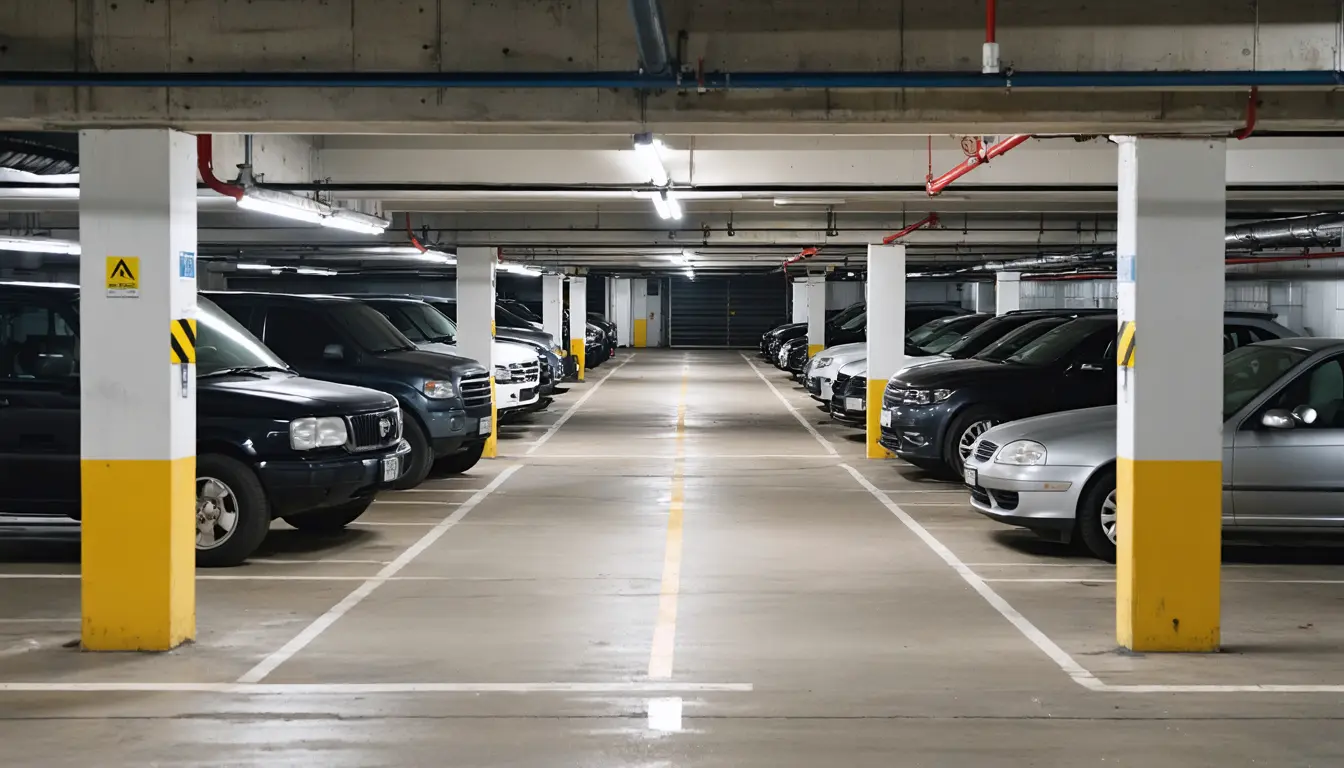
Changsha investor Wu paid 14 million yuan for 196 parking spaces, about 40% of a complex's supply, from a developer short of cash. A court upheld the sale in 2024 because no law caps ownership, Sedaily reported, so residents who passed in 2018 now rent from her.
The Investor · Invest desk
What happened
- Wu locked the spaces, began renting some at 500 yuan a month, about double the developer's 2018 rate, and refused residents' request to cut it to about 300 yuan.
- She listed some spaces for sale at about 100,000 yuan each, and some price tags ran up to 80% above what she had paid, according to Sedaily.
- After local officials failed to broker a deal, some residents sued to void her contract, arguing parking is infrastructure that one person should not buy in bulk for profit.
- The court also found that residents had been free to buy the spaces when the developer offered them and had chosen not to.
- The ruling, more than two years old, resurfaced recently on Chinese social media, where users split over whether Wu had done anything wrong.
Compiled by The InvestorSomething wrong?How this is made
Why it matters
- precedent A cash-short developer in Changsha can sell a block of parking to one investor backed by a court finding that no ownership cap exists, provided residents were offered the spaces first.
- cost Residents who passed on spaces at about 71,400 yuan in 2018 now pay rent that earns their landlord roughly 8.4% a year on that price.
- constraint Because the suit sought only to void the sale, residents have no court-set rent to point to; their main check on her price is the roughly 294 spaces in other hands.
Divide 14 million yuan by 196 and Wu paid about 71,400 yuan a space [27]. At the 500 yuan a month she charges [14], a let space brings in 6,000 yuan a year, a gross yield of roughly 8.4% on that cost [21]. The 300 yuan residents asked for [15] would bring it to about 5.0% [22]. The developer's 2018 rate, about half of hers, works out near 4.2% [23].
Whether 196 spaces amount to pricing power depends on who holds the rest. If 196 was about 40% of the total [2], the complex has roughly 490 spaces, and about 294 belong to someone else [28]. Sedaily's account does not say who owns them or what they rent for. It does record locks on Wu's spaces [13], a rent double the developer's [14] and her refusal to cut it [15]. A landlord in a competitive car park lets idle spaces at the going rate. One with some hold over supply can leave them empty and keep the price. One social media user, quoted by Sedaily, described something close to that: "it is unfair that other residents cannot find a place to park while many spaces sit empty" [9].
On the sale side, a listing of about 100,000 yuan [5] is 40% above her average cost [24]. The report's figure of up to 80% [6] would put some tags near 128,600 yuan if every space cost her the average [25]; otherwise some spaces cost her less than others. A neighbour who pays 100,000 yuan to stop paying 500 yuan a month is buying almost 17 years of rent up front [26].
The judgment covers less ground than its most quoted line. The residents sued to void the sales contract [7], so the court decided whether the sale stood. What she may charge was outside the suit. The ruling rested on three findings: residents could have bought when the developer offered the spaces and chose not to [18], Wu put up her own money and carried the risk of prices falling [19], and no law caps how many spaces one person may own [20]. One user's defence online matched the first finding: "the developer asked the other residents whether they wanted to buy and they didn't, so this woman did nothing wrong" [10]. The third finding applies to any complex. The first depends on this sale's history, and an investor who buys a block before residents are offered it would lose that ground.
Each party made a capital decision in 2018. The developer, short of cash [3], took 14 million yuan up front [1] and gave up the gain that came once the area filled in and demand for parking rose [12]. Residents looked at a complex with no shops, schools or public transit nearby and little demand for flats or parking [4], and kept their money. Wu read the local government's development plans and bet the other way [11].
One way this plays out is that investors copy it, buying blocks of parking from developers who need cash. Another is that the roughly 294 spaces in other hands hold her rent down [28], and empty spaces push her toward 300 yuan. A third is that the attention since the ruling resurfaced online [8] produces the cap the court found missing [20]. I think the ruling does open a legal route to pricing power over residents, though a narrow one. It needs a developer that offered the spaces to residents first, and it buys only as much control as the share of spaces bought. If her spaces fill at 500 yuan, a 40% stake was enough. If they stay locked and empty until she cuts toward 300, or she resells near cost as residents demanded [16], it was not.
What to watch
- Whether Wu's spaces fill at 500 yuan a month or stay locked and empty until she cuts toward the 300 yuan residents asked for.
- Any rule from Changsha or Hunan authorities capping bulk purchases of residential parking now that the 2024 ruling has resurfaced online.
- Whether other investors buy blocks of parking from cash-short developers and cite the Changsha judgment.
Clarity's read
What the record supports and how the coverage leans. The claims behind it follow.
Reality
- Evidence45
- Adoption
- Insufficient
- Hype gap+20
- Incentives55
- Confidence50
Claim ledger
Ranked by verification strength, evidence, and original report placement.
- [1]
A woman surnamed Wu acquired 196 parking spaces in a residential community in a single transaction for 14 million yuan.
ReportedSupportedSource: South China Morning Post2 sources— create a free account to open themView cited source - [2]
The 196 spaces represented 40 per cent of the project's total parking inventory.
ReportedSupportedSource: South China Morning Post2 sources— create a free account to open themView cited source - [3]
The developer, facing severe cash constraints, agreed to her purchase.
ReportedSupportedSource: South China Morning Post2 sources— create a free account to open themView cited source - [4]
The complex in Changsha, Hunan province, was completed in 2018, when the surrounding area lacked shops, schools, public transit and other basic amenities; demand was weak for both the apartments and the parking spaces.
ReportedSupportedSource: Sedaily, citing South China Morning Post2 sources— create a free account to open themView cited source - [5]
Wu listed some of the spaces for sale at about 100,000 yuan each.
- [6]
Some spaces carried price tags up to 80% higher than what Wu had originally paid.
ReportedSupportedSource: Sedaily, citing the report2 sources— create a free account to open themView cited source - [7]
Some residents filed a joint lawsuit seeking to void the sales contract between Wu and the developer, arguing parking is infrastructure serving residents and one individual should not buy it in bulk for profit.
- [8]
The ruling, handed down more than two years ago, resurfaced recently on Chinese social media and reignited debate; the South China Morning Post reported the case on the 7th.
- [9]
"it is unfair that other residents cannot find a place to park while many spaces sit empty"
ReportedSupportedSource: Chinese social media users, as quoted by Sedaily2 sources— create a free account to open themView cited source - [10]
"the developer asked the other residents whether they wanted to buy and they didn't, so this woman did nothing wrong"
ReportedSupportedSource: Chinese social media users, as quoted by Sedaily2 sources— create a free account to open themView cited source - [11]
Wu reviewed the local government's development plans and concluded the area would gain value.
- [12]
Development around the complex later picked up; as more residents moved in, the number of people looking for parking rose quickly.
- [13]
Wu installed locks on the spaces she bought to keep other vehicles out, then began renting some of them.
- [14]
Wu set rent at 500 yuan a month per space, roughly double the rate the developer had offered in 2018.
- [15]
Residents asked Wu to cut the monthly rent to about 300 yuan, but she refused.
- [16]
Residents demanded Wu resell the spots at close to her original purchase price.
- [17]
Local government officials stepped in to mediate, but the two sides failed to reach an agreement.
- [18]
In February 2024 a court in Changsha ruled for Wu, noting residents had also had the chance to buy the spaces when the developer put them up for sale but had chosen not to.
- [19]
The court found Wu had put up her own money anticipating future price gains and had borne the investment risk herself, including the possibility that prices would fall.
- [20]
The court held the bulk purchase could not be deemed illegal, citing the absence of any law capping the number of parking spaces an individual may own.
- [21]
At 500 yuan a month, a let space returns 6,000 yuan a year, a gross yield of about 8.4% on Wu's average cost.
- [22]
At the 300 yuan residents asked for, the gross yield would be about 5.0% on Wu's average cost.
- [23]
The developer's 2018 rate, roughly half of 500 yuan or about 250 yuan a month, implies a gross yield near 4.2% on Wu's average cost.
- [24]
A 100,000-yuan listing is about 40% above Wu's average cost per space.
- [25]
An 80% markup on the average cost would be a price of about 128,600 yuan.
- [26]
Buying a space at 100,000 yuan equals almost 17 years of rent at 500 yuan a month.
- [27]
Wu's average cost was about 71,400 yuan per space.
- [28]
The complex has roughly 490 parking spaces, about 294 of them not owned by Wu.
Sources
2 independent publishers whose own reporting we read for this story.
- en.sedaily.comWoman Who Bought 196 Parking Spots Wins Court Fight With Neighbors
1 article · October 8, 2026
- scmp.comChinese woman snaps up nearly 200 parking spaces to flip to neighbours for profit
1 article · October 6, 2026
Topics and entities
Follow any of these and your For You feed starts watching them — no settings page required.