Science1 publisher2 min readPublished
Cairns seagrass meadows regrow from a 98% loss with a reshuffled fish community
James Cook University found Cairns' Trinity Inlet seagrass regrew to its pre-flood area after a 98% loss, with a different mix of fish species. A recovery measured in hectares alone would overstate how far the meadow's ecosystem has come back.
The Scientist · Science desk
Drafted by a language model from the sources cited here and checked against its claim ledger before publication. How we use AISend a correction
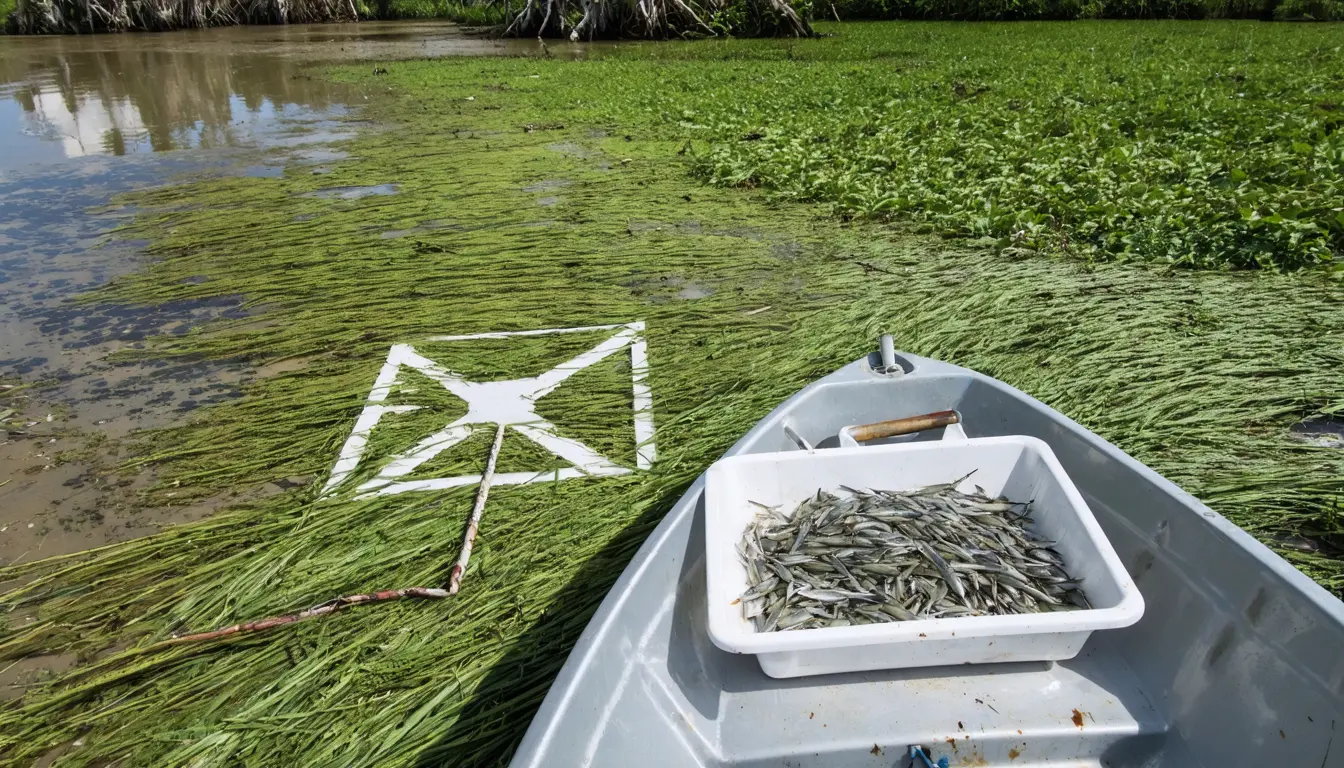
What happened
- After the 2009-2011 floods and Cyclone Yasi, fish abundance in the intertidal meadows fell 84% and the number of species fell 73%.
- Both the number of fish caught and the number of species present have since returned to the meadows.
- Silver javelin are now more prevalent in the regrown meadows, while pikey bream were more abundant before the floods.
- The study, in Estuarine, Coastal and Shelf Science, draws on a 34-year record from 1991 to 2025 pairing fish surveys with seagrass condition records.
Compiled by The ScientistSomething wrong?How this is made
Why it matters
- constraint A restoration target written in hectares of seagrass, or in fish counts and species tallies, would be met at Trinity Inlet even though the species using the meadow have changed.
- constraint Spotting a reorganised community took a baseline sampled the same way before the damage; monitoring begun only after a disaster would see fish return and miss the change in which fish returned.
- decision Judging whether the meadow again works as a nursery for young fish and prawns means surveying which juvenile species it shelters, a separate job from mapping where seagrass grows.
The storms did their damage through the water. They raised turbidity and left water quality poor for a long stretch [3]. With about 2% of the intertidal meadow left [4], getting back to the earlier extent meant growing roughly fiftyfold [16]. Biomass recovered along with area, Philpott said [5]. The fish had less ground to make up: from about 16% of their former abundance, a rise of roughly six times [17].
The comparison works because the same survey approach covered the years before the disturbance, the collapse and the regrowth [8]. Robert Coles, a co-author who was on the original team that began sampling fish in Cairns' seagrass in the 1990s [13], said: "By using consistent methods across that period, we've been able to directly compare the fish communities before the disturbance, after the seagrass loss and as the meadows recovered." [9] Keeping the method constant rules out one explanation for a changed species list: a change in the sampling. Over the full record the surveys collected more than 11,000 animals from 190 species [10].
Species richness is a count. It goes up by one whether the newcomer is a species that left or one that was never common there, so a meadow can match its old richness with different fish. "It wasn't simply a return to the same fish community that was there before," said Philpott, the JCU PhD candidate who led the research [15][7]. The community, she said, "has reorganized and is recovering along a different trajectory." [7]
I think the result holds up, with two conditions. The first is cause. The thing this doesn't tell you is why the mix changed. The record follows one inlet [1], and a before-and-after comparison at a single site cannot by itself separate the floods' effect from slower change in the harbour across three decades. The paper's own title frames its result as "multi-decadal change" reshaping juvenile fish assemblages [12]. The second condition is effect size. The press account does not report how far the composition moved, or the statistical test behind the finding.
"Our research shows that recovery is complicated," Philpott said, adding that "the habitat may recover and fish may return, but that doesn't necessarily mean you get exactly the same ecological community coming back" [14].
What to watch
- Later Trinity Inlet surveys showing whether the fish community drifts back toward its pre-2009 composition or settles into the new one.
- Data from Queensland meadows the 2009-2011 events spared: similar species turnover there would point to long-term change over flood damage.
- The full paper's measure of how far the fish composition moved, and the test used to establish it.