Science1 publisher2 min readPublished
Stellenbosch-led review finds seagrass restoration trials in just six African countries
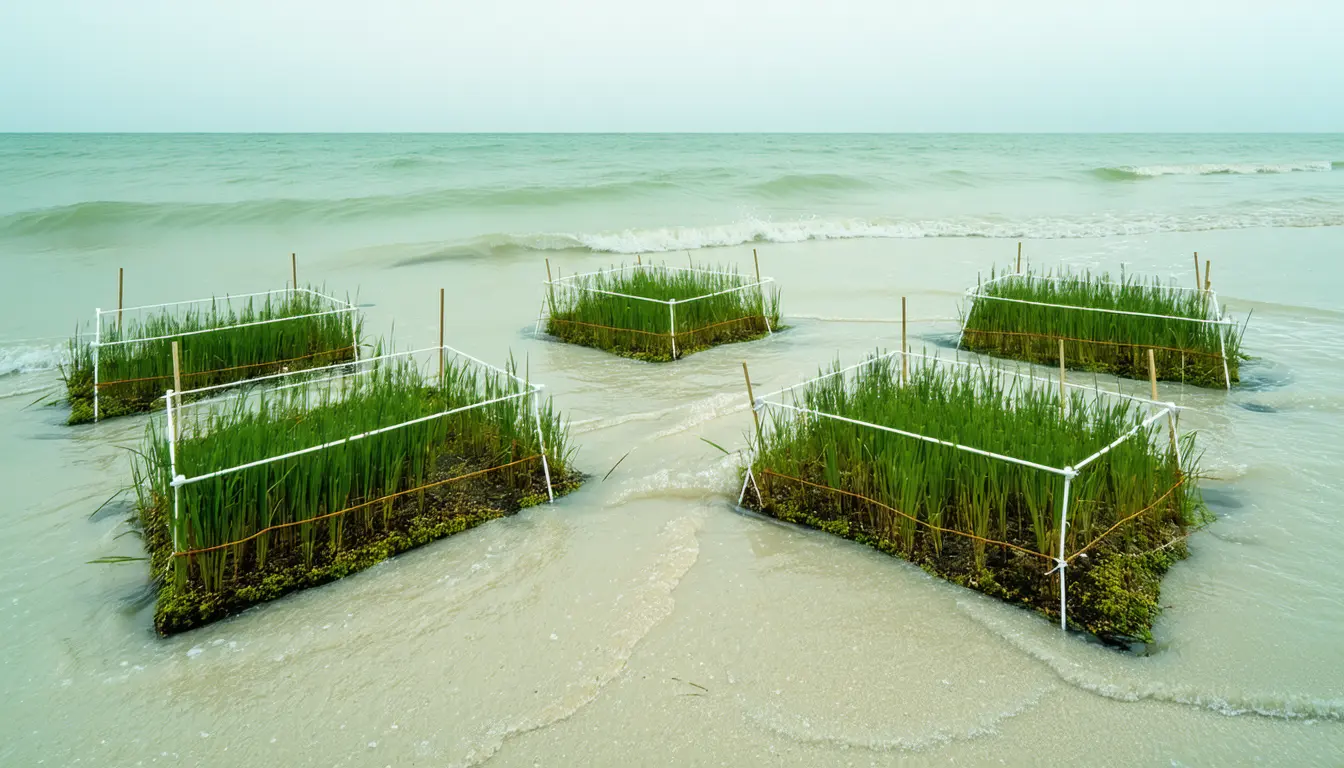
Sophie von der Heyden's review, the first across Africa's coast, finds seagrass restoration trials in six countries and meadow loss data in only four. Elsewhere the status of meadows is unknown, and the handful of trials is too small to show which restoration methods work.
The Scientist · Science desk
Drafted by a language model from the sources cited here and checked against its claim ledger before publication. How we use AISend a correction
What happened
- The review appeared in the Journal of Applied Ecology, written by von der Heyden of Stellenbosch University with colleagues from North, West and East African countries.
- Von der Heyden says coral reefs receive about six times as much research as seagrasses, even though seagrass research has grown worldwide over the past 20 years.
- African seagrass meadows line coastlines home to more than 250 million people, and the number living within 50 kilometres of the sea has risen substantially since 2010.
- The authors recommend using remote sensing and AI to map meadows, working urgently to identify and limit the causes of loss, and exploring large-scale restoration.
Compiled by The ScientistSomething wrong?How this is made
Why it matters
- constraint African projects will have to build their evidence species by species on their own coasts, because von der Heyden says methods that work in one region cannot be applied elsewhere.
- exposure Small-scale fisheries, and any seagrass carbon credit project, depend on meadows whose extent most African countries have not measured.
- decision The authors want surviving meadows protected immediately, partly because those meadows are the plant stock that any later restoration would need.
In most African countries with known seagrass meadows, nobody is sure how much area the meadows cover, and the authors rank that uncertainty among the biggest obstacles to monitoring [5]. Every country that could supply figures on meadow loss and gain also hosts restoration trials [14]. Two trial countries, Tanzania and The Gambia, are testing restoration without such figures [14].
That gap also limits what anyone can say about decline. According to the phys.org summary of the paper, coastal population growth, regional climate change and other pressures could mean Africa's meadows are in serious decline [15]. The decline is inferred from those pressures. With loss data from only four countries [6], it has not been measured across the continent.
The trial count comes with a condition. The authors built the review from published restoration studies [5], so "six countries" counts only trials that made it into the literature. Across those trials the teams used a range of techniques, and some worked better than others [8]. "The small number of trials and different outcomes means that we are a long way off from really knowing what works for African seagrass restoration," von der Heyden said [9].
She also argues that results from other coasts cannot fill the gap. "Seagrass restoration is an important part of maintaining seagrass meadows as they decline globally, but seagrass restoration science is fragmented and species-specific, meaning that what works in one region cannot be applied elsewhere," she said [4].
The coral comparison measures how much research exists, and she made it while discussing global seagrass research [3]. The thing it doesn't tell you is whether research attention is what holds back restoration on African coasts. Her own list of needs is longer. "However, we need the political will, secure funding and the buy-in from multiple stakeholders, such as communities living next to seagrass meadows, to ensure meaningful restoration of African seagrass meadows," she said [12].
What to watch
- Satellite or AI-based maps that give meadow extent for countries beyond Kenya, Mozambique, South Africa and Tunisia.
- Published outcomes from the Tanzanian and Gambian trials, and whether baseline monitoring comes with them.
- Whether any African seagrass carbon credit project goes ahead before the meadow it covers has been mapped.