Science1 publisher2 min readPublished
A 67-study synthesis finds climate change's effects on marine invaders vary by invasion stage
The authors' example is a Red Sea seagrass that reached dominance in Caribbean shallows Hurricane Maria had scoured. Their numbers, covering 30 species, show climate change rarely promoting an invader's spread.
The Scientist · Science desk
What happened
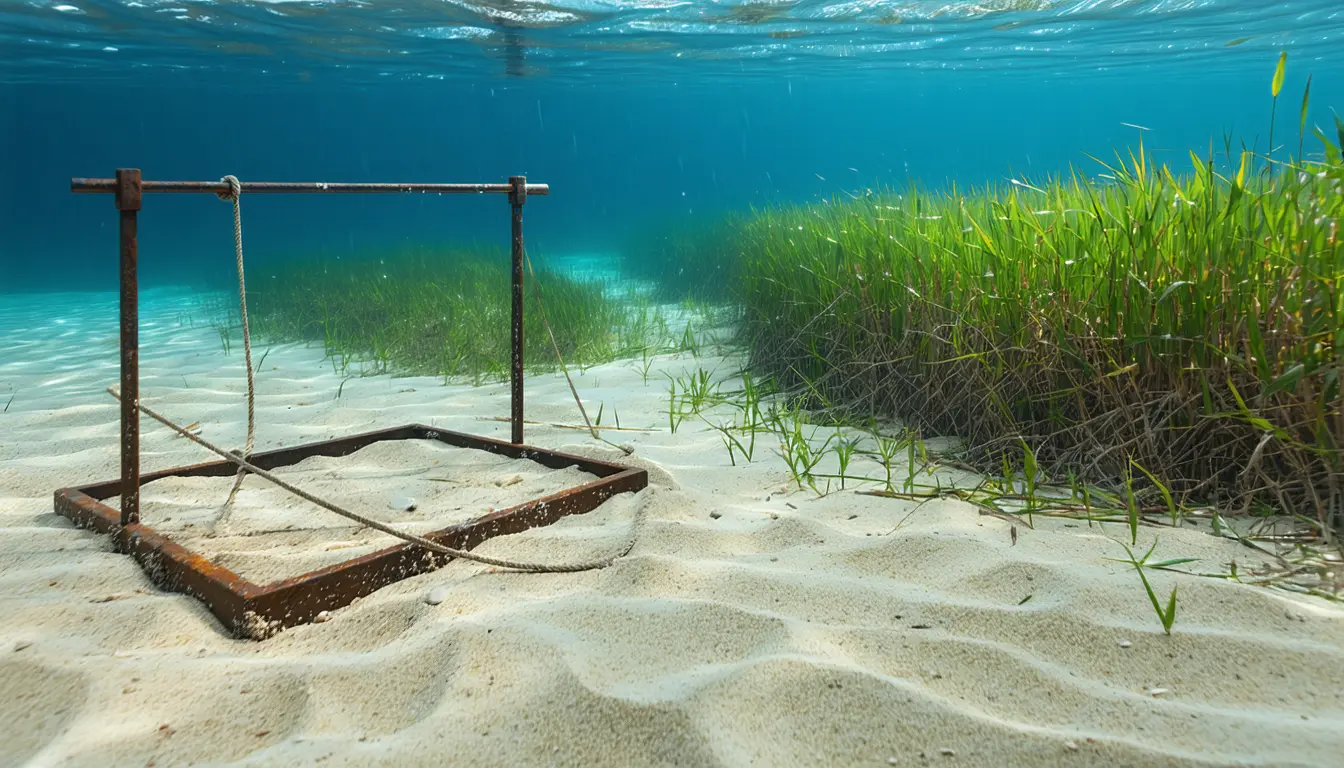
- When Hurricane Maria crossed Puerto Rico in 2017 with maximum sustained winds of 250 kilometers per hour, storm-moved sand and mud buried and destroyed native shallow seagrass meadows.
- Halophila stipulacea, a seagrass native to the Red Sea and Indian Ocean that human activity brought to the Caribbean, recovered rapidly after the storm and reached dominance in some areas of the shallow seascape.
- The authors' new paper is a systematic review and meta-analysis of 67 studies covering 30 marine invasive species, built to test whether climate change boosts invasion potential.
- Across that literature climate change generally increased invader abundance or establishment, with the strength of the relationship varying among species, environmental conditions and study designs.
Compiled by The ScientistSomething wrong?How this is made
Why it matters
- decision A restoration crew has to choose a target species before it chooses a planting method, because the cleared sediment it is working in may sit next to an invader that is already dominant.
- exposure Fish that shelter in a diversity of native seagrasses are the ones a single-species invasive meadow reaches, and they are not counted in area-of-cover restoration targets.
- constraint A coastal manager who wants to know how much extra invader to expect at one site will not get that figure from this synthesis, which resolves direction and heterogeneity but not per-site magnitude.
- contradiction An invasion front that is hard to stop and a climate effect that rarely reaches the spread stage imply different spending: one funds interception at the frontier, the other funds control where invaders already sit.
The Puerto Rico case is an observation, and the authors treat it as one. Writing in phys.org, they say climate change may not have caused Hurricane Maria [7]. What the storm did was clear space. Sand and mud buried the native shallow meadows [3], and an invader with broad tolerance to a range of environmental factors [14] grew back into the opening and reached dominance in some areas [5]. The article does not report recovery rates for the natives or for the invader, so it cannot say which of them regrows faster on the same sediment.
The measurement is in the rest of the paper: 67 studies across 30 marine invasive species [8], an average of about 2.2 studies per species [20]. With that much evidence per species, a site-specific effect size is out of reach for most of the 30. What the synthesis reports is the direction of the effect and the finding that its strength varied with species, environmental conditions and study design [9].
One candidate the authors name for that variation is duration. Short-term experiments miss long-term processes such as population growth, which observational studies and models are more likely to capture [12]. Some of the disagreement in the literature is therefore a property of study design. The authors call for longer-term experiments, sustained field monitoring and models that project longer-term changes [13].
The stage result is the one that bears on planning. Climate change sometimes increases invader abundance, sometimes magnifies establishment success, and rarely promotes spread [10]. Their explanation is that the stages come apart: an invader can grow more abundant without becoming established, if conditions remain suboptimal for reproduction [11].
The one extreme event in the article carrying an attribution number is the Northeast Pacific marine heat wave, not the hurricane. It persisted almost 1,000 days from 2019 to 2021, averaged about 1.6 C above normal, and reached local peaks of nearly 5.8 C [15]. An event of that duration and intensity would have had less than a 1% chance of occurring without elevated greenhouse gas concentrations [16]. Almost 1,000 days is roughly two years and nine months [21].
There is a precedent in the same paper for management choosing a target and getting a different ecosystem. Smooth cordgrass was introduced deliberately to China in 1979 to stabilize shorelines, and its rapid establishment and spread eventually reconfigured unvegetated tidal mudflats into densely vegetated salt marshes [18].
What to watch
- Whether the rarely-promotes-spread result holds once longer observational records replace short experiments in the literature.
- Any Caribbean survey that measures native and Halophila stipulacea recovery on the same post-storm sediment.
- Whether post-hurricane seagrass restoration funding specifies target species and invader monitoring rather than area replanted.