Fewer baby lobsters in Maine's midcoast preceded the fall in catchable adults, a UMaine study finds
University of Maine researchers found an 80% drop in baby lobsters sampled from 2010 to 2022 was followed by a 50% drop in catchable adults in the midcoast. The link was clearest there, so baby-lobster surveys look like a usable early signal in that region and a less certain one elsewhere.
The Scientist · Science desk
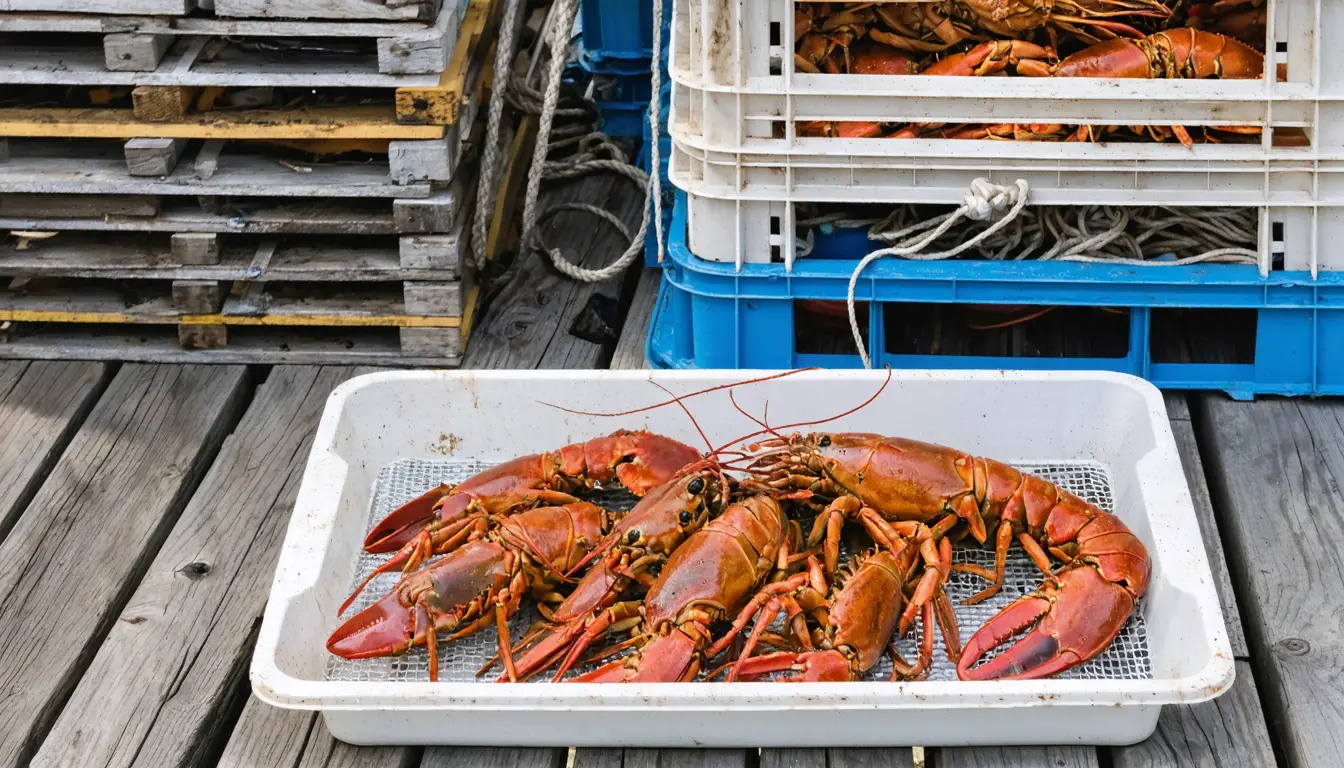
Key figures: the number of baby lobsters sampled fell 80% from 2010 to 2022. That was followed by a 70% decline in young lobsters since 2015 and a 50% decline in adults large enough for lobstermen to catch.
| Figure | Value | Note | Claim |
|---|---|---|---|
| Decline in baby lobsters sampled, 2010-2022 | 80% | 1 | |
| Decline in young lobsters, since 2015 | 70% | followed the baby-lobster decline | 1 |
| Decline in adults lobstermen can catch | 50% | followed the baby-lobster decline | 1 |
What happened
- Researchers found the sharpest drops anywhere in the Gulf of Maine along the midcoast, the stretch of coast between Brunswick and the Schoodic Peninsula.
- UMaine researchers and the Maine Department of Marine Resources analyzed state scuba, trap and trawl surveys; the work appears in Marine Ecology Progress Series.
- Downeast Maine saw a similar fall in baby lobsters since 2010 but a smaller fall among adults, and adolescent trends varied by survey.
- In southern Maine, lobster counts across all life stages have stayed relatively stable since 2010.
Why it matters
- What's now possible capability In the midcoast, a baby-lobster count from surveys the state already runs is now documented as a lead indicator for the catchable stock.
- Who's exposed exposure Maine landings topped $461 million in 2025 while the Gulf of Maine population has been falling since the mid-2010s, so an early signal has a large fishery attached to it.
- What it limits constraint Warming has opened deeper habitat that surveys cover only in part, so a survey count alone cannot separate fewer lobsters from lobsters living where nobody samples.
- Who has to decide decision Where the signal is weak, as in Downeast Maine, surveyors must decide whether to add sampling first, since researchers say thinner effort there could explain the difference.
The study lines up state surveys that each sample lobsters at a different stage of life [4]. Putting them in time order shows which stage fell first. The authors' account of why is temperature. Lead researcher Robert Jarrett II said the midcoast pattern was "driven by the boom and then decline in lobster abundance in the region tied to warmer water temperatures" [9]. That boom is real in the data: the number of lobsters sampled doubled from the 2000s to the 2010s [3].
The percentages need a careful read. The baby-lobster figure covers 2010 to 2022, the young-lobster figure runs from 2015, and the source gives no window for the adult decline [1]. The first two windows open five years apart [17], but a gap between the start of two windows is not a measured lag. The thing this doesn't tell you is how many years of notice a baby-lobster count buys before catchable adults thin out. Because each figure comes from a different survey, 80, 70 and 50 are separate measurements and cannot be multiplied into one cohort's survival.
Jarrett's explanation for why the signal is cleanest in the midcoast is growth speed. "Faster growth there also creates a more consistent signal than in eastern Maine, where slower, variable growth likely makes the signal harder to detect," he said [8]. In our reading, if lobsters take a similar time to move from stage to stage, a dip at the bottom reaches the top on something like a schedule. Where growth is slow and variable, that schedule blurs.
Southern Maine looks like a natural control, but it cannot test an early warning. Cold water does not circulate from the depths to the surface there, deeper water stays too cold for lobsters, and the territory they can occupy has not changed [10]. Where nothing falls, there is no decline to precede.
The study itself says baby lobsters serve as an indicator, on the evidence that their decline preceded decreases among adolescents in the midcoast and Downeast [11]. We think the case is strongest for the midcoast, where all three stages line up, and the evidence stops short of a coastwide rule. The researchers add that survey methodology, lobster behavior and habitat preferences can all shift the results [13]. Jarrett said the team is "continuing to expand sampling efforts" [12].
What to watch
- Whether added sampling in Downeast Maine turns the uneven adolescent trends into a clear baby-to-adult sequence.
- Whether midcoast baby lobster counts recover, and how long catchable-adult numbers take to follow.
- Whether surveys extend into the deeper habitat that warming has made suitable for lobsters.
Clarity's read
What the record supports and how the coverage leans. The claims behind it follow.
Reality
- Evidence62
- Adoption
- Not scored
- Hype gap+8
- Incentives
- Not scored
- Confidence65
Claim ledger
Ranked by verification strength, evidence, and original report placement.
- [1]
An 80% decline in baby lobsters sampled from 2010 to 2022 was followed by a 70% decline in young lobsters since 2015 and a 50% decline in adults large enough for lobstermen to catch.
- [2]
The midcoast, from Brunswick to the Schoodic Peninsula, is where researchers recorded the steepest declines in the Gulf of Maine.
- [3]
The midcoast losses followed a period of growth, when the number of lobsters sampled doubled from the 2000s to the 2010s.
- [4]
UMaine researchers worked with the Maine Department of Marine Resources to analyze state surveys that used scuba divers, traps and trawls to sample lobsters at different life stages and depths; the findings were published in Marine Ecology Progress Series.
- [5]
The study classified young lobsters as those with shell lengths of 45 to 83 millimeters (1.8 to 3.3 inches).
- [6]
Downeast Maine experienced a similar decline in the number of baby lobsters sampled since 2010, but a smaller decline among adults; trends among adolescents varied by survey.
- [7]
In southern Maine, the number of lobsters sampled across all life stages has remained relatively stable since 2010.
- [8]
"Faster growth there also creates a more consistent signal than in eastern Maine, where slower, variable growth likely makes the signal harder to detect."
- [9]
Jarrett said central Maine showed the clearest links among baby, adolescent and adult lobsters across surveys "driven by the boom and then decline in lobster abundance in the region tied to warmer water temperatures."
- [10]
In southern Maine, cold water does not circulate from the depths to the surface, so deeper waters remain too cold for lobsters even as temperatures rise and the territory in which they can reside remains unchanged.
- [11]
The study affirms that baby lobsters serve as an indicator for the fishery, as their decline preceded decreases in adolescent lobster populations in midcoast and Downeast Maine.
- [12]
Jarrett said, "we are continuing to expand sampling efforts to effectively support our sustainable fishery and understand how it will be impacted by future environmental changes."
- [13]
Researchers said differences in survey methodology, coupled with lobster behavior and habitat preferences, can influence the results and hamper scientists' efforts to track and interpret population changes.
- [14]
The Gulf of Maine's overall lobster population has declined since the mid-2010s, and the fishery generated more than $461 million in Maine landings in 2025.
- [15]
Warming waters have made deeper habitats more suitable for lobsters in midcoast and Downeast Maine, which can complicate efforts to track population changes because surveys cover limited areas and habitats.
- [16]
Researchers said fewer sampling efforts in Downeast Maine could help explain the differences between the two regions.
- [17]
The baby-lobster window opens in 2010 and the young-lobster window in 2015, so the two windows open five years apart.
Get this ledger inside ChatGPT. Ask about any of our stories and the answer brings its figure, each claim’s verdict and the sources. Free, no account.
Sources
1 independent publisher whose own reporting we read for this story.
- phys.orgBaby lobster decline foreshadows major midcoast population losses, study shows
1 article · October 15, 2026
Topics and entities
Follow any of these and your For You feed starts watching them — no settings page required.
Topics
- Fisheries scienceFollow
- Ocean WarmingFollow
- American lobster fisheryFollow