ScienceNot yet confirmed elsewhere1 publisher2 min readPublished
Enzyme-cut lentil protein makes nonfat yogurt mechanically similar to whole-milk yogurt
Penn State researchers report that 0.05% enzyme-cut lentil peptide gives nonfat yogurt mechanical texture similar to whole-milk yogurt. Removing fat makes yogurt thinner and changes its mouthfeel, so a plant additive that restores structure addresses a known cost of nonfat dairy.
The Scientist · Science desk
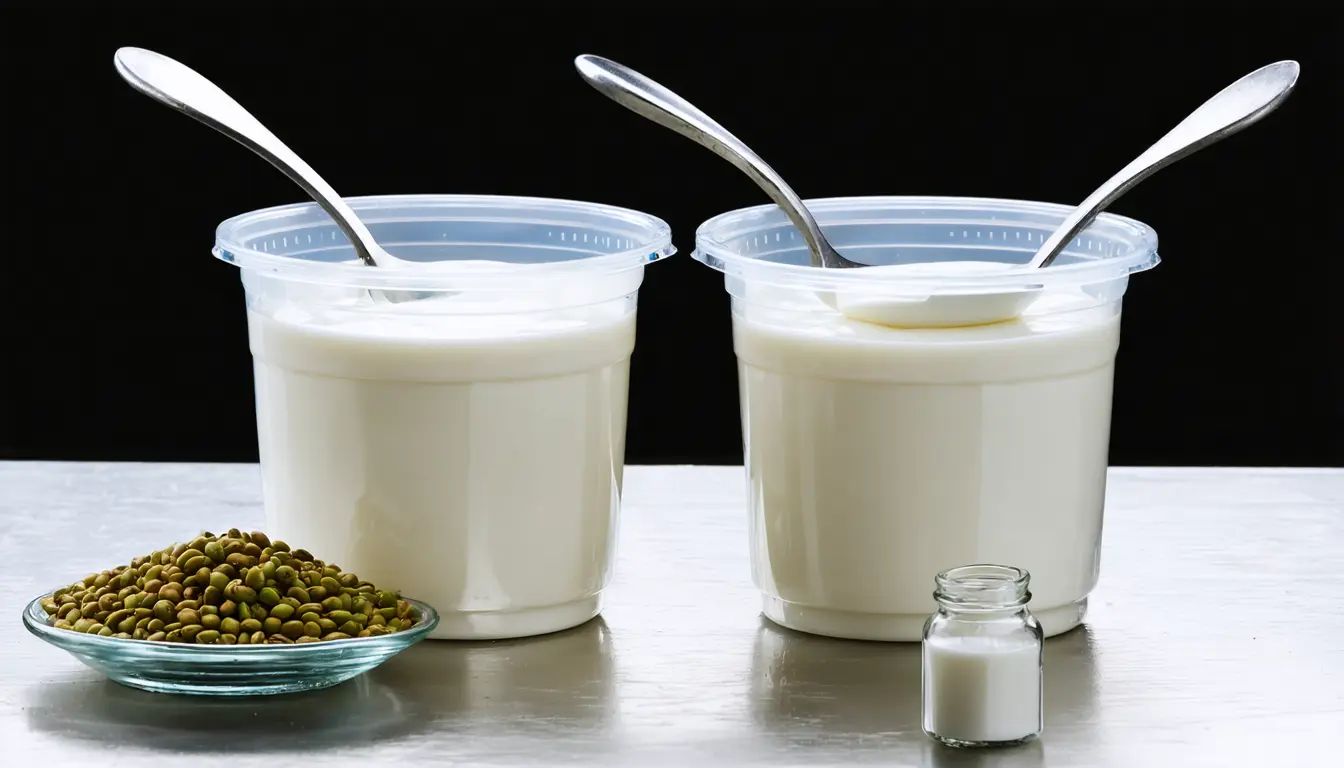
Two figures from the researchers: ordinary lentil protein held 174% oil, while the modified lentil protein held 752%.
| Measure | Value | As of | Claim |
|---|---|---|---|
| Ordinary lentil protein | 174% oil holding | 5 | |
| Modified lentil protein | 752% oil holding | 5 |
What happened
- The team used the enzyme alcalase to partially break lentil proteins into smaller polypeptides.
- The best-performing fraction, called LPP5-10, was tiny and helped stabilize water-and-oil mixtures in the way food emulsifiers such as lecithin do.
- Yogurt made from nonfat milk with the additive formed a stronger, more structured gel, and Zhang named firmness, elasticity and resistance to deformation as the measures.
Why it matters
- capability The route is a processing recipe: digest a plant protein with an enzyme and pick the fraction that works. Zhang says the team is working to modify plant proteins as fat replacers, so lentil is one input to a wider program.
- constraint Calorie savings still come from removing the fat. Zhang said the additive mimics fat's physical and textural functions and does not supply fat's nutritional properties.
- precedent Zhang said there has not been much research on plant protein-based fat texturizers. One lentil-and-yogurt study is an early data point, and other proteins and foods remain untested here.
Yi Zhang, the senior author, summarized the strategy in one sentence: "We can take plant protein, chop it into the right-sized pieces and make those pieces behave like a fat-texturizing ingredient," she said [14]. The oil-holding result supports the "right-sized" part. Ordinary lentil protein held 174% on the team's measure and LPP5-10 held 752% [5], a ratio of about 4.3 [15]. That comparison is against the unmodified protein, so it isolates what the enzyme step added to one property.
The yogurt result matters more for the application. The additive went in at 0.05% of the nonfat milk [6], which adds almost no mass to the product. The target was whole-milk yogurt, the product shoppers compare against, and Zhang said the mechanical texture of the modified yogurt became similar to it [7].
Zhang put the problem this way: "Although commercial fat replacers reduce calories, they often fail to replicate the functional and sensory qualities of fat" [8]. The researchers list four things that fat reduction often compromises: texture, viscosity, flavor and overall consumer acceptability [2]. The gel measurements speak to texture and perhaps viscosity. The thing this doesn't tell you is how the yogurt tastes: the source describes mechanical measurements and does not mention a taste panel.
The single-product scope is also worth keeping in view. The source reports the additive in nonfat yogurt, and the team's stated goal is functionality across diverse food applications, which this one test cannot establish [10].
What to watch
- Sensory testing of the yogurt, with taste and mouthfeel scored by people alongside the mechanical measures.
- Tests of LPP5-10 in foods other than yogurt, since Zhang's stated goal is functionality across diverse food applications.
- A production cost for the peptide fraction, given that Zhang's own criteria include cost-effectiveness.
Clarity's read
What the record supports and how the coverage leans. The claims behind it follow.
Reality
- Evidence55
- Adoption
- Insufficient
- Hype gap+10
- Incentives
- Insufficient
- Confidence55
Claim ledger
Ranked by verification strength, evidence, and original report placement.
- [1]
Modified lentil protein can act like fat in nonfat foods, especially yogurt, according to a study led by Penn State researchers and published in Food Chemistry.
- [2]
Fat reduction often compromises texture, viscosity, flavor and overall consumer acceptability, the researchers said.
- [3]
The researchers used an enzyme called alcalase to partially break lentil proteins into smaller pieces called polypeptides.
- [4]
The best-performing pieces, called LPP5-10, were tiny and had properties that help stabilize mixtures of water and oil, similar to food emulsifiers such as lecithin.
- [5]
The modified proteins could hold much more oil than ordinary lentil protein, the researchers reported: 752% versus 174%.
- [6]
When only 0.05% LPP5-10 was added to nonfat milk, the yogurt made from it formed a stronger, more structured gel, the team found.
- [7]
The mechanical texture of the yogurt, such as firmness, elasticity and resistance to deformation, became similar to yogurt made with whole milk, Zhang said.
- [8]
Zhang said: "Although commercial fat replacers reduce calories, they often fail to replicate the functional and sensory qualities of fat"
- [9]
Zhang said the study does not mean the lentil protein chemically becomes fat or provides the same nutritional properties as fat; it means the modified protein can mimic some of fat's physical and textural functions in food.
- [10]
Zhang said "There has not been much research done on plant protein-based fat texturizers" and pointed to the need for plant-protein texturizers that are low-calorie, cost-effective and functional across diverse food applications.
- [11]
Yi Zhang is the study's senior author and the Frederik Sr. and Faith E. Rasmussen Career Development Professor in Food Science at Penn State; she said the team is working to modify plant proteins that can act as fat replacers.
- [12]
The paper is Ishita Ghosh et al., 'A plant protein-based fat texturizer: Enzymatic bioproduction and application in non-fat yogurt', Food Chemistry (2026).
- [13]
Removing fat makes yogurt thinner and changes its mouthfeel, since fat gives yogurt its creaminess, thickness, lubrication and structure.
- [14]
Zhang said: "We can take plant protein, chop it into the right-sized pieces and make those pieces behave like a fat-texturizing ingredient"
- [15]
The oil-holding figure for LPP5-10 is about 4.3 times that of ordinary lentil protein.
Sources
1 independent publisher whose own reporting we read for this story.
- phys.orgModified lentil protein mimics fat in non-fat yogurt
1 article · October 13, 2026
Topics and entities
Follow any of these and your For You feed starts watching them — no settings page required.