Hobbyist's AI agents flag a super-Earth candidate among 126,000 TESS stars
Amateur astronomer Pavel Rabtsevich searched TESS data for more than 126,000 stars with AI agents and flagged TIC 4206066 as a super-Earth candidate. Three other searches had also picked up the signal, and thruster firings may explain some of the dips, so the planet is unconfirmed.
The Scientist · Science desk
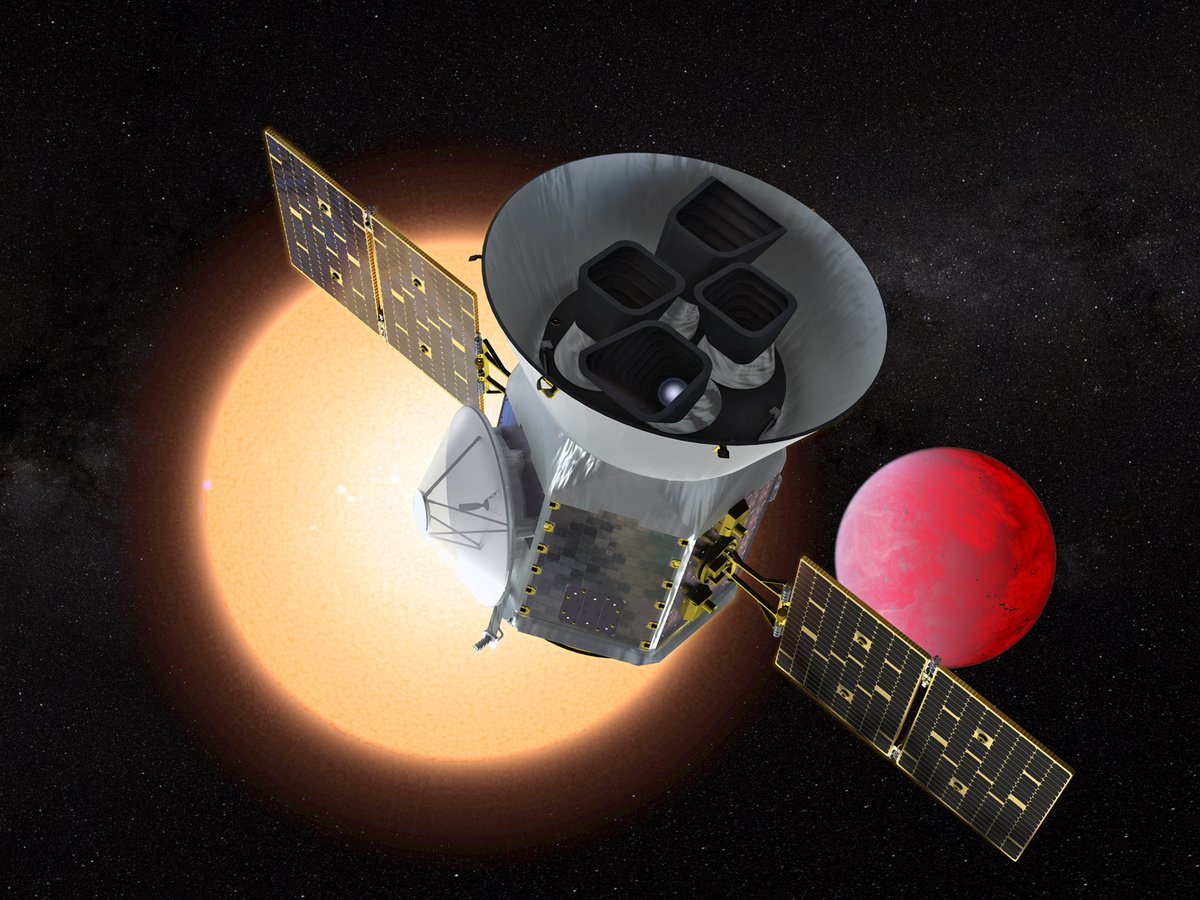
Key figures: Rabtsevich found an additional 22 instances of dimming in TESS archives for TIC 4206066; if confirmed as an exoplanet, it would be about 1.4 times the size of Earth; the star is about 116 light-years from Earth.
| Figure | Value | Note | Claim |
|---|---|---|---|
| Additional dimming instances found in TESS archives | 22 instances | 4 | |
| Size if a planet, about | 1.4 times Earth | 5 | |
| Distance from Earth, about | 116 light-years | 3 |
What happened
- The star is about 116 light-years away in Orion and dimmed for roughly two hours every three days in the TESS data.
- If it is a planet, it would be a super-Earth about 1.4 times Earth's size on a three-day orbit, with an estimated surface temperature near 1,000 degrees Fahrenheit.
- NASA's TESS team will reexamine the star in November, when the spacecraft's orbit around the sun brings the target into position.
Why it matters
- contradiction Rabtsevich says his search needed AI, while Perez says the official TESS list would almost certainly have carried this candidate within months anyway. AI let one person reach a result the survey teams were already approaching.
- constraint Every planetary property quoted, the 1.4-Earth size and the 1,000 degree surface temperature, holds only if the signal turns out to be a planet.
- precedent Other amateurs are running their own AI-assisted searches of TESS and other NASA archives, and we'd expect more candidates from outside the survey teams, some overlapping with signals those teams already hold.
Rabtsevich's search covered 126,000 stars [2]. The account does not say how many candidates it raised. Rabtsevich said "the research itself was mine: the question, the plan, the rules, the computing, the decisions on every candidate and what to publish" [11]. The phrase "every candidate" suggests TIC 4206066 was not the only one the search raised. Scientific American does not report how many others there were, how many survived vetting, or what the agents cost to run, so neither a false-positive rate nor the price of the tooling can be worked out from the account.
The method is built around distrust of the agents. Rabtsevich used several, and by his account they "wrote the code, ran it and checked each other's work" [10]. He is explicit about what their agreement is worth. "Models agreeing with each other isn't evidence," he said [8]. What he relies on is "a signal anyone can measure, calculations anyone can rerun, control samples," along with rules published before the next data sets arrive [9].
That design rules out two agents vouching for the same bug, but it cannot rule out an instrumental cause. In the 2018 data, the dips tended to align with moments when TESS fired its thrusters, and the article reports that this may have skewed the results [6]. He found 22 further dips in the archive [4]. His own summary is a "repeating transit-like signal in open data, with a plausible planetary explanation and alternatives that aren't yet ruled out" [7].
Pablo Mercader Perez, a PhD student at the Massachusetts Institute of Technology and a TESS team member, attributes the clearer signal to additional observation of that patch of sky. "Thanks to this, we got much more data than we had before for this particular star system, and the signal became a lot clearer," he said [15]. In statistical significance, he said, the candidate "became effectively detectable only in January of this year" [16]. His team's deep learning model has also flagged it [17]. Prof. Michelle Kunimoto's LEO-Vetter software selected it in early 2026, a result Perez described as not public yet [18]. Counting the 2020 filter, that makes three searches besides Rabtsevich's that picked up the signal [21]. In Perez's account, the change between the 2020 rejection and detection was mostly the volume of data.
Greg Laughlin, who once hunted planets as an astronomer at Yale University and has since moved into the AI industry, said the potential for at least one exoplanet around the star seems "solid" [12]. He called the analysis "a great example of human-AI teamwork" and added that large language models such as Claude and Codex have proven effective at combing astronomical literature for overlooked discoveries [13]. Laughlin did not say whether that record extends to light-curve searches. The literature work Laughlin cites is a different task from the one Rabtsevich ran.
What to watch
- Whether the November TESS observations show the dips recurring on schedule at times unrelated to thruster firings.
- Whether the LEO-Vetter selection and the MIT deep learning flag appear in an official TESS candidate list.
- Whether Rabtsevich or other amateurs publish counts of candidates raised and rejected, so a false-positive rate can be estimated.
Clarity's read
What the record supports and how the coverage leans. The claims behind it follow.
Reality
- Evidence40
- Adoption
- Insufficient
- Hype gap+20
- Incentives
- Insufficient
- Confidence50
Claim ledger
Ranked by verification strength, evidence, and original report placement.
- [1]
Pavel Rabtsevich, a Spain-based product manager and space-science hobbyist, used AI agents to examine public data from NASA's Transiting Exoplanet Survey Satellite (TESS).
- [2]
Rabtsevich examined more than 126,000 TESS target stars with a custom-built AI algorithm.
- [3]
His machine-learning assistant directed focus to TIC 4206066, about 116 light-years from Earth in the Orion constellation, which dimmed for about two hours every three days.
- [4]
Rabtsevich dug through the TESS archives for more data on the same star and found an additional 22 instances of dimming.
- [5]
If the signal is confirmed as an exoplanet, it would be a super-Earth about 1.4 times the size of Earth, likely rocky, with a three-day orbit and an estimated surface temperature of 1,000 degrees Fahrenheit (530 degrees Celsius).
- [6]
Rabtsevich noticed that the dips in TIC 4206066's light in 2018 tended to align with moments when TESS fired its thrusters, which may have skewed the results.
- [7]
Rabtsevich acknowledges that all that can be confirmed is a "repeating transit-like signal in open data, with a plausible planetary explanation and alternatives that aren't yet ruled out."
- [8]
Rabtsevich said: "Models agreeing with each other isn't evidence."
- [9]
Rabtsevich said: "What I rely on is a signal anyone can measure, calculations anyone can rerun, control samples, and rules published before the next data [sets] arrive."
- [10]
Rabtsevich says the search couldn't have been done without AI; he used multiple agents and the models "wrote the code, ran it and checked each other's work."
- [11]
Rabtsevich said: "the research itself was mine: the question, the plan, the rules, the computing, the decisions on every candidate and what to publish."
- [12]
Greg Laughlin, a former planet-hunting astronomer at Yale University who now works in the AI industry, says the potential for at least one exoplanet orbiting TIC 4206066 seems "solid."
- [13]
Laughlin called Rabtsevich's analysis "a great example of human-AI teamwork" and said large language models like Claude and Codex have proven effective at combing astronomical literature for overlooked discoveries.
- [14]
Pablo Mercader Perez, a PhD student at the Massachusetts Institute of Technology and a member of the TESS team, says the signal was picked up by a detection filter in 2020 but was rejected due to a lack of conclusive evidence.
- [15]
Since 2020 TESS has conducted much more observation of that part of the sky; Perez said: "Thanks to this, we got much more data than we had before for this particular star system, and the signal became a lot clearer."
- [16]
In terms of statistical significance, Perez said, "this planet candidate became effectively detectable only in January of this year."
- [17]
A deep learning model developed by Perez's team has also flagged the potential exoplanet, Perez says.
- [18]
Perez says a search by Prof. Michelle Kunimoto using her software LEO-Vetter, independent and not public yet, had already selected this planet candidate in early 2026, and that it "would almost certainly have been alerted in the official list in the next few months."
- [19]
Other amateurs, on their own or taking cues from Rabtsevich's candidate, are pursuing additional AI-assisted searches of public data sets from TESS and other NASA missions, with some reporting promising early results.
- [20]
Rabtsevich's calculations have prompted NASA's TESS team to reexamine the star once the spacecraft's orbit around the sun brings the target into position in November.
- [21]
Three searches other than Rabtsevich's picked up the signal: the 2020 detection filter, Perez's team's deep learning model, and Kunimoto's LEO-Vetter.
Get this ledger inside ChatGPT. Ask about any of our stories and the answer brings its figure, each claim’s verdict and the sources. Free, no account.
Sources
1 independent publisher whose own reporting we read for this story.
- scientificamerican.comAmateur astronomer harnesses AI to find a possible hidden exoplanet
1 article · October 14, 2026
Topics and entities
Follow any of these and your For You feed starts watching them — no settings page required.
Topics
- AI agents in scienceFollow
- Citizen ScienceFollow
- Exoplanet DetectionFollow