A tanker whose owner dissolved 76 days before loading now leaks inside Oman's whale reserve
Cleanup for the grounded Caroline Bezengi is put at $200m to $500m, the international fund built for exactly this caps out near $279m, and its spokesperson says an act-of-war exclusion applies, so Oman is spending its own money.
The Investor · Invest desk
What happened
- An explosion flooded the engine room of the laden Suezmax Caroline Bezengi off southern Yemen on June 8, leaving her adrift, and her crew abandoned ship three days later.
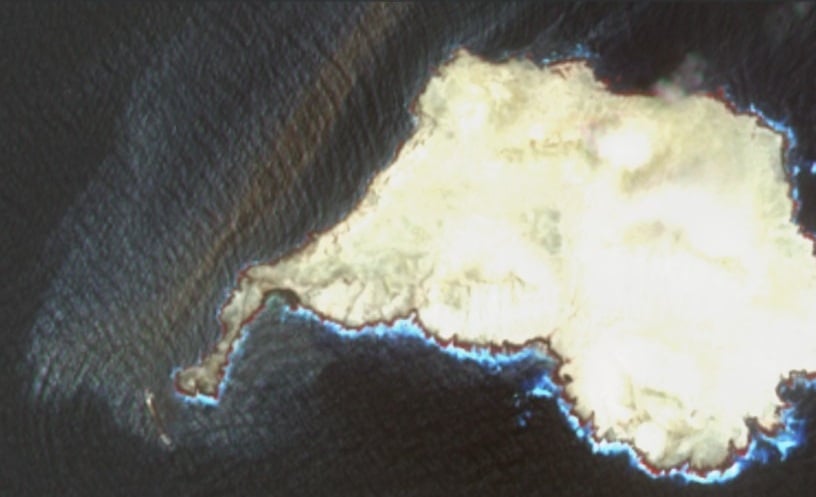
- She grounded on the rocks of Al Qibliyah in the Hallaniyat archipelago on June 30, and oil from the wreck has since reached the Omani mainland at Ras Madrakah.
- No group has claimed responsibility and no government has stated a cause, though security sources and Greenpeace have both pointed to a limpet mine that remains unconfirmed.
- Her last owner of record was Rentoor Shipmanagement, whose Shanghai correspondence address is a dead-letter box in a residential block, according to Maritime Executive.
- Oman is a party to the 1992 Civil Liability and Fund Conventions, which impose strict liability on a registered owner and require compulsory insurance certificates.
Why it matters
- cost The booms, the dispersants and the hand-clearing of twelve kilometres of beach through the Khareef monsoon are being paid out of Oman's own budget, with no solvent defendant to bill at the end of it.
- contradiction The Fund's refusal exists as a statement to a news agency while its governing bodies have not met and no reasoned determination is on paper, so whether this is a denial or a delay is still genuinely open.
- decision Oman now has to decide whether to spend three years litigating an exclusion that the Fund, not Oman, must prove, or to treat the response as an unrecoverable cost of geography.
- exposure The 13% of oceangoing tonnage outside the International Group clubs is now the pool that coastal states must assume can strand them with the bill, which changes how a laden unclassed hull is treated in port.
Run the ownership backwards and the number that stands out is 76: the days between Rentoor Shipmanagement Ltd being dissolved in the Marshall Islands on February 24 and roughly 800,000 barrels of Russian Urals going aboard at Novorossiysk on May 11 [13][3][4][29]. Cameroon had suspended its international register on February 6, having found its flag was being issued through two fraudulent websites [15], which is 94 days before that loading [30], and by June it had told the IMO that 39 ships were struck off the register [16]. So at the moment the cargo was pumped, the ship had no owner of record that legally existed and no registry that would admit having flagged her, which is the mundane reason there is no publicly identified insurer to sue [c16b].
Which turns an environmental story into an arithmetic one. Dimitris Maniatis of the maritime risk firm Marisks told Bloomberg Television that cleanup alone could run $200m to $500m [1], against an International Oil Pollution Compensation Fund ceiling of about $279m per incident [c17b]; the high case is 1.79 times the cap and leaves $221m unfunded even if the safety net worked as designed [31]. Put differently, it is $250 to $625 per barrel carried [27], a cost no dark-fleet voyage would be priced to absorb by anyone who expected to be billed for it.
The disputed area is really a dispute about price per square kilometre. Oman's Environment Authority assessed 390 square kilometres on August 10 [11]; SkyTruth's John Amos put the figure above 2,000 two days later [12], at least 5.1 times as large [32]. On the official area, the cleanup estimate implies $513,000 to $1.28m per square kilometre; on SkyTruth's, $100,000 to $250,000 [28]. One of those numbers is badly wrong, and which one it is sets Oman's claim.
The exclusion is the part I would push on. A Fund spokesperson told Reuters in August that it would not be involved in cleanup costs because the incident was being treated as an act of war [2], a determination that has not been published and that the Fund's governing bodies have not met to make [24]. The Fund has paid harder cases than this: 147.9m euros after the Prestige, South Korea after the Hebei Spirit, and in 2000 the claimants of a tanker that sank off Abu Dhabi carrying neither liability insurance nor a class certificate [22][23].
This is probably wrong, but I read the war language as a bargaining position rather than a legal conclusion, because the Fund is financed by levies on companies receiving more than 150,000 tonnes of oil a year in member states [21], and an institution funded by compliant receivers has an obvious interest in not becoming the residual insurer for a fleet that pays no levies at all. It can go three ways: the governing bodies convene and pay, making this a slow claim rather than a precedent; Oman litigates and wins on burden of proof; or nobody pays, and the Fortune column's expectation that pollution quietly replaces sanctions as the legal basis for stopping these ships, after two years of European interdiction on sanctions grounds, becomes the cheapest enforcement available [34]. A published reasoned determination followed by a payment would kill my reading outright.
Meanwhile the leaking hull sits inside a 667-square-kilometre reserve that Sultan Haitham decreed for endangered Arabian Sea humpbacks less than eight months before she arrived [9], and the screening that would have flagged her was documentary and free, since both the registry suspension and the corporate dissolution were on the public record before she loaded [15][13].
What to watch
- Any Omani filing that names the cargo's buyer at Sikka rather than the dissolved Marshall Islands owner as a defendant.
- Whether the 39 ships Cameroon struck off its register reappear under another low-scrutiny flag instead of leaving the trade.
- The first detention of a laden tanker justified on pollution-risk grounds by a coastal state citing this grounding.
Clarity's read
What the record supports and how the coverage leans. The claims behind it follow.
Reality
- Evidence58
- Adoption35
- Hype gap+15
- Incentives70
- Confidence55
Claim ledger
Ranked by verification strength, evidence, and original report placement.
- [1]
Dimitris Maniatis, who runs the maritime risk firm Marisks, told Bloomberg Television that cleanup alone could run $200 million to $500 million.
- [2]
A spokesperson for the Fund told Reuters in August that it would not be involved in cleanup costs because the incident was being treated as an act of war, a category the convention excludes.
- [3]
The Caroline Bezengi is a dark fleet Suezmax tanker built in 2001, carrying roughly 800,000 barrels of Russian Urals crude.
- [4]
The ship loaded at Novorossiysk on May 11 and was destined for Sikka, in Gujarat.
- [5]
On June 8 an explosion flooded her engine room off southern Yemen and left her adrift.
- [6]
No group has claimed responsibility and no government has stated a conclusion about the cause; security sources and Greenpeace have both pointed to a limpet mine, but that is not yet confirmed.
- [7]
Her crew abandoned ship three days after the explosion.
- [8]
On June 30 she hit the rocks of Al Qibliyah, in the Hallaniyat archipelago, and grounded.
- [9]
She now sits leaking oil inside a 667-square-kilometre marine reserve that Sultan Haitham created by royal decree nearly eight months before the grounding, to protect an endangered population of Arabian Sea humpbacks.
- [10]
Oil reached the Omani mainland at Ras Madrakah.
- [11]
Oman's Environment Authority assessed the affected area at 390 square kilometres on August 10.
- [12]
Satellite analysis by SkyTruth's John Amos suggested a figure of more than 2,000 square kilometres two days after Oman's assessment.
- [13]
The ship's last registered owner of record is Rentoor Shipmanagement Ltd, a Marshall Islands company dissolved on February 24.
- [14]
Rentoor Shipmanagement's Shanghai correspondence address is, Maritime Executive reports, a dead-letter box in a residential block.
- [15]
The ship claimed Cameroonian registry, but Cameroon suspended its international register on February 6 after discovering its flag was being issued through two fraudulent websites.
- [16]
In June Cameroon told the IMO it had struck 39 ships off its registry.
- [17]
No International Group club, whose members insure roughly 87% of oceangoing tonnage, is likely to insure a ship without any approved classification.
- [18]
The Caroline Bezengi had no publicly identified insurer.
- [19]
Oman is a party to the 1992 Civil Liability Convention and the 1992 Fund Convention, a regime of strict liability on the registered owner plus compulsory insurance certificates.
- [20]
The International Oil Pollution Compensation Fund can pay up to about $279 million per incident.
- [21]
The Fund is financed by levies on any company receiving more than 150,000 tonnes of oil a year in a member state.
- [22]
The Fund paid 147.9 million euros after the Prestige and paid South Korea after the Hebei Spirit.
- [23]
In 2000, when a small tanker carrying no liability insurance and no class certificate sank off Abu Dhabi, the Funds paid claimants in the United Arab Emirates anyway.
- [24]
No reasoned determination has been published and the Fund's governing bodies have not yet met on the incident.
- [25]
Under the convention the burden of proving the war exclusion falls on the Fund, not the claimant, and Oman has three years to force the question in court.
- [26]
Oman is running the shoreline response on its own dime: booms, dispersants, and crews hand-clearing some twelve kilometres of oil-sodden beach at the height of the Khareef monsoon.
- [27]
The cleanup estimate works out at $250 to $625 per barrel of cargo carried.
- [28]
Against Oman's 390 square kilometres the estimate implies $513,000 to $1.28m per square kilometre; against SkyTruth's 2,000-plus it implies $100,000 to $250,000.
- [29]
The registered owner had been dissolved for 76 days by the time the ship loaded its cargo.
- [30]
The claimed flag registry had been suspended for 94 days by the loading date.
- [31]
The high cleanup estimate is about 1.79 times the Fund's per-incident ceiling and exceeds it by $221 million.
- [32]
The SkyTruth area estimate is at least 5.1 times Oman's official assessment.
- [33]
Roughly 13% of oceangoing tonnage sits outside the International Group clubs.
- [34]
The Fortune column argues the most likely outcome is that pollution will quietly replace sanctions as the legal basis for stopping shadow fleet vessels, after Europe spent two years interdicting on sanctions grounds.
Get this ledger inside ChatGPT. Ask about any of our stories and the answer brings its figure, each claim’s verdict and the sources. Free, no account.
Sources
1 independent publisher whose own reporting we read for this story.
- fortune.comWho pays for a shadow fleet oil spill? No one
1 article · August 28, 2026
Topics and entities
Follow any of these and your For You feed starts watching them — no settings page required.
Topics
Entities
- Caroline BezengiFollow
- Rentoor Shipmanagement LtdFollow
- International Oil Pollution Compensation FundFollow
- 1992 Civil Liability ConventionFollow
- 1992 Fund ConventionFollow
- Oman Environment AuthorityFollow
- SkyTruthFollow
- John AmosFollow
- MarisksFollow
- Dimitris ManiatisFollow
- Sultan HaithamFollow
- Cameroon International Ship RegisterFollow
- International Group of P&I ClubsFollow
- International Maritime OrganizationFollow
- GreenpeaceFollow
- RUSIFollow
- Hallaniyat Marine ReserveFollow