Science1 publisher3 min readPublished
Tagged Galápagos yellow-morph green turtles stayed inside their marine reserve for up to 418 days
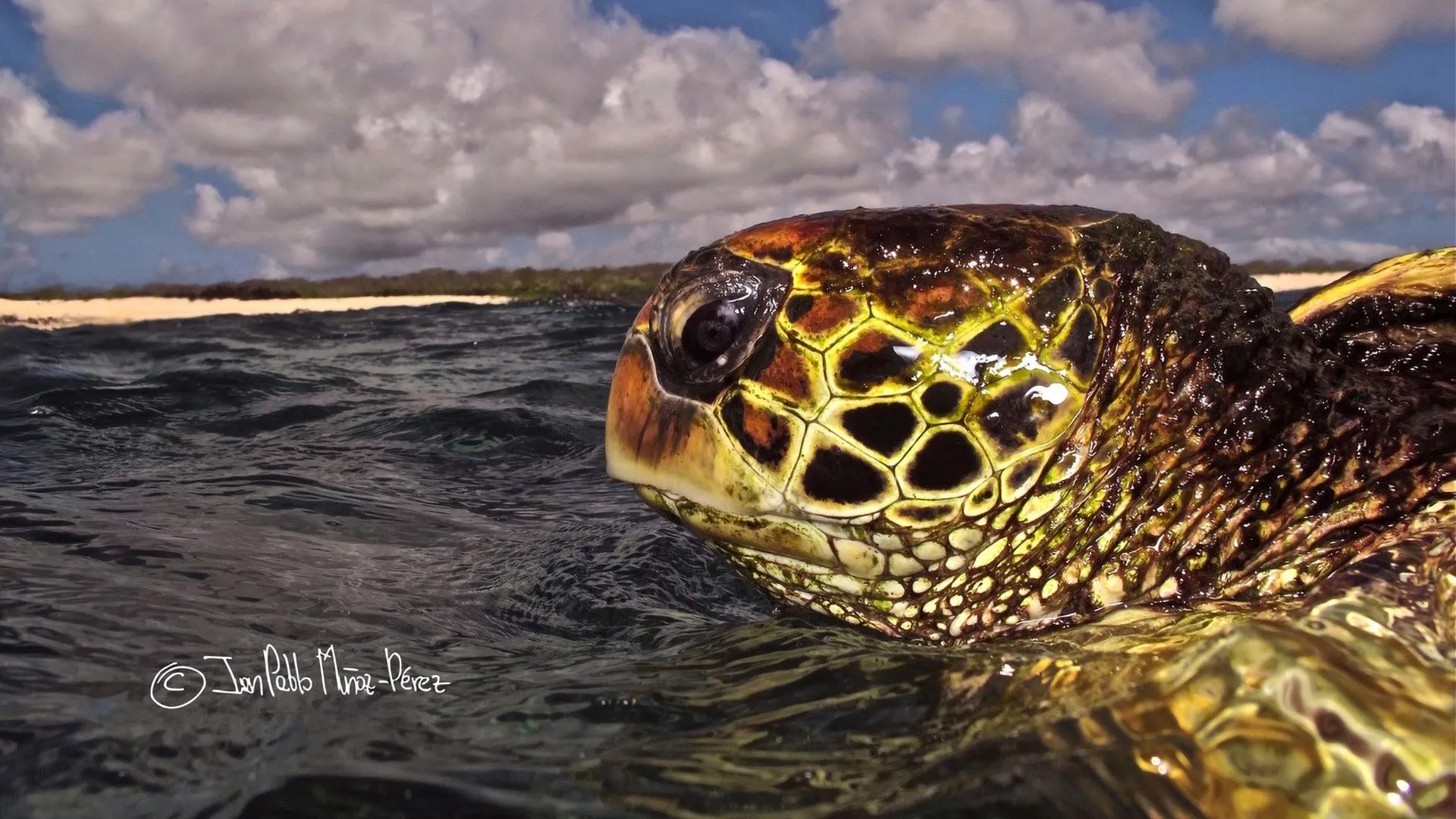
Nine yellow-morph green sea turtles tagged in the Galápagos in 2015 never left the marine reserve while their satellite tags transmitted, for up to 418 days. Only two were female, so the case for coastal protection is strong while breeding trips to distant beaches remain untested.
The Scientist · Science desk
What happened
- The researchers caught seven male and two female adults in shallow water near four islands and fitted them with transmitters reporting to the Argos satellite network.
- Every move between islands happened during the cooler months of April through October.
- The average home range was 1,498 sq km, and its size varied considerably from one turtle to another.
Compiled by The ScientistSomething wrong?How this is made
Why it matters
- decision Reserve managers now have tracks placing these adults' foraging life in the islands' shallow coastal waters, so coastal protection reaches them for at least that phase.
- constraint With two females followed for about a year at most, the study cannot justify dropping open-ocean protection for this population, since breeding trips may fall outside the tracked window.
- contradiction Rowe's 'three years' is the study's span; no turtle was tracked beyond about 1.1 years, so the residency finding rests on shorter individual records than the quote suggests.
- capability A yellow-morph group that stays put where it shares feeding grounds with black morphs lets researchers compare the two forms' growth and physiology in one place.
The study rests on nine turtles, and two of them were female [3]. That split matters. The long journeys sea turtles are known for end with a return toward the places where they were born, to reproduce [15]. Rowe's team expected the yellow morphs to make that trip. "We expected them to migrate to distant beaches in the western Pacific to reproduce, yet interestingly, none of our satellite-tagged turtles even left the Galápagos Marine Reserve over the three years of our study," said John W Rowe, a professor at Alma College and the study's corresponding author [2].
The three years are the length of the study. No single animal was watched for that long. The longest individual track ran 418 days [4], about 1.1 years [1], and tracks generally ended when a tag detached or stopped sending signals [5]. The release does not list each turtle's tracking duration. So the finding that none left the reserve [1] holds only for the days each tag lasted, and for no animal was that more than 418.
Within those windows the pattern is consistent. The turtles favoured shallow coastal water, and although some went as far as 25 km from shore, most stayed much closer [6]. Five of the nine, about 56 percent [2], spent most of the study near a single island [7]. Bernardo and Sara moved between Isabela and San Cristóbal, and Leandro between Isabela and Española. Ainoa, tagged near San Cristóbal, went on to Santa Cruz and then to Isabela [7]. Every move between islands fell in the cooler months of April through October [8]. The average home range was 1,498 sq km, with wide variation between animals [9]. That average is under 1 percent of the 198,000 sq km reserve [10][3].
The thing this doesn't tell you is whether the females breed away from the islands. The researchers cautioned that their observations cover a limited period of the turtles' lives and that longer migrations could happen at other times, a caveat they said matters most for females [11]. Two females, each followed for about a year at most, cannot settle that. There is also a sampling point. All nine were caught in shallow water near four islands [3], so the study started with animals already on coastal foraging grounds.
The release says the tracking shows how important the islands' coastal habitats may be to the turtles' survival [16]. For the foraging phase, I think the evidence supports that: during the months their tags reported, these animals lived close to shore and inside the reserve [1][6]. Whether open-ocean protection matters to them is still open. The part of the life cycle most likely to take a turtle out of the reserve, a female's breeding trip, is the part this sample was least able to see [3][11].
The population is worth that follow-up for another reason. Yellow morphs are mainly a western Pacific form and black morphs an eastern Pacific one [13]. The Galápagos is the only known place where the two share water and eat the same kinds of marine vegetation [12]. Young yellow morphs grow faster than young black morphs, and the release takes that as a sign of physiological differences scientists have not yet fully characterized [14].
What to watch
- Tags on more females that last through a full breeding cycle would show whether Galápagos yellow morphs nest on distant western Pacific beaches.
- Comparable tracking of black morphs in the same Galápagos waters would show whether staying close to the islands is specific to the yellow form.