ProductNot yet confirmed elsewhere1 publisher2 min readPublished
macOS 27 already carries the touch tells, so audit hit targets before October
Sidecar touch and fatter menu bar items are in the beta now. That makes finger-sized targets a this-cycle problem whether or not a touchscreen MacBook Pro arrives in October.
The Product Desk
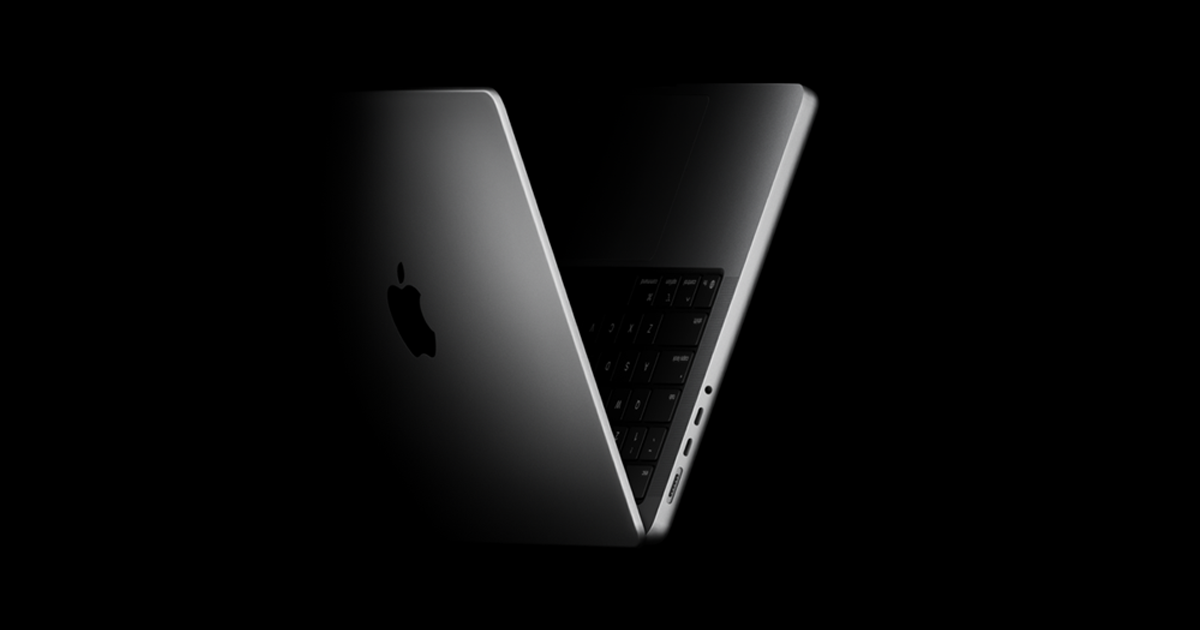
What happened
- The macOS 27 betas add touch support in Sidecar, pull to refresh, and slightly larger menu bar items.
- 9to5Mac reports Apple's first touchscreen MacBook could arrive as soon as October, alongside a MacBook Pro redesign.
- Bloomberg's Mark Gurman describes unreleased behaviour in which touching a control raises a menu around the user's finger.
Why it matters
- constraint Menu bar real estate got smaller for everyone on update day, so apps with extras beside the notch lose room on small screens with no touch hardware involved.
- decision The trigger for scheduling a hit target pass is now an OS beta rather than a hardware keynote, which moves the work into the current release cycle.
- cost Testing finger input against real hardware means buying near the top of the Mac range at an expected $2499 floor, months before anything cheaper exists.
- precedent Once pull to refresh is a system behaviour on the Mac, scroll views that repurpose overscroll for something else become the ones users have to relearn.
Sidecar is the load-bearing item on that list. Putting touch into Sidecar means a finger becomes a legitimate way to hit a control in a Mac window, and it does so on hardware that already exists in large numbers [1]. No October launch is required for a user to poke at your toolbar.
The menu bar change is the one with a bill attached already. The 9to5Mac writer reports that on a 13-inch MacBook Air, extras that used to fit to the left of the notch now spill past it [2]. That is not a preview of a future problem. It is a layout regression that arrives with the OS update, and it lands on whoever put an icon up there.
Mark Gurman's description of the unreleased behaviour, as relayed by 9to5Mac, is worth reading as an admission about target sizes. Touch a button and the interface is said to raise a new menu around the finger with more relevant touch commands [5]; the control set on offer is said to be chosen from prior interaction [6]; tapping a menu bar item is said to enlarge the controls so a finger can pick one [7]. All three are the system mediating a target that is too small for a fingertip. The implication for anyone drawing controls inside a custom view is that the system cannot do that mediation on your behalf, because it does not know what your pixels are.
The counter-argument is the rumour mill, and the rumour mill is exactly why the OS beta is the better index. Initial reporting had the redesign debuting M6 Pro and Max chips; the current account is that Apple skipped them to accelerate the M7, leaving the machine on existing M5 Pro and M5 Max silicon [9]. Chip reporting reversed inside one cycle. Sidecar touch and the menu bar metrics did not, because they are shipping code.
The commercial shape matters for how long the audit stays optional. There is no base model at launch, with a base M7 version rumoured for as early as next spring [10], which puts roughly two quarters between the first touch Mac and a cheaper one [13]. Expected pricing starts at $2499 for the 14-inch and $2999 for the 16-inch after Apple's June increases tied to the memory crisis [12], a $500 spread [14]. For that window, the users touching your app are the ones who bought the most expensive notebook in the range, which is not usually the cohort a team wants to hand a mis-sized target to.
What to watch
- Whether the October machine actually ships with touch, or the redesign lands as a display and chassis update with the touch work held back.
- Whether Apple publishes Mac touch target metrics for developers, which would replace guesswork about minimum control size and spacing.
- Whether the base M7 model appears next spring, since that sets when touch stops being confined to the top of the line.
Clarity's read
What the record supports and how the coverage leans. The claims behind it follow.
Reality
- Evidence26
- Adoption14
- Hype gap+44
- Incentives66
- Confidence33
Claim ledger
Ranked by verification strength, evidence, and original report placement.
- [1]
Apple left hints in macOS 27: touch support in Sidecar, pull to refresh support, and slightly bigger menu bar items.
- [2]
The 9to5Mac writer, a 13-inch MacBook Air user, found the bigger menu bar items annoying because things that used to fit on the left side of the notch were now spilling over.
- [3]
Apple will roll out its first touchscreen MacBook as soon as October, alongside the next MacBook Pro redesign, potentially dubbed MacBook Ultra.
- [4]
9to5Mac notes that rumors are rumors, but essentially every reputable source has aligned on the MacBook Pro gaining touch support later this year.
- [5]
Per Bloomberg's Mark Gurman, if users touch a button or control, the interface will bring up a new type of menu surrounding their finger providing more relevant options for touch commands.
- [6]
Per Gurman, the software will display the most appropriate set of controls based on users' prior interaction.
- [7]
Per Gurman, if a person taps an item in the menu bar at the top of the screen, the set of controls will enlarge to be more easily selectable with a finger.
- [8]
The redesigned MacBook Pro is reported to come with a Tandem OLED display and a Dynamic Island slightly smaller than the iPhone's, but without Face ID support.
- [9]
Initial reporting suggested the redesigned MacBook Pro would debut M6 Pro and Max chips, but Apple is now said to be skipping those to accelerate the M7, so the machine will instead offer existing M5 Pro and M5 Max chips.
- [10]
There will not be a base model version of the redesigned MacBook Pro at first; rumors suggest a base version with an M7 chip as early as next spring.
- [11]
One design rumor is that the new MacBook Pro will be slightly slimmer and lighter, though it is unclear how meaningful that will be.
- [12]
9to5Mac expects at least $2499 for the 14-inch and $2999 for the 16-inch, citing steeper price points following Apple's June price hikes from the memory crisis.
- [13]
An October launch for the touch MacBook Pro and a base model as early as next spring leaves roughly two quarters in which touch is confined to the higher-priced configurations.
- [14]
The expected price gap between the 14-inch and 16-inch models is $500.
Sources
1 independent publisher whose own reporting we read for this story.
- 9to5mac.comWe’re just two months away from the first touchscreen MacBook: Here’s what to expect
1 article · August 22, 2026
Topics and entities
Follow any of these and your For You feed starts watching them — no settings page required.