BuildNot yet confirmed elsewhere1 publisher3 min readPublished
Neither can build it alone: Korean memory and Taiwanese packaging now set the accelerator clock
Taiwan and South Korea are splitting the AI server chain because demand exceeds what either can build. For 2026 supply forecasts, the binding step is the handoff, not any single fab.
The Engineer · Build desk
What happened
- CNN reports Taiwanese and South Korean chipmakers are now supplying AI accelerators jointly because demand from the biggest buyers exceeds what either side can produce alone.
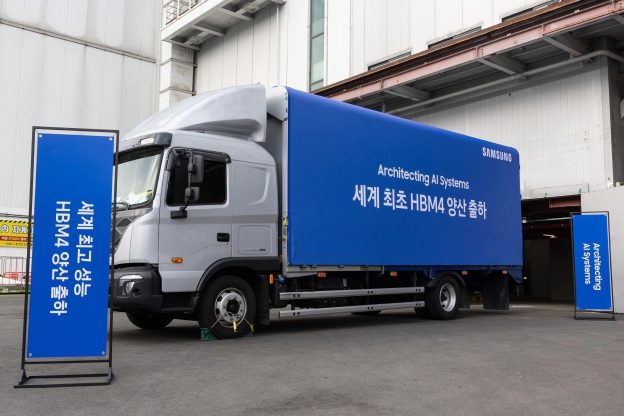
- SK Hynix and Samsung together account for about 80% of the world's high bandwidth memory output.
- South Korea booked a record trade surplus with Taiwan last year on the strength of the relationship.
Why it matters
- constraint Deliveries are governed by the slowest handoff between Korean memory and Taiwanese packaging, so added capacity at one vendor does not by itself move an accelerator ship date.
- exposure Server buyers now carry schedule risk across two jurisdictions whose rivalry is intact, rather than inside a single supplier relationship they can escalate through.
- decision Seoul's $576 billion programme is large enough to pay for steps currently done in Taiwan, and how it is spent decides whether today's division of labour outlives the demand peak.
- contradiction Nomura's complementarity reading and DIGITIMES's frenemy reading imply different durability for this supply arrangement, which is precisely the variable a 2026 forecast rests on.
Taiwan's statisticians have already published a volume forecast for AI hardware, and it is filed under GDP. The official projection is 11.05% growth in 2026 [7] against 8.7% last year [14]: an acceleration of about 2.35 percentage points [19], and on the agencies' own reckoning the fastest expansion in 39 years [8], which puts the last comparable year near 1987 [20]. Nomura's Jeong Woo Park ranked the island first in the world by share of AI hardware production in a May report [13], and AI exports are what carried last year's figure [14]. A statistics office does not underwrite double-digit growth unless it expects the racks to keep leaving the port.
For anyone modelling availability rather than sentiment, the interesting part is the handoffs. Korean memory is joined to TSMC logic inside Taiwan using advanced packaging [12], after which Taiwanese firms build the accelerators into racks with their cooling systems [11], drawing on a local network of power supply, packaging and thermal specialists that lets a customer assemble a chain from several vendors [18]. Two national supply bases, and the slowest station sets the delivery date. Memory is the tightest part of it: on the reported concentration, roughly a fifth of world HBM output comes from anyone other than the two Korean suppliers [21], so a buyer without an allocation there has little to fall back on. Jensen Huang's June inscription on an SK Hynix wafer, asking for more production [22], reads as the largest customer naming the step it believes is short.
The division of labour is newer than it looks. Samsung was the exclusive maker of iPhone processors until 2015, before Apple moved to TSMC and made it the primary supplier [6], and Owen Lin's account is that cooperation between the two industries was rare while competition was the norm [3]. Park now describes them as increasingly complementary [9], and Yu-Ning Chiu's summary is that no country can do all of it alone [2], while Colley Hwang of DIGITIMES prefers "frenemy" and calls Taiwan Korea's corridor to the United States [10]. Both readings hold as long as orders exceed combined capacity. Sung Soo Eric Kim, quoted by CNN, framed it as sequencing: demand is too large for the old fight, so securing supply comes first [5].
What sits underneath is unsettled. Taiwan passed South Korea on GDP per capita in 2025 for the first time in more than two decades [15], Seoul has a $576 billion AI and semiconductor investment plan in hand [17], and the reporting is explicit that the partnership has not dissolved political and economic friction [16]. For next year, that evidence supports one supply claim and no more: volumes rise through a shared pipeline whose narrowest section is held by two companies in one country. There is nothing here that supports a price call, and anyone selling you one is not working from this material.
What to watch
- Whether South Korea's $576 billion AI and semiconductor programme funds domestic advanced packaging, which would duplicate the step currently performed in Taiwan.
- Revisions to Taiwan's 11.05% forecast for 2026, which is the closest thing to an official volume expectation for AI hardware assembly.
- Any HBM supplier outside SK Hynix and Samsung taking a meaningful share of the remaining fifth of world output.
Clarity's read
What the record supports and how the coverage leans. The claims behind it follow.
Reality
- Evidence32
- Adoption62
- Hype gap+18
- Incentives55
- Confidence38
Claim ledger
Ranked by verification strength, evidence, and original report placement.
- [1]
Taiwanese and South Korean companies are supplying the global market with AI accelerators, and demand from the largest technology companies is high enough that neither side can handle the production volume alone.
ReportedSupportedSource: CNN, as carried by mezha.net3 sources— create a free account to open themView cited source - [2]
Yu-Ning Chiu says no country can do all of it on its own.
ReportedSupportedSource: Yu-Ning Chiu, quoted by CNN via mezha.net3 sources— create a free account to open themView cited source - [3]
Owen Lin says cooperation between the Taiwanese and South Korean industries happened very rarely, and that competition was far more widespread.
ReportedSupportedSource: Owen Lin, quoted by CNN via mezha.net2 sources— create a free account to open themView cited source - [4]
SK Hynix and Samsung together produce about 80% of the world's High Bandwidth Memory.
- [5]
Sung Soo Eric Kim, quoted in the CNN reporting, said there is no time for the old-fashioned conflict, that demand is so great that the two sides must cooperate, and that securing supply comes first. The wording reaches us through a Ukrainian-language rendering of the CNN report, so it is paraphrased rather than quoted verbatim.
ReportedSupportedSource: Sung Soo Eric Kim, quoted by CNN via mezha.net3 sources— create a free account to open themView cited source - [6]
Until 2015 Samsung was the exclusive manufacturer of iPhone processors; Apple later began working with TSMC, which became its main chip supplier.
- [7]
Taiwan's statistical authorities forecast the economy will expand 11.05% in 2026.
- [8]
If Taiwan's 2026 forecast holds, it would be the fastest rate of growth in 39 years.
- [9]
Jeong Woo Park says the two countries increasingly complement one another.
ReportedSupportedSource: Jeong Woo Park, Nomura2 sources— create a free account to open themView cited source - [10]
Colley Hwang of DIGITIMES called Taiwan "Korea's corridor to the United States" and described the relationship between the two technology centres as "frenemy", a mix of partnership and rivalry.
ReportedSupportedSource: Colley Hwang, DIGITIMES2 sources— create a free account to open themView cited source - [11]
In Nvidia's AI server production chain, TSMC of Taiwan makes the compute chips, SK Hynix or Samsung of South Korea supply the memory, and Taiwanese companies turn the accelerators into server racks fitted with complex cooling systems.
- [12]
HBM is then integrated with TSMC chips in Taiwan using advanced packaging technology, and this combination of Korean memory and Taiwanese processor manufacturing has been a key condition for scaling AI infrastructure.
- [13]
Jeong Woo Park of Nomura, in a May report, ranked Taiwan first in the world by share of AI hardware production.
- [14]
Taiwan's economy grew 8.7% last year, its highest rate in 15 years, supported by AI exports.
- [15]
In 2025 Taiwan overtook South Korea on GDP per capita for the first time in more than two decades.
- [16]
The cooperation does not remove political and economic tension between the two.
- [17]
South Korea presented an investment plan for artificial intelligence and semiconductors worth $576 billion.
- [18]
Taiwan's advantage is a broad network of narrowly specialised manufacturers, including power supply vendors, chip packaging firms and cooling system designers, which lets customers assemble production chains flexibly from different partners.
- [19]
Taiwan's 2026 forecast implies an acceleration of about 2.35 percentage points over last year's growth rate.
- [20]
A 2026 growth rate described as the fastest in 39 years places the last comparable year at about 1987.
- [21]
Roughly 20% of world HBM output comes from suppliers other than SK Hynix and Samsung.
- [22]
In June, Jensen Huang wrote an appeal to increase production on an SK Hynix memory wafer.
- [23]
The relationship helped South Korea post a record trade surplus with Taiwan last year.
Sources
1 independent publisher whose own reporting we read for this story.
- mezha.netТайвань і Південна Корея об’єднуються заради світового ринку ШІ
1 article · August 23, 2026
Topics and entities
Follow any of these and your For You feed starts watching them — no settings page required.
Topics
- AI Boom MacroeconomicsFollow
- Taiwan-South Korea Tech RelationsFollow
- High-Bandwidth MemoryFollow
- AI Hardware Supply ChainFollow
- Advanced Chip PackagingFollow