InvestReports disagree2 publishers2 min readPublished
Taiwan prosecutes the staff, not the vendors, in a $2.5bn AI server route into China
Nine people face prosecution in Taipei over Super Micro servers with Nvidia chips reaching China. Neither company is a defendant in the US case; a sitting Super Micro director is.
The Investor · Invest desk
What happened
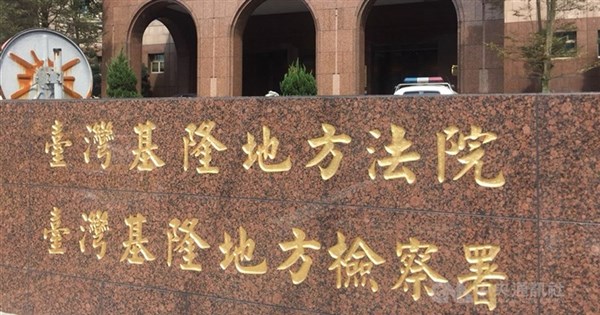
- Taiwan is moving to prosecute nine people, including Nvidia and Super Micro staff, over about $2.5 billion of restricted AI servers routed into China.
- Prosecutors allege the group forged export documents and shipping records to hide where the chips were going.
- An Nvidia employee has been detained in Taiwan since late July.
- Three other people were already held over falsified shipping papers for Super Micro servers bound for China.
- Super Micro has fired the employees implicated in the probe.
Why it matters
- contradiction Super Micro says its senior leadership knew nothing, while US prosecutors named its co-founder and sitting board member as a ringleader.
- constraint Licence compliance can no longer be discharged by a clause in a distributor agreement.
- decision Nvidia and Super Micro have to decide how much authority Taiwan-based channel employees keep over shipping documentation, knowing the answer costs revenue speed either way.
- precedent Charging named employees rather than the corporate entity establishes personnel as the working enforcement handle for diversion cases, a template other jurisdictions hosting assembly can pick up.
The mechanism Taiwanese prosecutors describe is clerical. Export documents and shipping records were falsified to hide where Super Micro machines running Nvidia processors actually landed [2][3]. Restricted-goods screening is built to interrogate the counterparty, and a Taiwan-based sales manager routing orders through normal channels is not a counterparty. The people alleged to have broken the rule were the same people who filled in the forms.
The pace is the part worth pricing. US prosecutors say roughly $510 million moved through a Southeast Asian intermediary that supplied fake records, between late April and mid-May 2025 [5][10]. That is about a fifth of the $2.5 billion attributed to the whole scheme, inside roughly three weeks [13]. A route running at that rate leaves a reconciliation trail between stated end-use and actual destination, and nobody inside the chain stopped it.
Super Micro's public position is that it is not a defendant in the US case [8]. That is accurate and narrower than it sounds. The March charges from the US Attorney's Office for the Southern District of New York named co-founder and board member Yih-Shyan "Wally" Liaw as one of three people behind the operation, alongside a Taiwan-based sales manager and a contractor [7]. Liaw holds a $464 million stake in the company [18]. Corporate non-liability does not keep an indictment off the board or out of the register of large holders.
Two prosecutions now cover the same shipments, and neither depends on the other. Taipei's motive is domestic: in July its prosecutors charged a former TSMC employee over the alleged theft of chip know-how that Taiwan classifies among its national core assets, a case investigators say was aimed at China [9]. An authority willing to charge its own foundry alumni has no particular difficulty charging a foreign vendor's local hires, and it works on evidence Washington does not control.
Jensen Huang's formulation in Taipei, that Nvidia insists its partners are compliant [16], is both the right thing to say and a statement of the limit. The leverage a chip designer has over a distributor's paperwork is contractual. Nvidia is meanwhile still pitching its licensed H200 as the legal way into China, without approval from Beijing [12]. That request is now read against $2.5 billion of hardware that arrived without one.
What to watch
- Whether Taiwan's charges climb above staff level at either company, or stay confined to the nine now facing prosecution.
- Whether the Southern District of New York adds corporate defendants to a case built so far on named individuals.
- What Super Micro's investigation of its own top leadership concludes, and whether it is disclosed.
Clarity's read
What the record supports and how the coverage leans. The claims behind it follow.
Reality
- Evidence55
- Adoption62
- Hype gap+22
- Incentives72
- Confidence55
Claim ledger
Ranked by verification strength, evidence, and original report placement.
- [1]
The Nvidia employee linked to the illegal export of AI servers to China has been detained since late July.
- [2]
According to Taiwanese prosecutors, the group forged shipping export documents and shipping records to hide the trail of chips illegally redirected to China.
ReportedSupportedSource: Taiwanese prosecutors2 sources— create a free account to open themView cited source - [3]
The hardware at the heart of the case is built by Super Micro Computer and runs on Nvidia processors.
- [4]
The US imposed licensing requirements in 2022 covering deployment of that class of Nvidia AI hardware in China, Hong Kong and Macau, citing national security.
- [5]
US prosecutors say roughly $510 million of the scheme was routed through a Southeast Asian intermediary between late April and mid-May 2025.
ReportedSupportedSource: US prosecutors2 sources— create a free account to open themView cited source - [6]
Taiwan had earlier held three people accused of falsifying shipping documents for Super Micro servers bound for China, before the July detention of the Nvidia employee was disclosed.
- [7]
In March, the US Attorney's Office for the Southern District of New York named Super Micro co-founder and board member Yih-Shyan "Wally" Liaw, Taiwan-based sales manager Ruei-Tsan "Steven" Chang and contractor Ting-Wei "Willy" Sun as the people behind a $2.5 billion Nvidia server smuggling operation into China.
ReportedSupportedSource: US Attorney's Office, Southern District of New York2 sources— create a free account to open themView cited source - [8]
Super Micro has stressed that it is not a defendant in the US case.
- [9]
In July, Taiwanese prosecutors charged a former TSMC employee over the alleged theft of chip know-how that Taipei classifies among its national core assets, in a case investigators say was aimed at China.
- [10]
A Southeast Asian firm implicated in the ring provided fake records in a middleman role, according to filings.
ReportedSupportedSource: filings, via cryptopolitan.com2 sources— create a free account to open themView cited source - [11]
Super Micro has fired several employees implicated in the $2.5 billion smuggling probe.
- [12]
Huang is pitching Nvidia's licensed H200 chip as a legal alternative route into China, and Beijing has not yet approved that plan.
- [13]
The roughly $510 million routed through the Southeast Asian intermediary is about 20 percent of the $2.5 billion attributed to the entire scheme.
- [14]
Taiwan is moving to prosecute nine people, including Nvidia and Super Micro staff, accused of smuggling about $2.5 billion of restricted AI servers into China.
ReportedContestedSource: Taiwanese prosecutors, via cryptopolitan.com3 sources— create a free account to open themView cited source - [15]
Super Micro says its senior leadership knew nothing of the scheme.
- [16]
Nvidia CEO Jensen Huang told reporters at Songshan airport during a Taipei visit, "We insist our partners are compliant," adding he hoped partners would tighten compliance to prevent future breaches.
- [17]
Super Micro is investigating its top leadership for compromise as part of its response to the server rerouting allegations.
- [18]
Yih-Shyan "Wally" Liaw has a $464 million stake in Super Micro.
Sources
2 independent publishers whose own reporting we read for this story.
- cryptobriefing.comNvidia manager indicted in Taiwan for smuggling AI chips to China
1 article · August 24, 2026
- cryptopolitan.comTaiwan moves to prosecute Nvidia, Super Micro staff over illegal AI server export to China
1 article · August 24, 2026
Topics and entities
Follow any of these and your For You feed starts watching them — no settings page required.
Topics
Entities
- Ting-Wei "Willy" SunFollow
- NvidiaFollow
- Jensen HuangFollow
- Ruei-Tsan "Steven" ChangFollow
- Keelung District Prosecutors' OfficeFollow
- BlackwellFollow
- US Attorney's Office for the Southern District of New YorkFollow
- Nvidia H200Follow
- Super Micro ComputerFollow
- Yih-Shyan "Wally" LiawFollow
- Taiwan SemiconductorFollow