Science1 publisher2 min readPublished
Control experiment reassigns zavondemstat's main target to DHODH
University of Sydney researchers report that the cancer drug zavondemstat works mainly by blocking the enzyme DHODH, not the KDM4 proteins it was built to hit. The experiments were done in glioblastoma cells, and the drug is already in human trials.
The Scientist · Science desk
Drafted by a language model from the sources cited here and checked against its claim ledger before publication. How we use AISend a correction
What happened
- The work, published in Nature Chemical Biology, came from the University of Sydney with Goethe University, Oxford and the Institute of Cancer Research in London.
- When the researchers tested other KDM4 inhibitors, none reproduced QC6352's anticancer effect, the clue that KDM4 was not the active target.
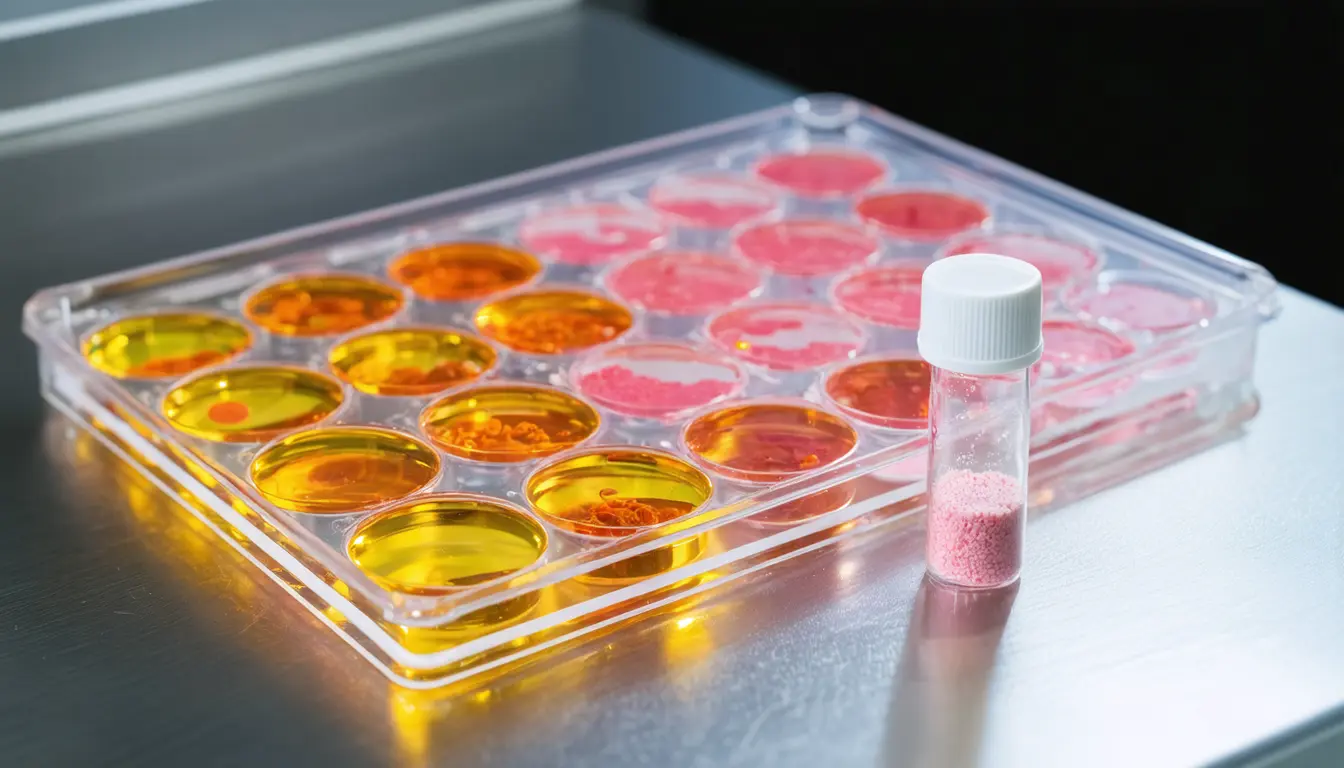
- To tie the drug to DHODH, the team used stem cells from patients' glioblastomas and tumor models, and ran genetic, mechanistic and molecular tests.
- The team also built new compounds that block KDM4 without affecting DHODH, giving future work a cleaner tool for studying KDM4.
Compiled by The ScientistSomething wrong?How this is made
Why it matters
- exposure Because labs around the world used QC6352 to study KDM4, published results built on that tool may need rereading.
- decision A wrong mechanism can push trials toward inappropriate patient selection and designs built around the wrong biology, Munoz says.
- capability DHODH inhibition surfaces as a possible route for glioblastoma, and DHODH-blocking drugs already in trials for other cancers could be tested there.
DHODH is an enzyme cancer cells use to make the building blocks of DNA. Munoz described it as "a machine producing bricks needed to build new DNA," and said "if you switch off the machine, the cell starts running out of bricks and can no longer efficiently copy its DNA and keep dividing" [3]. A reassigned target does not by itself mean the drug fails; a compound that starves cancer cells of DNA parts can still slow them.
KDM4 is a family of proteins that can push cancer cells to grow and spread when it is overactive, and that is what these compounds were meant to block [1]. The case against KDM4 rests on elimination. "If blocking KDM4 was driving those effects, we would have expected the other inhibitors to behave similarly. Instead, the results suggested QC6352 was acting through a different mechanism," said Professor Lenka Munoz, who led the work from the University of Sydney [12][14].
Both compounds were developed for cancers such as colorectal, pancreatic and prostate [9], while the mechanism here was worked out in glioblastoma, where the team had been testing whether the drugs could be repurposed [10]. The experiments do not show whether DHODH is the main driver in the cancers zavondemstat is being trialed for, and the authors describe the clinical implication only as a possibility [6].
Munoz sets the case in a longer pattern. "There are well-known examples of cancer drugs advancing through large clinical trials before researchers realized they were not working through the mechanism originally proposed," she said, adding that the study "shows this is not just a historical problem but one still happening today" [16][17].
What to watch
- Confirmation of whether DHODH is the active mechanism in the colorectal, pancreatic and prostate cancers zavondemstat is being trialed for.
- Whether the sponsors of the zavondemstat trials revise patient selection or endpoints in response to the finding.
- Whether the new KDM4-selective compounds overturn conclusions that labs drew using QC6352.